Rotterdam FootGolf event blends competition, celebrities and lifestyle networking
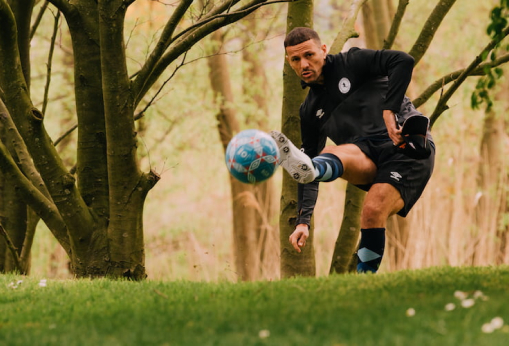
Footgolf 2026 is being built like a scene, not just a scorecard. Set for Saturday, June 20, 2026, at Golf Center Seve on Kleiweg 48 in Rotterdam, the event mixes footballers, celebrities, brands and lifestyle audiences in a format that treats FootGolf as both competition and social currency.
A tournament with networking built into the draw
The clearest sign that this is not a standard event is the structure itself: each team is paired with a former footballer as captain. That does two things at once. It gives the competition a recognizable sporting edge, and it turns every group into a built-in conversation starter, which is exactly how FootGolf keeps expanding beyond the scoreline.
That is the smart part of the pitch. FootGolf has always had crossover potential because it sits between two familiar worlds, but this Rotterdam edition leans hard into the idea that people are not only coming to compete. They are coming to connect, to be seen, and to spend a day inside a setting where football culture meets fashion, media and business without losing the game’s competitive spine.
Why Golfcenter Seve is the right stage
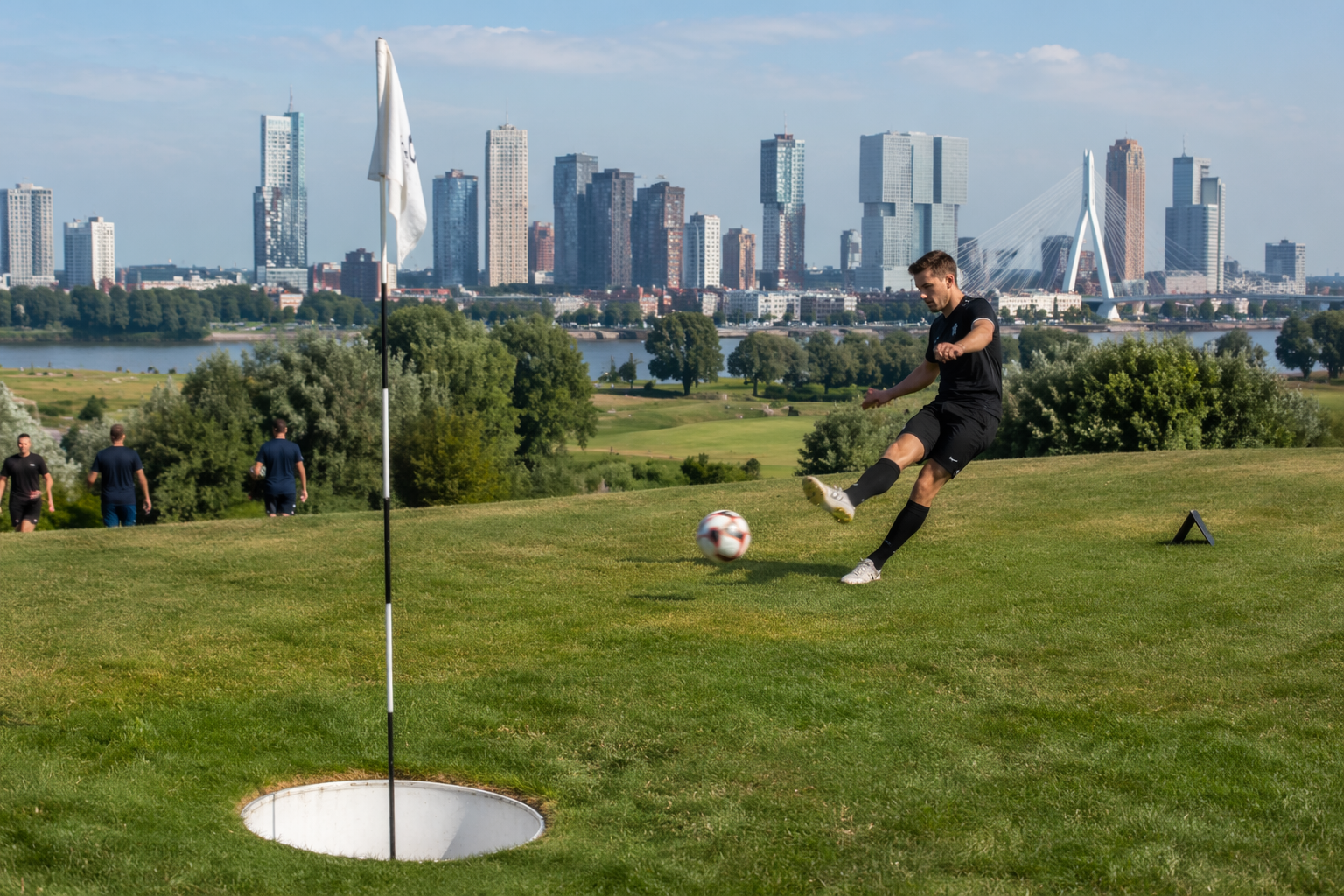
The venue matters here as much as the field. Golfcenter Seve has long billed itself as the largest training facility in the Netherlands, and it pairs golf with food and lifestyle in a way that fits a premium social-sport event. That matters because FootGolf events aimed at mixed audiences need more than space. They need atmosphere, flexibility and a setting that already feels like a destination.
The course itself sharpens the appeal. Seve’s FootGolf layout is a short 9-hole course built around the driving range, and it is described as technically demanding. That combination is useful for a hybrid event: the holes are compact enough to keep the action moving, but tricky enough to keep the footballers honest. If the format were too easy, it would drift into exhibition territory. At Seve, the course still has teeth.
An established series, not a one-off stunt
The event archive shows Footgolf 2026 sitting alongside a Footgolf 2025 edition, which tells you this is part of a continuing calendar, not a one-time experiment. Earlier Life After Football coverage points in the same direction. The format has been running for years, with a 2020 outing at Seve in Rotterdam that featured ten teams and a strong line-up of prominent football pros.
That history matters because it explains why the 2026 edition can afford to sell atmosphere so aggressively. The organizers are not trying to prove the concept from scratch. They are building on a track record that has already shown FootGolf can work as a social event, a sponsor-friendly gathering and a genuine competition. The archive is the proof that the formula has momentum.
The 2023 edition adds another layer to the story. Life After Football’s Footgolf event that year was won by Karim Saïdi after ten holes and three challenges. That is the detail that keeps this from becoming all branding and no sport. There is still a winner, there are still holes to play, and there is still enough pressure for a former professional to separate himself over the course of a controlled but competitive format.
The real product: community with a sports label
What makes Footgolf 2026 interesting is not just that it blends categories. It is that the blend appears intentional and commercially sharp. By putting footballers, celebrities and brands in the same space, the event is essentially using FootGolf as a bridge to broader lifestyle culture. That is a different growth strategy from the old model of treating FootGolf purely as a niche sport. Here, the sport is the entry point, but the ecosystem around it is the real draw.
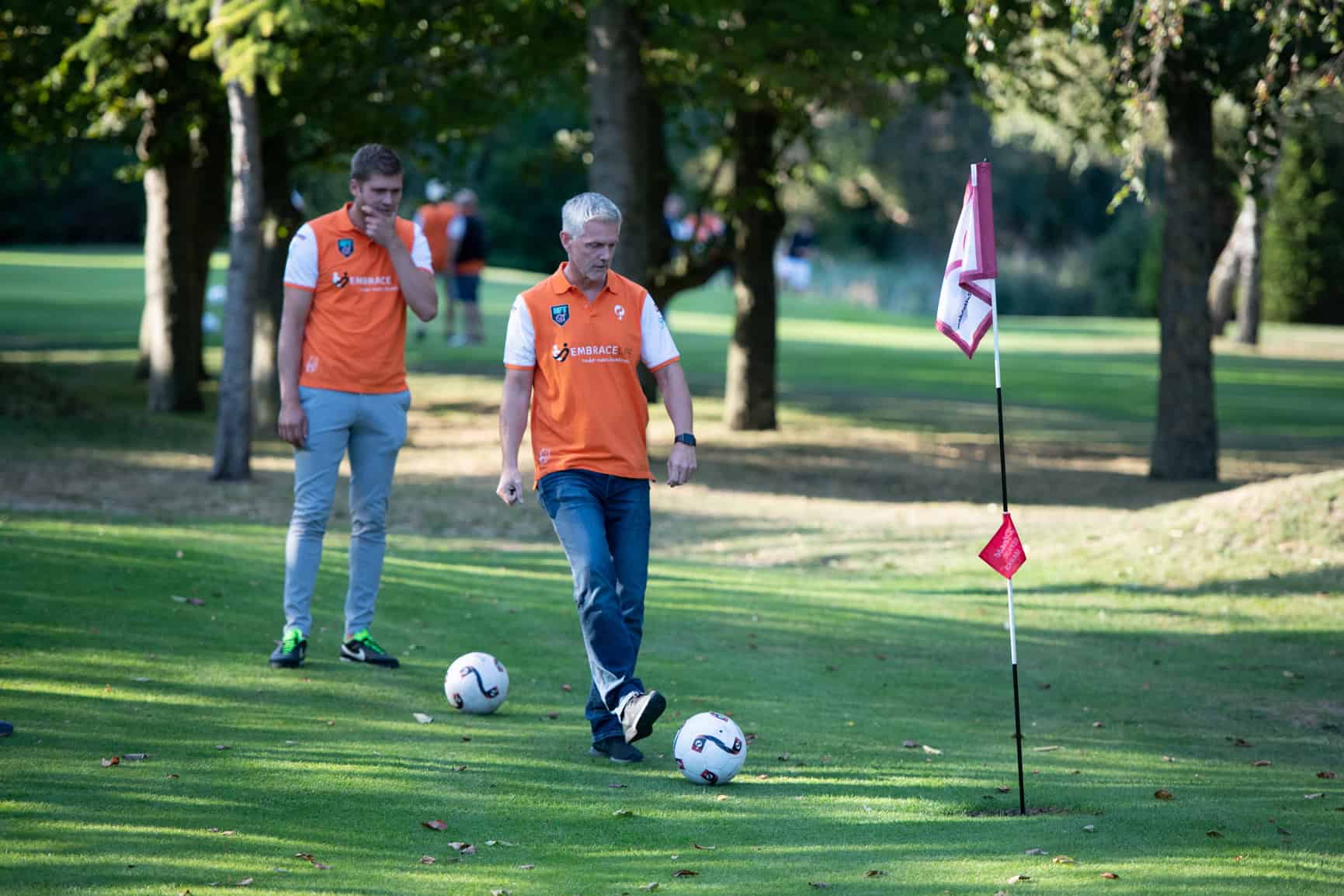
That approach also says something about how organizers think the game should grow. FootGolf does not need to hide its football roots to feel legitimate, and it does not need to be stripped down into a pure sporting test to matter. In Rotterdam, the format is being packaged as a community event with a competitive core, and that is a stronger proposition than trying to force it into a single identity.
• The football side gives the event credibility and recognizable faces. • The lifestyle side gives it reach, brand appeal and a broader audience. • The networking layer turns a round of FootGolf into a full-day social occasion.
The day is designed to run long
There is one more clue about how Life After Football wants this event to feel: the day ends with a public viewing of the Netherlands national football team’s World Cup match. That detail makes the schedule feel deliberate. This is not a quick afternoon tournament followed by people going home. It is a full-day gathering built around shared attention, shared interest and a communal finish.
That ending also reinforces the event’s broader logic. FootGolf becomes the reason to gather, but the surrounding experience keeps people there. The social energy of the event does as much work as the leaderboard, and that is exactly why this format has room to grow. The game still matters. It just now lives inside something bigger, louder and more commercially useful.
For FootGolf, that is the bigger takeaway from Rotterdam. The sport’s next phase may not come only from stricter competition or cleaner format design. It may come from events that understand how to package the game as a place where sport, status and community overlap. In that sense, Footgolf 2026 is not just another tournament on the calendar. It is a blueprint for how the sport wants to be seen.
Sources
- [1]lifeafterfootball.eu
- [2]seve.nl
- [3]faaswilkesfootgolf.com
- [4]lifeafterfootball.nl
- [5]facebook.com
- [6]youtube.com