Sacramento kickball league grows into a weekly LGBTQIA+ community hub

Kickball has become the easiest way into Sacramento’s OutLoud Sports community, and the payoff reaches far beyond the scoreboard. What began as a simple weekly game now functions as a steady social anchor for LGBTQIA+ adults and allies, giving players a place to compete, connect and be known. The league’s growth says as much about belonging as it does about sport.
Saturday mornings that hold the community together
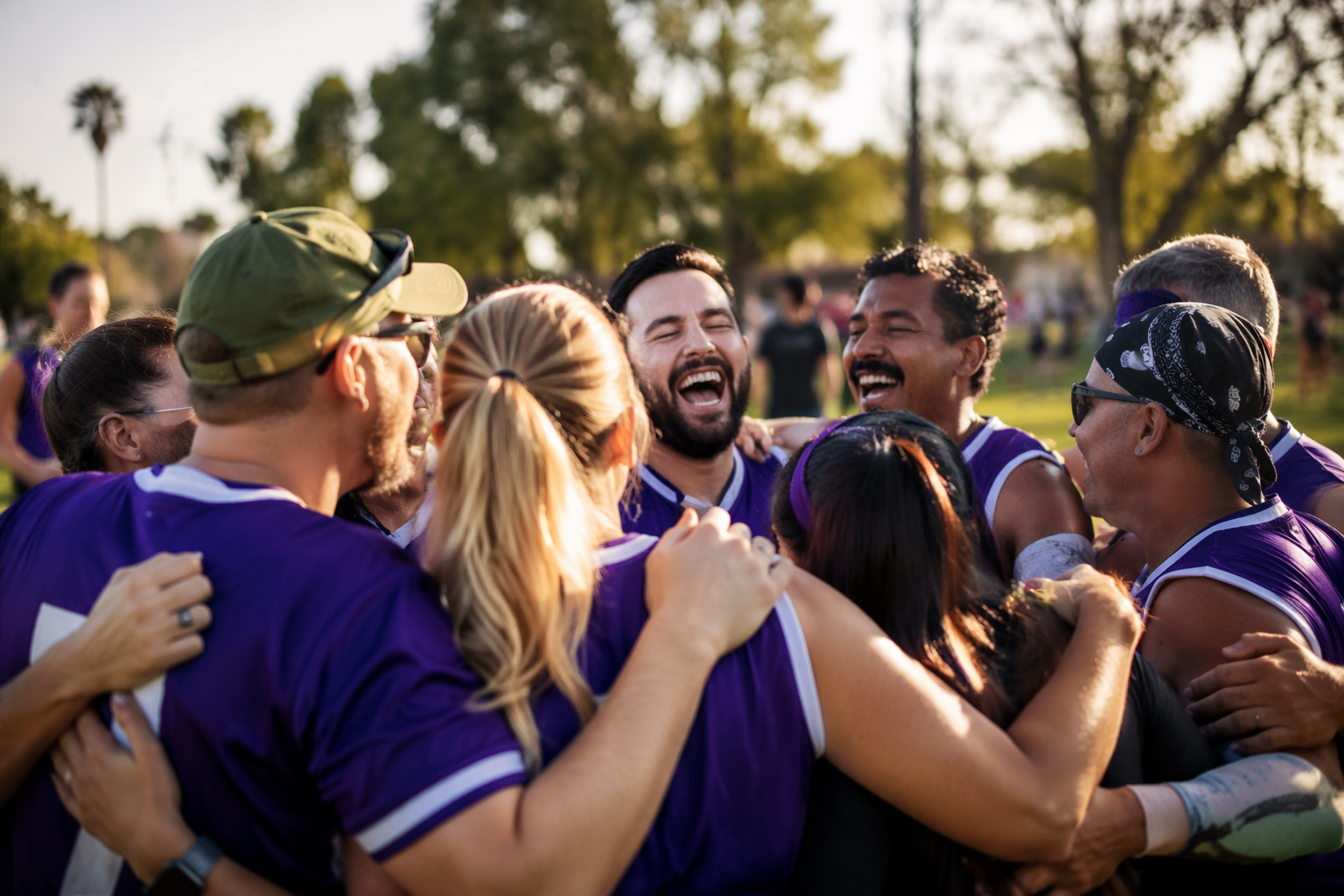
Most Saturday mornings, Tahoe Park becomes the league’s meeting point, and that regular cadence is part of the appeal. OutLoud Sports Sacramento has built a rhythm that is easy to join and hard to leave behind: show up, play, talk, return the next week. For many adults who are past the easy friend-making years of school or new to Sacramento altogether, that kind of dependable routine matters.
The scene is deliberately low-barrier. Players come from beginner to advanced backgrounds, but the point is not to create a high-pressure ladder or an elite competition. The structure rewards participation, encouragement and consistency, which makes the league feel more like a civic fixture than a weekend diversion. In a city where adult social circles can be fragmented, that consistency has become one of the league’s biggest strengths.
A league that grew because people stayed
Dan Dutra, who oversees the Sacramento league, said the numbers tell the story clearly. When he took over in 2021, OutLoud Sports Sacramento had about 80 people and offered only kickball. Now the league has about 1,000 people, and the expansion forced it to move parks to make room for the growing membership.
That kind of growth points to more than curiosity. It suggests that players are finding something durable enough to keep returning, and that the league is meeting a real need for recurring connection. In practical terms, the move to a larger setting reflects a demand for spaces where adults can build friendships without having to navigate the usual barriers of nightlife, dating apps or one-off social events.
Nina Francesconi has been part of that shift since 2021. Her experience reflects how the league has matured from a sports option into a familiar part of the weekly calendar, the kind of place where faces become names and names become friendships. The fact that the league had to change parks because it outgrew its original setup says a great deal about how deeply that model resonates.
More than kickball, and that matters
The league’s broadening menu is another sign that OutLoud Sports is operating as a community network, not a single-sport club. Dutra said the Sacramento league now includes dodgeball, volleyball, cornhole, bowling and kickball, a mix that gives players more ways to stay involved across the week and across the year. That kind of cross-sport structure keeps the social circle intact even when a player is not in a kickball season or misses a Saturday.
OutLoud Sports Sacramento’s official offerings now go even further, listing kickball, dodgeball, soccer, football, pickleball, tennis, indoor and sand volleyball, and bowling. The range matters because it creates entry points for different comfort levels and different kinds of athletes. A player who joins for kickball may stay for bowling or volleyball, then begin showing up for the social fabric as much as the games themselves.
Why the league resonates socially
Alexandra Orzeck’s experience captures the league’s deeper value. After moving to Sacramento from Houston in 2019, she said the OutLoud Sports community was the first place where she really met a whole group of people. That is a powerful marker of what these leagues do well: they create repeated contact in a setting that is active, welcoming and built around shared routines rather than forced networking.
For LGBTQIA+ adults and allies, that kind of space can carry extra weight. It offers exercise, yes, but also a setting where people do not have to explain themselves to belong. The league’s impact stretches beyond the field because friendships continue outside league nights, reinforcing the idea that weekly play can become a support system, not just a pastime.
The broader cultural significance is hard to miss. In a city like Sacramento, a league like this helps fill the gap between formal community institutions and casual social life. It gives adults a place to gather regularly, build trust over time and find a crowd that feels both inclusive and durable. That is especially important for people who have recently moved, changed life stages or simply want a reliable, affirming routine.
Part of a larger national network
OutLoud Sports is not a Sacramento-only story. The organization says it was founded in 2007 and now represents more than 80,000 LGBTQIA+ and allied athletes across the United States. That national scale gives the Sacramento league added context: it is part of a larger recreational-sports network that has spent years building inclusive, year-round programming around the country.
The Sacramento branch fits neatly into that model. It reflects a broader industry trend toward social sports leagues that blend fitness with belonging, especially for adults looking for consistent ways to stay connected. But the local version has its own identity, shaped by Tahoe Park mornings, a fast-growing roster and a community that keeps showing up because the space works.
What makes this model durable
OutLoud Sports Sacramento succeeds because it solves several problems at once. It gives people a weekly reason to leave the house, a friendly setting to meet others, and a broad enough slate of sports to keep participation fresh. It also lowers the stakes of adult social life by making connection feel as normal as playing catch.
That is why the league reads less like a recreational side note and more like community infrastructure. In Sacramento, weekly kickball has become a reliable place to gather, compete and belong, and the league’s expansion shows that the need for that kind of space is not fading.
Sources
- [1]abc10.com
- [2]outloudsports.com