Seven young standouts emerge across USL Championship and League One
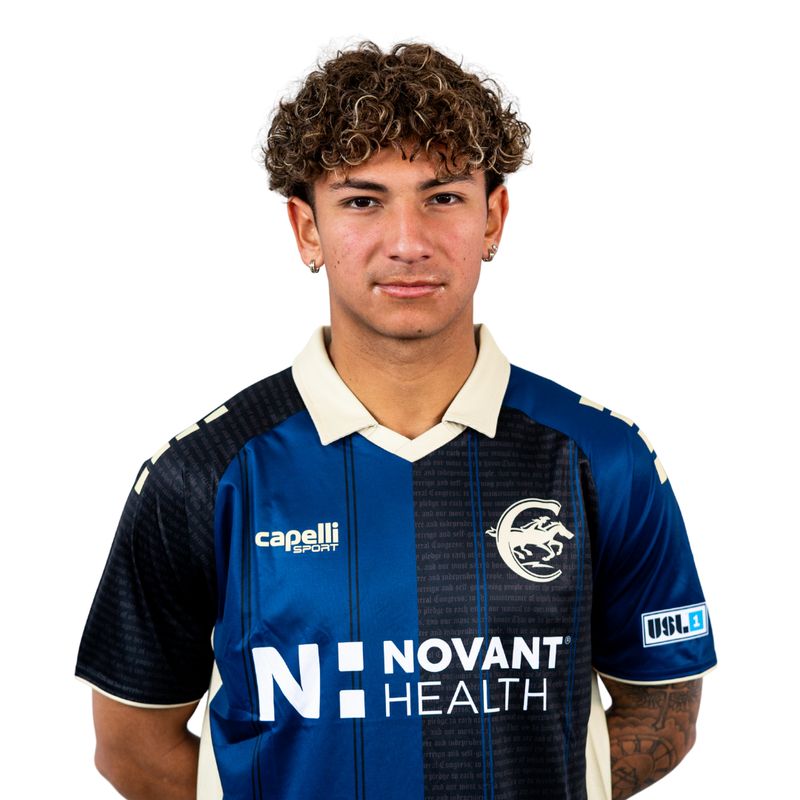
Seven young players used the latest USL weekend to underline a bigger truth about the Championship and League One: clubs that hand out real minutes are getting real production back. Javen Romero and Colton Swan were the headliners in the weekly youth spotlight, but the deeper story is how Charlotte and Charleston are building repeatable pathways from prospect to first-team contributor.
Javen Romero is expanding Charlotte’s defensive ceiling
Romero’s rise keeps moving beyond the original scouting report. The 19-year-old center back arrived from Chivas de Guadalajara’s reserve ranks after appearing at the 2023 FIFA U-17 World Cup for Mexico, and Charlotte has responded by trusting him with a larger and larger role. His distribution has become part of the pitch, too: in the 3-1 win over One Knoxville SC, he completed 23 of 26 passes, including 8 of 10 long balls, and helped launch the counterattack that finished the game.
The bigger signal came in Week 10, when Romero played all 180 minutes in Charlotte’s two-match week, one of only two full 180-minute weeks logged by the club alongside Christopher Jaime. That kind of workload says Charlotte sees him as more than a development project. It sees a young defender who can stabilize the back line now and still add value later as a transfer asset because he already looks comfortable in possession and in volume minutes.
Christopher Jaime has turned midfield trust into steady output
Jaime’s path is quieter than Romero’s, but it is just as revealing. He first turned pro with Las Vegas Lights as a USL Academy signing, then moved to Charlotte and settled into the center of the park as a 22-year-old who can absorb responsibility rather than just cameo into games. In the recent stretch, he notched his first two assists in USL League One against FC Naples during Week 14 and followed that with another battling display in Charlotte’s 3-2 road win at Chattanooga Red Wolves SC.
What makes Jaime especially important in this pipeline story is the volume. His 180-minute week with Romero in Week 10 shows Charlotte was willing to ask two young players to carry an entire two-game stretch, not just one late substitute shift. For a club in League One, that is developmental upside with immediate competitive value, and it is the sort of résumé that can turn a midfielder into a weekly difference-maker rather than a one-hot-streak story.
Colton Swan is becoming Charleston’s most convincing new first-team answer
Charleston’s bet on Swan already looks smarter by the week. The Battery signed the 18-year-old to a multi-year deal on January 7 after he made the Big Ten All-Freshman Team at Indiana University, and he has answered with the kind of end product clubs covet. By late May he was tied for the league lead with five goal contributions across the Championship and Prinx Tires USL Cup, and by early June he had seven goals across all competitions in his first three months as a pro.
The latest proof came in Charleston’s 2-0 win over Detroit City FC at Patriots Point, where Swan recorded a goal and assist two minutes apart and helped keep the Battery undefeated at home in USL Championship play. That is the difference between a promising young player and a player you can build around: the production is not isolated, it is attached to winning. For Charleston, Swan is already looking like both a weekly attacking option and a future value piece whose next step could come quickly if this pace holds.
Luis Álvarez shows how a club can recycle talent instead of starting over
Álvarez is the kind of player who reminds you that development does not always move in a straight line. Charlotte sent him to Tampa Bay in 2025 in the league’s largest intraleague transfer fee between a USL League One and USL Championship club, then brought him back on loan for 2026 after he had already logged 57 league appearances across three seasons for the Independence and 15 goals across all competitions in Charlotte colors. He also carried the label of a 2024 League One Young Player of the Year finalist, which makes the reunion feel less like a gamble and more like Charlotte reassembling a known weapon.
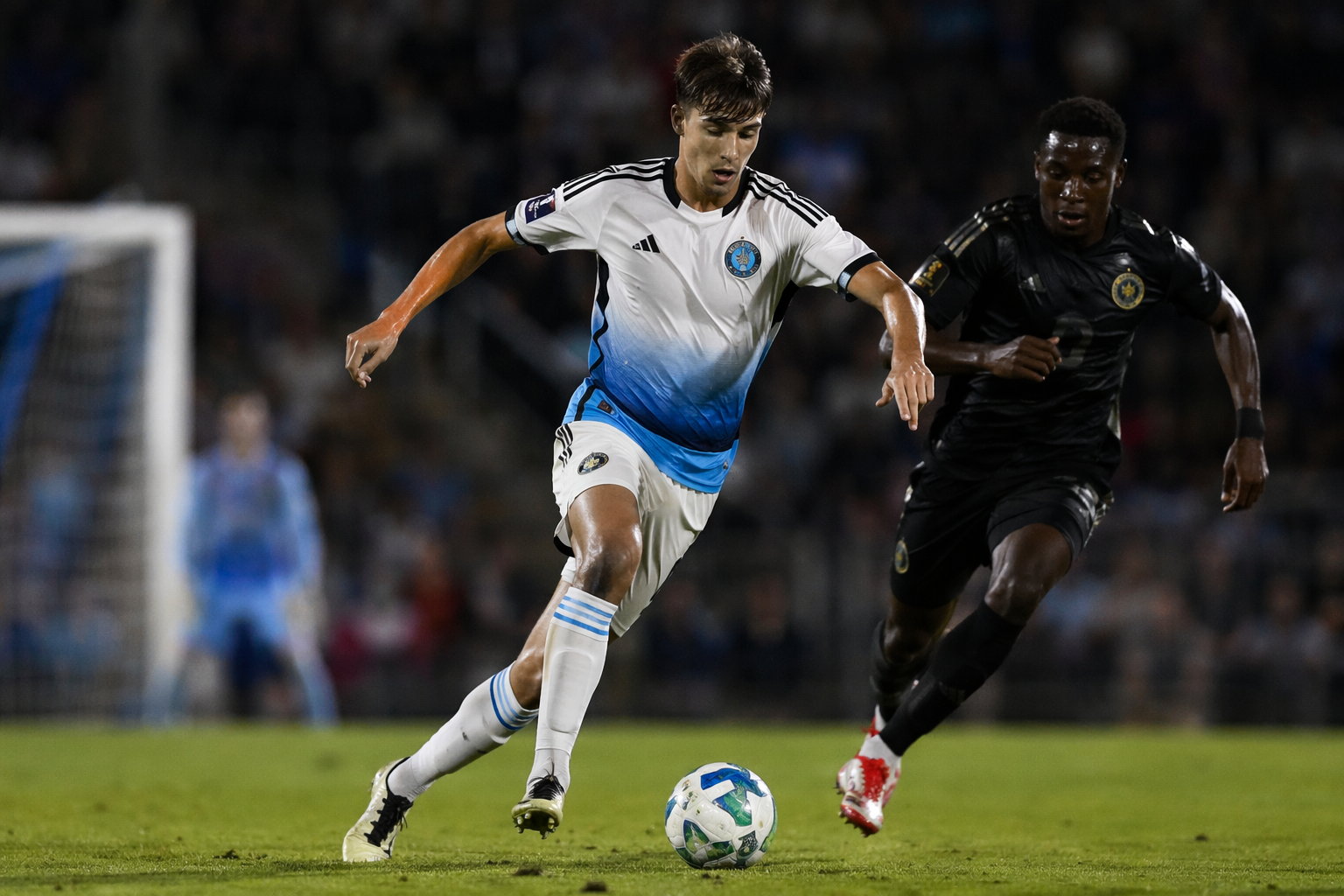
That matters in the broader youth conversation because Álvarez is no longer just a prospect. He had six Team of the Week honors despite appearing in only nine league games in 2025, which is the kind of efficiency that makes a player expensive in both competitive and transfer terms. Charlotte’s decision to bring him back says the club believes his ceiling still has room, and it also shows how League One can produce players whose value stretches beyond the division that first gave them a platform.
Souaibou Marou keeps Charlotte dangerous when games open up late
Marou gives Charlotte a different kind of youth value: veteran-like disruption from an attacking role that can change a game in one touch. The Cameroon international is in his second season with the Independence, finished second on the team with nine league goals in 2025, and still owns a place in league history as the first substitute to score a hat trick in USL League One. On June 28, he added his seventh goal of the season from distance to lead Charlotte to a road draw against Loudoun United FC, the sort of moment that keeps a club alive when a tight match needs one clean strike.
Even the shootout against Pittsburgh Riverhounds SC showed his usefulness. Marou converted from the spot after regulation, with Javen Romero and Luis Álvarez also stepping up in the same penalty sequence, a small but telling snapshot of how Charlotte is leaning on young and still-developing players in pressure situations. That is what first-team trust looks like when it has matured: the young attacker is no longer just entering games, he is finishing them.
Fidel Barajas remains the template Charleston is chasing with Swan
Barajas is not just a past Charleston success story, he is the proof of concept behind the club’s youth model. In 2023, he won USL Championship Young Player of the Year with four goals and nine assists, then moved on to Real Salt Lake and later Chivas de Guadalajara, a progression that made him the first active USL Championship player named to The Guardian’s Next Generation list. That path still resonates because it shows Charleston can develop talent to the point where bigger stages take notice.
Swan’s current surge sits in that same lane, only with a different profile. Barajas was the creative teenage winger who became a transfer headline; Swan is the center forward who is forcing his way into Charleston’s scoring hierarchy. The club’s willingness to keep betting on young attackers, and to put them in positions where they can affect results immediately, is why the Battery keep producing players other clubs want to study.
The minutes picture shows a league-wide trust gap closing fast
The numbers behind these breakouts matter as much as the highlights. In Week 10, 54 players age-eligible for the Young Player of the Year race appeared in Championship and League One action, 12 of them went the full 90 minutes, and Charlotte accounted for two of the heaviest workloads with Romero and Jaime each playing 180 minutes. In the latest featured week, that number rose to 60 age-eligible players across the Championship, League One and USL Cup, with 26 full 90-minute outings.
That is the real thread running through the roundup: the clubs getting the most from youth are not merely showcasing talent, they are trusting it in competitive minutes that build value fast. Charlotte has done it with defenders, midfielders and attackers. Charleston has done it with Swan and built a pipeline that already has Barajas as its signature success. Across both leagues, the prospects closest to becoming every-week difference-makers are the ones whose coaches have stopped treating them like future plans and started using them like present-tense solutions.