Shannon Wright’s aggressive style helped define women’s racquetball

Shannon Wright did not just collect trophies. Over a 12-year career, she won more than 35 professional tournaments, captured seven National Championships and finished No. 1 on the Women’s Professional Racquetball Association Tour four times, a run that put her at the center of the women’s game. USA Racquetball’s Hall of Fame class of 2004 places Wright from Fridley, Minnesota, in the sport’s formative pro era, where her results and her style helped define what championship-level women’s racquetball would look like.
The numbers that made Wright unavoidable
The first thing that stands out about Wright is the scale of the winning. More than 35 pro tournament victories over 12 years is not just longevity; it is sustained control of a circuit that was still building its own identity. Seven National Championships and four No. 1 finishes on the WPRA Tour mark her as a dominant force, not a one-season spike.
Those numbers matter because they frame Wright as a benchmark, not a footnote. In a sport where a player can rack up wins without changing the conversation, Wright did both, and that combination is what keeps her in the center of racquetball history.
How she changed the women’s game
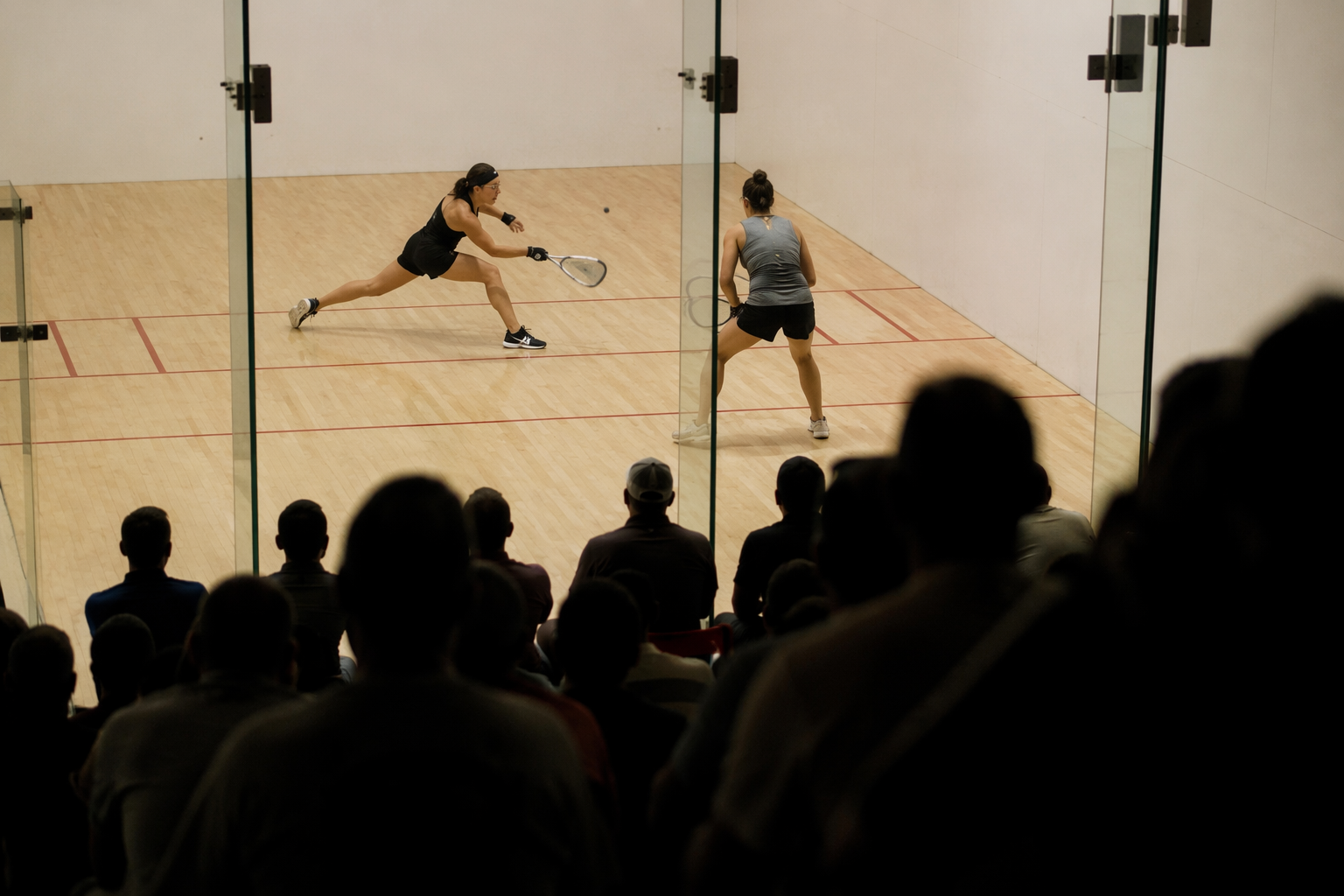
Wright’s legacy is tied to more than outcomes. USA Racquetball’s Hall of Fame text says some observers credited her with revolutionizing women’s racquetball through her hard-hitting style and aggressive play. That detail is the hinge point in her story, because it marks a shift in the tactical expectations around the women’s side of the sport.
Racquetball rewards players who can create offense from tight court angles, quick hand speed and immediate pressure after the serve. Wright leaned into that reality and made it the model. Instead of treating aggression as a specialty, she turned it into a standard, and that changed how elite women’s racquetball was watched, discussed and judged.
Before Wright’s rise, the women’s pro game was still carving out its place in the sport’s larger identity. The late 1970s and early 1980s were a period when racquetball was defining professional excellence, and the style that emerged from that era had room for more finesse and control. Wright’s success showed that a harder, faster, more attacking approach could dominate at the highest level.
A new standard for fans and rivals
Wright’s career gave fans a clearer picture of what elite women’s racquetball could deliver: pace, power and relentless pressure. That mattered in a sport trying to build visibility, because a more aggressive style tends to create more dramatic rallies, sharper points and a clearer sense of risk. Promoters could sell action, rivals had to match it, and audiences learned to expect women’s matches to look every bit as fierce as the men’s side.

The competitive effect was just as important. When one player wins repeatedly with an attacking identity, opponents are forced to adapt. Wright’s run helped establish that championships could be won not only through consistency and placement, but through constant offense and physical readiness to sustain it over a long season.
Her Hall of Fame page also notes that she was heavily involved in conditioning during her career. That detail fits the rest of the record: aggressive racquetball is demanding, and a player who is always pressing has to be prepared to keep that pace across matches, tournaments and years. Wright’s dominance was built on talent, but it was also built on the work required to keep her style effective.
Why the late 1970s and early 1980s still matter
The timing of Wright’s peak helps explain why her legacy endures. The 2003 Racquetball magazine feature, “Where are they Now? Shannon Wright,” written by Lynn Adams and Caryn McKinney, again described her as dominating women’s racquetball in the late 1970s and early 1980s. That retrospective matters because it shows her place in the sport’s memory was secure decades after her prime.
That period was crucial for the visibility of women’s professional racquetball. Players like Wright did not just win matches, they helped set the tone for how the women’s tour would be understood by fans following the sport’s growth. Her repeated No. 1 finishes on the WPRA Tour gave the circuit a recognizable standard bearer at a time when consistency and star power were both needed.

The result is a career that bridges performance and perception. Wright’s titles and rankings tell one story, but the lasting influence of her hard-hitting approach tells another. Together, they explain why her name still functions as a reference point whenever women’s racquetball is discussed as a serious championship sport.
What Wright left behind
Shannon Wright’s career offers a clean before-and-after contrast. Before her peak, women’s pro racquetball was still clarifying its style and status; with Wright at the top, the game had a visible model of aggressive, high-pressure excellence. Her 35-plus victories, seven national crowns and four WPRA No. 1 finishes are the hard proof, but the bigger legacy is the expectation she helped create.
That expectation still defines how the women’s side of racquetball is remembered: not as a softer version of the sport, but as a showcase for speed, power and attack. Wright’s Hall of Fame place from 2004 preserves the numbers, but her style preserved the standard.