South American flag football championship opens in Colombia, Brazil leads contenders
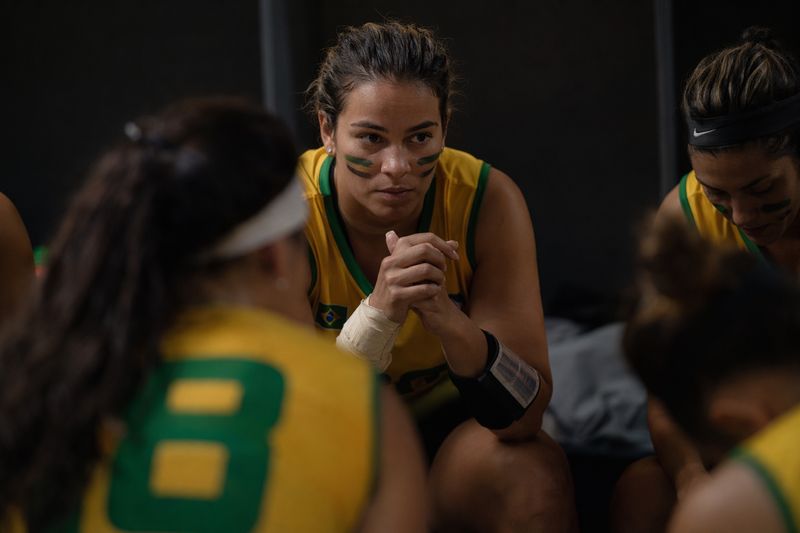
Brazil arrived in Medellín as the top-ranked nation in both the men’s and women’s fields, and that status instantly shaped the South American Regional Flag Football Championship into a referendum on the region’s pecking order. Five nations, Argentina, Brazil, Chile, Colombia and Venezuela, opened play at Cancha de Fútbol Marte No. 1 beside Atanasio Girardot Stadium, and Venezuela’s first international appearance added a new variable to a field trying to close the gap on the continent’s standard-bearer.
The tournament, endorsed by the International Federation of American Football, used round-robin play with 10 games on Friday and Saturday before Sunday’s knockout rounds. The men’s gold medal game was set for 6:00 p.m. on June 28, followed by the women’s final at 7:15 p.m., a scheduling squeeze that leaves little room for error and even less for slow starts. In a compact format like this, one dropped flag or one missed conversion can flip a bracket.
Brazil’s early form matched the expectation that comes with being South America’s highest-ranked program in the 2025 IFAF world rankings. The Brazilian men and women had trained in São Paulo and Mexico before arriving in Colombia, and IFAF said both squads posted strong results on day one. That matters because the continent’s hierarchy is still taking shape: Argentina, Chile and Colombia have all pushed the level upward, but Brazil still enters these events with the deepest competitive footprint and the clearest Olympic track record.
The stakes stretched well beyond Medellín. The International Olympic Committee approved the LA28 qualification system in February 2026, locking in a route that gives the United States automatic places as host in both genders and leaves five women’s and five men’s berths to be earned. The first direct prizes come at the 2026 IFAF World Flag Championships in Düsseldorf, Germany, from August 13-16, where two teams per gender, excluding the U.S., will qualify. From there, the 2027 continental championships will send two teams per continent per gender into the final qualification phase, before the last three men’s and three women’s Olympic places are decided in the 2028 Olympic Qualifier Series.
That structure gives Medellín a significance that goes beyond a regional trophy. For Brazil, it is a chance to prove its women can stay ahead of the pack before the Olympic pipeline tightens. For Colombia, Chile, Argentina and debuting Venezuela, it is an early read on whether South American flag football is still separated by a clear tier, or whether the distance to the favorite is finally shrinking.