South Florida emerges as USA flag football's talent pipeline
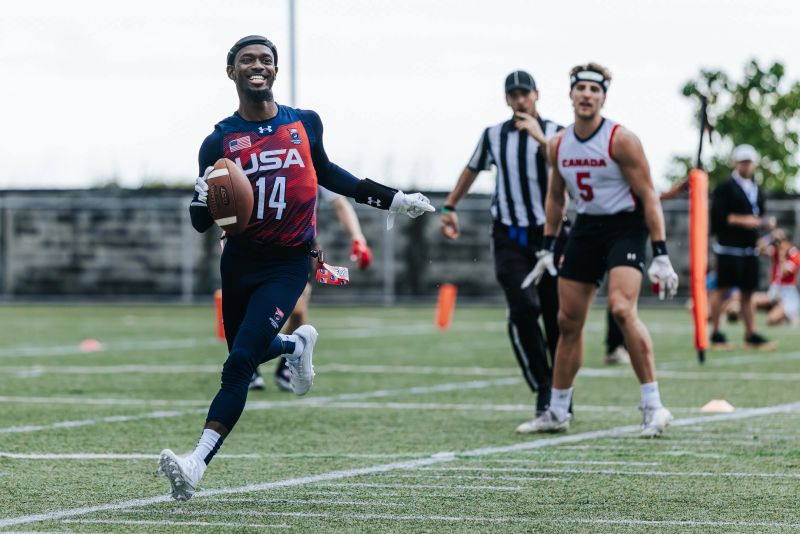
South Florida is not merely producing flag football players. It is shaping the template for elite American flag football, and USA Football’s 2026 national-team rosters make that plain. Laderrick “Pablo” Smith, a Pompano Beach product who played at Blanche Ely and turned an injury into a flag career, is the clearest example of how the region keeps feeding the sport’s top level.
South Florida built a real pipeline, not a one-off hot streak
The region’s influence starts with structure. South Florida has its own formal flag-football ecosystem, including the South Florida Flag Football League, and the Miami Dolphins have pushed the game deeper into the community through girls flag football events such as a Girls Flag Football Jamboree presented by Nike. That matters because national-team talent does not appear out of nowhere. It comes from repeat competition, coaching continuity, and a local culture that treats flag as a serious sport instead of a side activity.
That culture is also geographic. Broward County, Pompano Beach, and Miami Gardens sit inside one of the country’s most concentrated football areas, where athletes grow up around organized football year-round. In South Florida, flag football benefits from that same competitive environment, but with a format that lets more athletes stay in the game longer. The result is a feeder system with depth, not just flash.
The “groundbreakers” line fits because South Florida was ahead of the national curve before flag football became a mainstream conversation. Other parts of the country are still building youth ladders, girls opportunities, and coaching networks. South Florida already has them, and that early start is why the region keeps showing up on national-team lists.
Pablo Smith shows the pathway from tackle football to flag football stardom

Smith’s path is the kind of story that explains the sport’s growth better than any marketing campaign. He grew up in Pompano Beach, played at Blanche Ely, and then shifted into flag football after an injury changed his football road. That transition is common in flag football, where former traditional football players often find a second career in a less contact-heavy format without giving up competition.
What makes Smith notable is not just that he made the switch. He is entering his fifth year competing at the highest level, which shows that flag football can support a long runway for elite athletes. In a sport that is expanding fast and moving closer to Olympic relevance, that kind of longevity matters. It gives South Florida a second advantage: it is not only producing talent early, it is keeping talent in the game when other paths would have ended.
Smith also represents the broader talent profile South Florida keeps exporting. The region’s players are often built on classic football fundamentals, but they adapt quickly to the speed, spacing, and decision-making flag demands. That combination is exactly what national-team coaches want when they are trying to turn local standouts into world-level pieces.
USA Football’s roster cycle shows where the talent is coming from
USA Football’s initial 2026 men’s and women’s flag football national team rosters were released in July 2026, and the organization’s own roster pages show the 2026 U.S. Men’s and Women’s Flag National Team groups. USA Football describes itself as the sport’s national governing body and the only organization that selects and leads the U.S. men’s and women’s national teams, so the roster release is more than a list of names. It is the front door to the national team pathway.
That pathway includes talent ID camps and a National Team Development Program, which gives the selection process a broader base than a single tryout weekend. South Florida fits neatly into that system because it already produces players who can survive a serious evaluation environment. When a region has leagues, youth events, and a steady stream of football athletes making the jump into flag, it becomes exactly the kind of place national scouts return to again and again.
The next step in that cycle is centralized training. USA Football said the reigning men’s and women’s national teams would gather at the Chula Vista Elite Athlete Training Center in Chula Vista, California, from July 23-26, 2026 for final training camp before international competition. FOX 5 San Diego framed that camp as part of the road to another world title run, which shows how quickly this sport has become a national-team business with a clear calendar and a clear target.
Why South Florida’s early edge matters now
Flag football’s rise is changing the value of regional pipelines. As the sport gains national visibility and moves closer to the Olympic stage, the places that already know how to develop athletes will have the advantage. South Florida has spent years building its edge through local leagues, girls programming, and a football culture that keeps feeding the next wave of players into higher competition.
That is why South Florida’s role goes beyond roster representation. The region is helping define the American style of elite flag football, from how players are developed to how careers are extended. If USA Football’s 2026 rosters are the snapshot, South Florida is part of the system that made the picture possible.