South Korea hosts first disability racquetball tournament in milestone debut
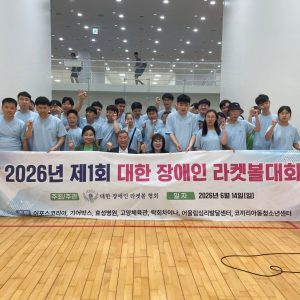
South Korea staged its first Racquetball Tournament for Athletes with Disabilities at the Ilsan Goyang Gymnasium racquetball courts on June 14, 2026, turning a long-running inclusion idea into an actual competition site. The event gave racquetball in Korea a public adaptive debut and showed how much of the sport’s growth now depends on the work around the court as much as the action on it.
The International Racquetball Federation backed that message by naming the people who helped make the tournament happen. Dr. Wangi Cho headed the IRF adaptive players committee, Kim Sung Suk served as secretary general, and Kim Soo Im led Racquetball Asia. The federation also credited organizers, officials and volunteers, a detail that matters in adaptive sport because a tournament like this lives or dies on logistics: court access, staffing, and the willingness of the governing bodies to treat disability competition as part of the calendar, not a side project.
South Korea was not building from zero. The IRF’s Asian Championships archive shows Seoul previously hosted the XIX Asia Championships in 2019, the I Eurasia Championships in 2019, and the Asia Open in 2018, evidence that the country already had tournament experience and the infrastructure to stage regional play. An IRF post from October 2024 added another piece of the picture, describing a rehabilitation racquetball program in Korea with coaching from Jo Wang-gi, Han Byeong-gu, Park Young-jae and Yoo Jun. That earlier program suggests the June tournament was the latest step in a longer runway, not a one-off showpiece.
The regional structure behind the event is just as important. The Asia Racquetball Federation says it is the governing body for racquetball federations across Asia, and the IRF says the Asian Championships are held every two years under that continental framework. With the IRF also running the World Championships every two years and the Junior World Championships annually, South Korea’s adaptive tournament fit into a broader system built to widen the athlete pool.
The federation said it looked forward to continued growth in inclusive racquetball programs and events throughout South Korea and beyond. The real test now is whether Goyang becomes the start of a repeatable pathway, with the same mix of leadership, coaching and venue support showing up again when the next athletes are ready to play.