Special Olympics flag football emphasizes inclusion with unified team rules
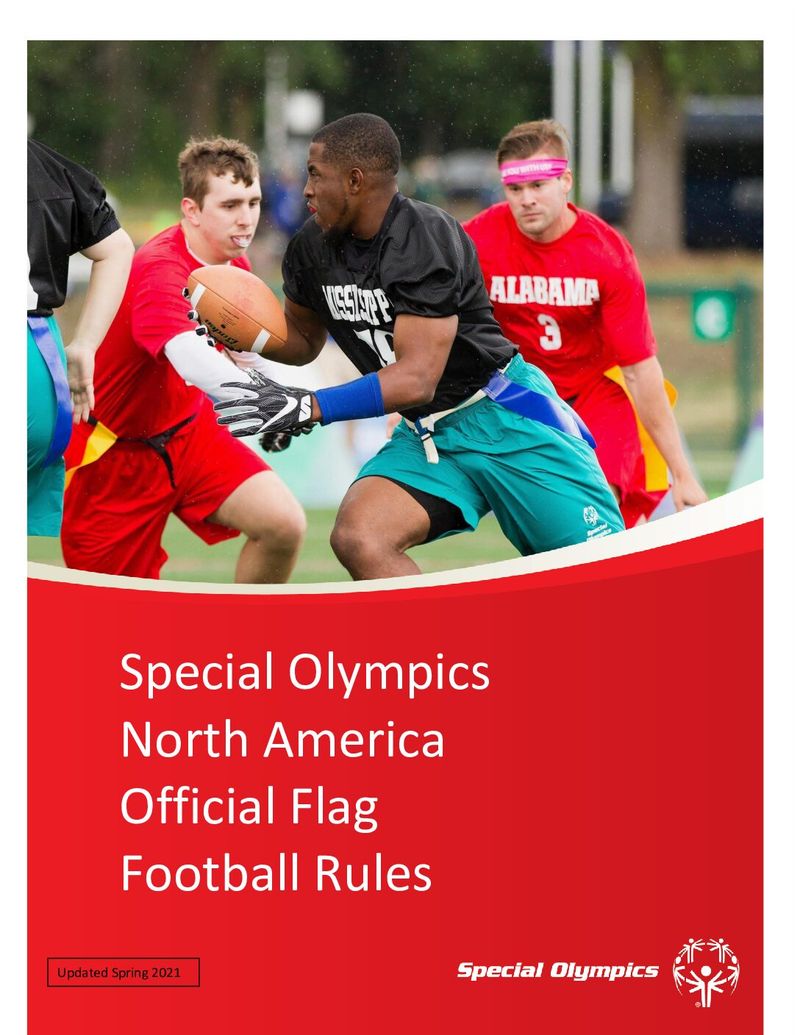
Special Olympics flag football is built to keep more athletes involved in every snap. The format trims roster size, softens the edges around injuries and disqualifications, and uses Unified Sports rules to make shared play part of the structure, not an afterthought. That design gives the game its identity: competitive, but organized around participation and fairness first.
Built for participation, not just depth
Special Olympics Washington’s local flag football rules are a clear example of how the sport is engineered. In its January 1, 2022 rules, a team roster could include a maximum of 12 players, teams were required to start with five players, and play could continue with as few as four if a disqualification or injury left a side short. That combination keeps games moving and prevents one roster problem from wiping out a team’s chance to compete.
The setup matters because it changes what success looks like on the field. Instead of rewarding the deepest bench or the biggest lineup card, the format asks teams to organize around a smaller, more manageable core. In many mainstream flag football settings, roster construction can lean toward depth and specialization; Special Olympics puts a ceiling on that logic and makes five-player continuity the standard. The result is a game that values availability, teamwork and steady participation as much as speed or open-field skill.
Unified Sports builds the team differently
Unified Sports pushes that idea further by reshaping who is on the field together. Special Olympics materials describe Unified Sports as combining equal numbers of Special Olympics athletes with non-intellectually disabled peer partners, and in the Unified flag football materials surfaced in search, equal meant at least three athletes and three partners. That is not a side exhibition or a ceremonial add-on. It is the roster model itself.
Special Olympics Delaware’s Unified Flag Football rules frame the sport as non-contact and make player safety the primary consideration. That detail matters because it explains why the format is so deliberate about shared involvement. A non-contact structure lowers the barrier to entry and makes room for athletes of different experience levels to contribute in the same game plan, rather than splitting them into separate versions of the sport.
Unified flag football is distinctive because it asks the lineup to reflect the partnership on purpose. The numbers are built in, the roles are shared, and the structure is meant to create meaningful involvement for both athletes and partners. In practical terms, that means the game is not only about who can outrun whom. It is about how a team functions when it is designed from the start to include both groups equally.
A familiar rule base, adapted for Special Olympics competition

Special Olympics did not build flag football from scratch. In Special Olympics Indiana’s 2024 flag football rules, the organization said its official flag football rules were based on the NFL’s Air It Out flag football rules, except where they conflict with Special Olympics rules or Article I. That matters because it gives the sport a recognizable football language while still preserving Special Olympics priorities.
The Special Olympics North America rulebook shows how that framework has been formalized over time. Versions were updated April 10, 2013, with later updates visible in Spring 2021 and 2024. Special Olympics Wisconsin materials noted that Special Olympics North America made significant flag football rule changes in 2021, a reminder that the sport has continued to evolve inside a consistent national structure.
That balance between familiar and adapted is the core of the format. The NFL’s Air It Out rules provide a base that football fans can recognize quickly, but Special Olympics keeps the parts that support access, fairness and safety. The result is not a stripped-down version of football for its own sake. It is a competition model built to preserve the sport’s rhythm while changing the assumptions underneath it.
The long Special Olympics frame behind the game
The flag football rules sit inside a much older Special Olympics story. The movement traces back to Eunice Kennedy Shriver’s early-1960s day camp for people with intellectual disabilities, which helped establish the idea that athletic competition could be both serious and inclusive. That foundation carried into the first national Special Olympics meet at Soldier Field in Chicago in 1968, where 1,000 athletes from the United States and Canada competed.
The scale continued to grow. The 1995 Special Olympics World Summer Games were held in Connecticut, another marker that the organization’s sports structure had become international and durable. Flag football fits into that larger system as one more sport where the rules are not just about how the game is played, but about who gets to play, and on what terms.
That is why the five-player start, the 12-player roster cap, the four-player survival rule and the Unified Sports balance are more than technical details. They are the blueprint. Special Olympics flag football uses rules as a form of access, and the sport’s competitive identity comes from that choice.