Stall count, ultimate's built-in pressure clock, shapes every possession
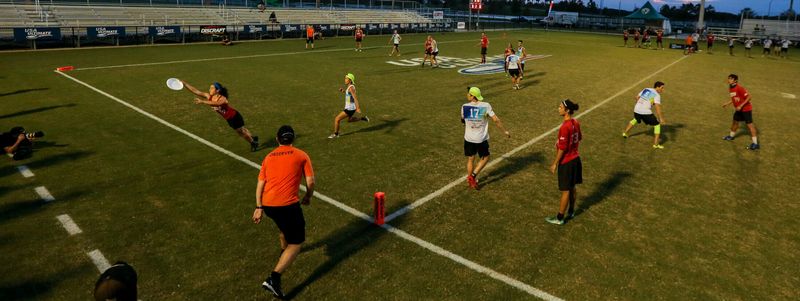
The marker says “Stalling,” counts from one to ten with at least a second between numbers, and if the thrower has not released the disc by ten, the point of attack can end in a turnover.
The count is the hidden shot clock
The defense uses that deadline to shrink options one second at a time, while the offense has to create enough movement to keep the possession alive.
The count also has to be clear. The marker must clearly communicate the stall count. If the thrower hears “stalling three,” then “stalling four,” then “stalling five,” the possession is already entering the danger zone, where one slow pivot, one jammed lane, or one late dump can turn a controlled drive into a scramble.
How a possession gets squeezed
The most revealing stall-count possessions are the reset-heavy ones. When the first throw is taken away, the offense has to swing the disc back through a dump or an inside reset, and every extra catch buys only a few seconds before the pressure starts again. That is where handler movement, quick give-and-go patterns, and dump cuts matter most, because the disc can move faster than the defense can reset its shape.
Late-stall hucks are the other classic outcome. By the time a thrower reaches the back end of the count, the defense has usually forced the offense to the edge of its structure, and a deep shot is often a bailout rather than a planned attack. The same pressure shows up in the red zone, where the field compresses, the mark can sit on the obvious throwing lanes, and the offense often needs a reset before a clean scoring chance appears.
• Stalling three to five usually means the possession is still on schedule, but the first plan may already be gone.
• Stalling six to seven often means the dump or swing has to arrive now, or the thrower is forced into a low-percentage throw.
• Stalling eight to ten is where composure matters most, because the thrower has to resist panic while the defense waits for a mistake.

The restart rules make every stoppage feel heavier
The stall count becomes even more delicate after a stoppage. Under WFDF’s current rules, if a call interrupts play, the marker adds two seconds to the stall count when play restarts, and if that restarted count reaches ten or higher, it is still a stall-out turnover. That means a call does not simply pause the pressure clock, it can make the next live throw even more dangerous.
Restart language is just as exact in USA Ultimate’s rules. The count resumes only after the required audible pre-stall warnings at ten and five seconds, and once ten seconds have elapsed, a defensive player within ten feet may announce “disc in” and continue the count.
Why self-officiating depends on the count
Ultimate’s pace-control mechanism works because the sport is self-officiated. Spirit of the Game is essential under WFDF rules, and USA Ultimate empowers players to self-officiate within that framework. The marker has to count cleanly and consistently, and the thrower has to stay composed while the count marches toward ten.
The enforcement structure has become more formal over time. USA Ultimate’s rules resources are maintained by the Rules Working Group within the SOAR Committee, and its observer materials include formal training clinics and an Observer Manual.
A rule that helped define the sport’s tempo
Ultimate’s current shape traces back to the summer of 1968, when Joel Silver, Buzzy Hellring and Jonny Hines were experimenting with rules while playing with a Frisbee at Columbia High School in Maplewood, New Jersey. The sport’s first unofficial national championships arrived in the mid to late 1970s, and the first USA Ultimate National Championships were held in State College, Pennsylvania, in 1979, with only a men’s division.