Studies show racquetball delivers cardio workout nearly as intense as squash
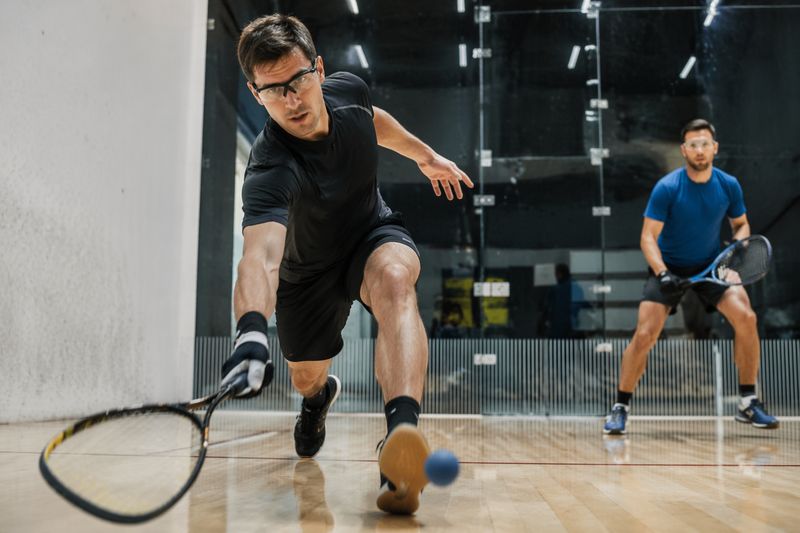
Racquetball still gets treated like a quick-hit gym diversion, but the physiology says otherwise. In a classic study of 32 adult men, researchers tracked oxygen consumption and heart rate during racquetball and squash and found racquetball’s energy expenditure was only slightly lower than squash, enough for them to conclude that either sport fits fitness development and maintenance for healthy adults.
The cardio load is real, not anecdotal
That matters because racquetball is not built around one long, steady pace. The sport’s stop-start rhythm, repeated accelerations, and rapid changes of direction keep the workload high enough that players feel it in the lungs, the legs, and the reflexes all at once. Another racquetball-specific study found mean oxygen use at about 51 percent of VO2 max during play, a clear sign that the sport demands sustained repeated effort rather than a series of isolated sprints.
The court itself explains a lot of that strain. Racquetball is played on a four-walled court where the walls, floor, and ceiling are all legal playing surfaces, so the ball can rebound from almost anywhere and force constant movement. That geometry compresses recovery time and rewards players who can transition fast, read angles quickly, and cover space without wasting steps.
What that means for conditioning and fitness
For conditioning, racquetball sits in a valuable middle ground: intense enough to tax the cardiovascular system, but varied enough to train agility, leg power, and reaction speed at the same time. The 51 percent VO2 max finding helps translate the sport into training terms. It suggests that a rally is not just a burst of effort, but a repeated workload that keeps the heart rate elevated long enough to build match fitness.
That is also why the sport has long been underestimated. A game that looks like quick exchanges off the walls can actually produce the kind of intermittent intensity sports scientists care about most. Players do not just chase calories in racquetball, they train the same systems that support field sports, court sports, and any activity that depends on rapid recovery between hard efforts.
Why opponent quality changes the workout
The load is not constant from match to match, either. A PubMed-indexed study of nine male racquetball players found that heart rate response and percent intensity were highest when the monitored player was weaker than his opponent. In practice, that means a lopsided matchup can create a harsher fitness test for the less experienced or less efficient player, who must cover more court, react longer, and survive more extended pressure.
That detail gives racquetball an edge as a competitive conditioning sport. The same court can produce different physiological costs depending on who is on the other side of the glass, which is one reason serious players talk about the game as part cardio, part leg work, and part reaction training. It is also a reminder that racquetball performance is not simply about raw speed. It is about how well a player manages repeated stress under live match conditions.
Small rule changes can alter the workload
The sport’s intensity is sensitive enough that even rule tweaks matter. A 2016 Oklahoma State study on a racquetball rule modification measured kilocalories per minute, METs, heart rate reserve percentage, moderate-to-vigorous physical activity time, and the number of hits per rally. That kind of design shows how tightly linked the sport’s rules are to its physiology: change the rally structure, and you change the energy cost.
The project was completed as a December 2016 master’s study in health and human performance at Oklahoma State University, which underlines how seriously sport science has taken racquetball’s workload. The thesis, by Jesús Alberto Hernandez-Sarabia, is a useful marker for anyone trying to understand racquetball as a measurable training environment rather than a vague recreational pastime.
A sport with a long institutional footprint
Racquetball’s place in sport history helps explain why it has stayed relevant even when it is underrated. Joseph G. Sobek invented the game in 1950, and Britannica says that by the early 21st century there were about 10 million racquetball players in more than 90 countries. That is a sizable global footprint for a sport that is often treated as niche in the United States.
The institutional timeline shows the same progression. The National Paddle Rackets Association was founded in 1952, the International Racquetball Association followed in 1969, and the sport continued to formalize its rules and identity as it spread. Those milestones matter because they show racquetball was not just a passing exercise fad. It developed a governing structure, a player base, and a competitive culture that stretched well beyond the original court setups.
How the modern game changed
Rule evolution also shaped the way the sport is played and watched. The US Racquetball Museum’s timeline notes a major change in 1984, when match scoring moved from 21 points to 15 points per game with an 11-point tiebreaker. Two years later, in 1986, a mandatory eye-guard rule was passed.
Those changes reflect a sport that has always balanced pace, safety, and spectacle. Shorter scoring can sharpen urgency and raise pressure on every rally, while protective equipment formalizes the risk built into a game where the ball can ricochet off multiple surfaces at speed. For players, that means modern racquetball asks for both explosiveness and discipline, with less room to drift through a match.
Why racquetball deserves more respect as training
Racquetball’s biggest selling point is that it combines physical qualities that are often trained separately. The heart rate data show that it can sit close to squash in energy cost, the VO2 max finding shows sustained aerobic demand, and the match-intensity study shows that the workload rises when the opponent forces the issue. Add the court’s four-wall rebound system and the sport becomes a compact test of conditioning, timing, and movement efficiency.
That is why racquetball belongs in the conversation with more widely respected training sports. It does not just burn energy; it builds the ability to repeat hard efforts, recover quickly, and keep making decisions under pressure. For players who want a workout that tests lungs, legs, and reactions at the same time, the evidence makes the case plainly: racquetball earns its place as serious competitive fitness.