Study finds 10,644 pediatric kickball injuries a year in U.S. EDs
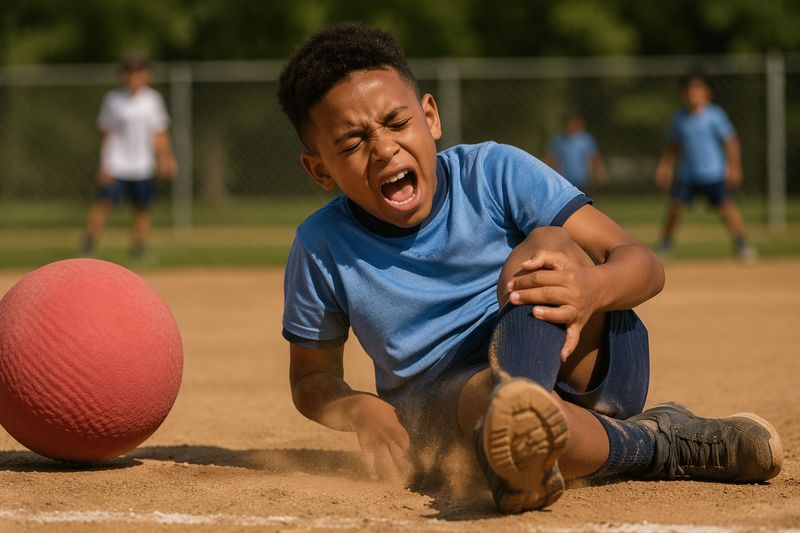
Kickball sent an estimated 10,644 pediatric injuries to U.S. emergency departments each year, and 54.1 percent of those cases happened at school. The game’s reputation as harmless recess play did not match the record: from 2000 to 2017, injury counts showed no significant change.
Kevin Pirruccio, Daniel Weltsch and Keith D. Baldwin reached that estimate by analyzing National Electronic Injury Surveillance System data in the Orthopaedic Journal of Sports Medicine, in an online paper published April 2, 2019. Their breakdown showed that sprains, strains or muscle tears accounted for 34.4 percent of injuries, while fractures made up 24.8 percent. The ankle was the most commonly injured body part at 13.7 percent, and fingers of the hand accounted for 17.1 percent.
Those numbers point to how kickball injuries happen in real school settings. The game rewards sprinting, hard stops, cuts, fielding and collisions, and it also puts children in the path of hard-thrown or hard-kicked balls. The study found that 60.7 percent of injured patients were male and 44.8 percent were ages 10 to 12, the age band most likely to be running into trouble on playgrounds, in gym class and during recess games.
The paper also put the risk in context: kickball’s annual pediatric injury burden surpassed that of some sports commonly viewed as high-risk, including martial arts and tennis. That comparison matters because kickball remains embedded in schoolyard culture precisely because it looks simple, cheap and easy to run. Protoball places the game in the early 1900s and describes it as part of the broader baseball family of baserunning games, a heritage that helps explain why it still feels familiar across generations.
The prevention playbook is already clear. The American Academy of Pediatrics says recess is a necessary break for social, emotional, physical and cognitive development, and in its May 11, 2026 policy statement it urged pediatricians to work with parents, students, school nurses and school staff to protect regular breaks from concentrated classroom demands. The Centers for Disease Control and Prevention describes recess as a regularly scheduled period of physical activity and play monitored by trained staff or volunteers, and CDC and SHAPE America have developed 19 evidence-based recess strategies plus a planning guide and template.
For schools, that means the goal is not to kill kickball. It is to keep the game moving with clearer rules, tighter supervision, safer field setup, modified balls and age-appropriate PE instruction, so a recess staple does not keep sending ankles and fingers to the emergency department.
Sources
- [1]ncbi.nlm.nih.gov
- [2]journals.sagepub.com
- [3]publications.aap.org
- [4]cdc.gov
- [5]apeas.shapeamerica.org
- [6]protoball.org
- [7]sabr.org
- [8]wikipedia.org