Sunday FUNDAY kickball reel spotlights packed late-season league night
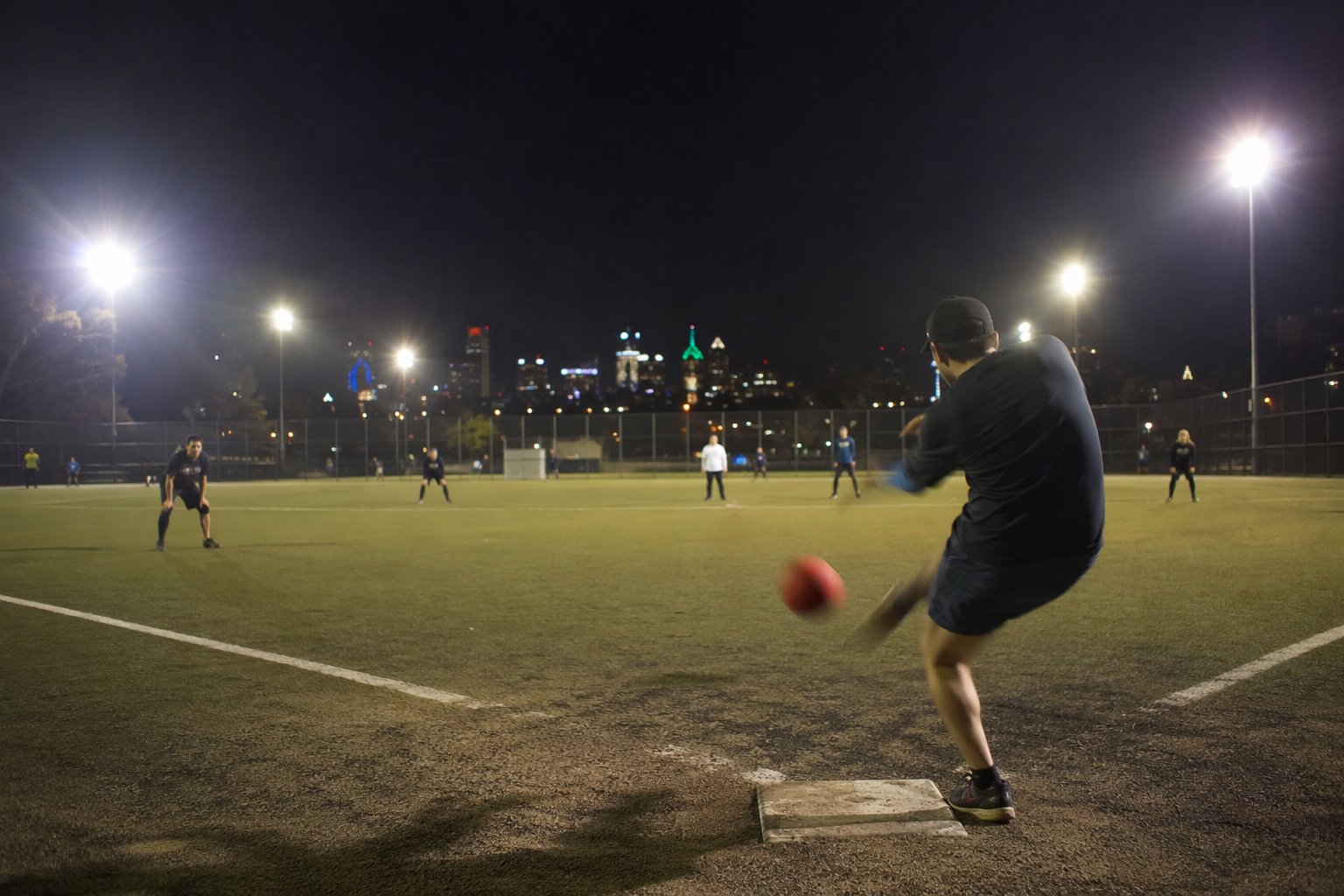
The Sunday FUNDAY reel turns a late-season adult kickball night into a small civic ritual. It was published on July 27, 2026, and it points back to games played on July 23, with first pitch set for 6:30 PM and three matchups carrying the evening from one slot to the next.
A Sunday night built on repetition
What stands out first is the structure. A single start time of 6:30 PM sets the tone, but the night is really defined by the slate that follows: BALL LIQUORS vs. PRIMED AND READY, KICKBALL MAFIA vs. PITCHES BE TRIPPIN, and BYD vs. GUMPSTER. That kind of sequencing matters in adult kickball because the league experience is not just about one game, but about a predictable rhythm that gives every team a place in the night.
The reel frames the evening as part of a season wrap, which gives the event a familiar late-summer feel. By this point in the schedule, the games are less about introducing the league and more about reinforcing it, with familiar teams, familiar start times, and a routine that players can build around. That consistency is part of what keeps a recreational league alive when the season starts to wind down.
Team names do a lot of the social work
The names alone tell you how this league thinks about itself. BALL LIQUORS, KICKBALL MAFIA, PITCHES BE TRIPPIN, BYD, PRIMED AND READY, and GUMPSTER are not generic placeholders. They carry personality, humor, and an identity that makes each matchup feel like its own event instead of a line on a schedule.
That kind of branding matters in adult kickball because the social side of the league is as important as the result. When teams have names that stick, players have something to rally around, talk about, and remember from week to week. The reel leans into that character, and it shows a league that understands the value of making every roster feel like part of the show.
Why the night keeps moving
The three-game slate also suggests a healthy level of participation. A schedule with multiple matchups on the same evening keeps more squads engaged, stretches the action across the night, and gives the league a fuller sense of occasion. Even without final scores attached to the reel, the lineup itself tells you the night had enough depth to support several clubs closing out their games in competitive settings.
That matters in a late-season context because energy can fade if the structure gets loose. Here, the opposite is true: the posted start time, the sequence of games, and the distinct team identities all keep the evening moving. The result is a league night that feels organized enough to sustain attention but casual enough to preserve the appeal of a summer social sport.
The league is bigger than one reel
Tampa Bay Club Sport’s dedicated kickball sport page shows that this kind of evening sits inside a broader recreational sports-league ecosystem. That infrastructure is what separates organized adult kickball from an informal pickup game, because it gives players a place to return to, a schedule to trust, and a league format that can survive beyond one good night.
The Sunday FUNDAY reel works because it sits inside that system. A recurring league environment creates momentum, and momentum is what keeps teams coming back as the season progresses. Players return for the game itself, but they also return for the regularity of seeing the same opponents, the same start times, and the same field-side social energy week after week.
How kickball became a league sport
The wider history helps explain why a post like this resonates. Kickball was invented in the United States around 1942 during World War II, and background sources place it among recreational games that took root as a simple, accessible format. It is now described as a game played primarily in North America and South Korea, with adult leagues giving it a more organized identity.
That shift from casual playground game to structured adult league did not happen by accident. The founding of the World Adult Kickball Association helped formalize adult kickball and gave the sport a clearer league framework. Once that happened, kickball stopped being only a childhood memory and became a social sport with schedules, team names, and a recurring calendar that could hold a whole season together.
What keeps players coming back
The appeal of this league night is easy to see in the details. The start time is clear, the matchups are memorable, and the season has enough continuity to make a late-July Sunday feel like part of a larger routine rather than a one-off event. That is the core adult kickball formula: competition, social atmosphere, and enough structure to keep the experience from drifting.
A night like this also shows how the league sustains itself as summer wears on. The games do not need elaborate framing when the teams already carry their own identity and the schedule already carries its own momentum. The league survives on repetition, and in that repetition, Sunday FUNDAY becomes less a title than a habit with a scoreboard attached.