Swiss dodgeball rules tackle the sport's toughest judgment calls
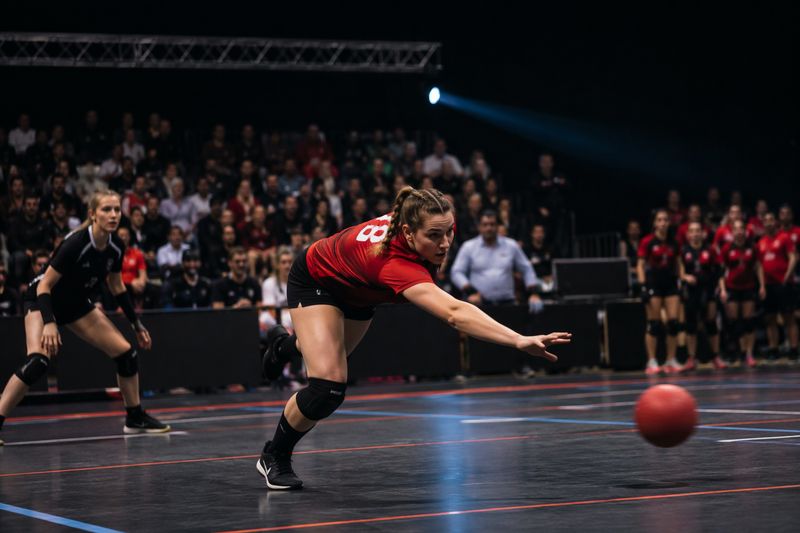
Competitive dodgeball only looks simple until the first split-second argument. The Swiss federation’s rules page makes the real job of the rulebook plain: settle the moments everyone sees differently, from a catch that may or may not have been completed to a line call made at full speed.
The rulebook is built for the arguments that decide matches
The Swiss federation’s table of contents reads like a map of dodgeball’s most disputed plays: official court diagram, playing area, equipment, participants, the match, starting the game, offensive and defensive play, eliminated players, boundaries, simultaneous play, injuries, protests, officials, code of conduct, and violations and penalties. That structure tells you exactly where the sport gets messy. It is not just about throwing and dodging; it is about deciding who was out, who was safe, and whether two actions happened at the same instant.
That matters because the most controversial dodgeball moments are rarely obvious from the stands. A ball can glance off a player, a catch can be completed under pressure, or a throw can land as a foot drifts across a boundary line. By giving separate sections to boundaries, simultaneous play, injuries, protests, and penalties, the Swiss rulebook treats judgment calls as part of the sport itself rather than as afterthoughts.
Catches, deflections, and simultaneous outs are the heart of the problem
The practical value of these rules shows up in the plays that fans and players argue about most. Did the ball hit before the catch was secured, or did the defender control it cleanly enough to erase the throw? Was a player already out of bounds when the ball arrived? Did two hits happen together, or did one happen first by a fraction of a second? Those are not rare edge cases in dodgeball; they are the game.
That is why a serious rulebook has to define offensive and defensive play with more precision than a playground version ever would. It has to tell officials when a catch cancels a hit, when a thrower remains vulnerable, and how to handle simultaneous play without letting every close exchange turn into a shouting match. The presence of a code of conduct and formal protest procedures shows the same logic at work: the sport is trying to keep the game moving while preserving credibility.
The World Dodgeball Federation standard adds hard numbers
The World Dodgeball Federation goes after the same problem with a different kind of precision. Its rules specify that the cloth format uses 5 balls and the foam format uses 6 balls, and it lists ball circumference at 17.8 cm, or 7 inches. Those are not cosmetic details. More balls on the floor change spacing, pressure, and the number of live threats a team has to track at once.
The federation’s 2022 final rules deepen that precision further. They include sections on facilities and equipment, participants, uniforms, and player equipment, with specific rules for headgear, casts and prostheses, gloves, jewelry, goggles, shoes, and other equipment and substances. That level of detail is what keeps a close game from devolving into an argument over whether a glove, a cast, or a pair of goggles changed the outcome.
The WDBF also published officiating guidance for the 2019 World Championship, revised on November 12, 2019, and credited to Alex Svetlovsky and Ian Michael Assang. That separate officiating document matters because it shows the sport is not just writing rules, it is training officials to apply them under championship pressure.
The rules keep evolving after every World Championships
The WDBF says its board reviews the rules after each World Championships and may revise them based on analysis of match videos from around the world. That makes the rulebook a living document, shaped by the same controversial plays that coaches and players argue about after the final whistle. Video analysis is where theories meet reality: if the same type of call keeps creating problems, the rulebook gets adjusted.
That approach also explains why dodgeball governance looks so formal compared with the schoolyard version most people remember. The rules are not there to make the game sterile. They are there to make sure the sport can survive the speed of modern play without leaving every disputed hit, catch, or boundary call to interpretation. When a federation updates officiating guidance after a world championship, it is responding to the exact kinds of arguments that erupt in real matches.
Different federations solve the same problem in different ways
The European Dodgeball Federation follows the same instinct for clarity. Its Rules & Regulations Version 6.1 includes an official court diagram and sections on the playing area, equipment, participants, substitutions, and retrievers. That tells you Europe’s governing body is solving the same problem the Swiss federation is solving: define the space, define the people on it, and define the actions that can change possession or end a rally.
Other rule systems show how much the sport can vary from one organizer to the next. The World Dodgeball Association’s Rules & Regulations Version 2.0.4 was released for the New York World Cup 2018, a reminder that dodgeball has developed through multiple governing bodies rather than one universal code. The result is a sport with recognizable basics, but different answers on roster size, substitutions, and how the game should flow.
Format changes the feel of the game, and the numbers prove it
Even within the same rule family, the setup can shift the entire rhythm. Dodgeball For All’s condensed WDBF rules say two teams of 6 players face off with 6 balls in play at any time. At California State University, Channel Islands, teams are made up of 6 to 10 players and six players compete on a side. Those differences change everything from spacing to substitution pressure to how crowded the court feels during a scramble.
That variety is exactly why a serious ruleset has to be so specific about what counts, what does not, and who decides. Dodgeball at this level is not chaos with a whistle. It is a codified contest built to turn the sport’s hardest judgment calls into decisions both sides can live with, even when they still disagree with them.