Team USA's dodgeball dynasty: 17 medals and two double-gold sweeps
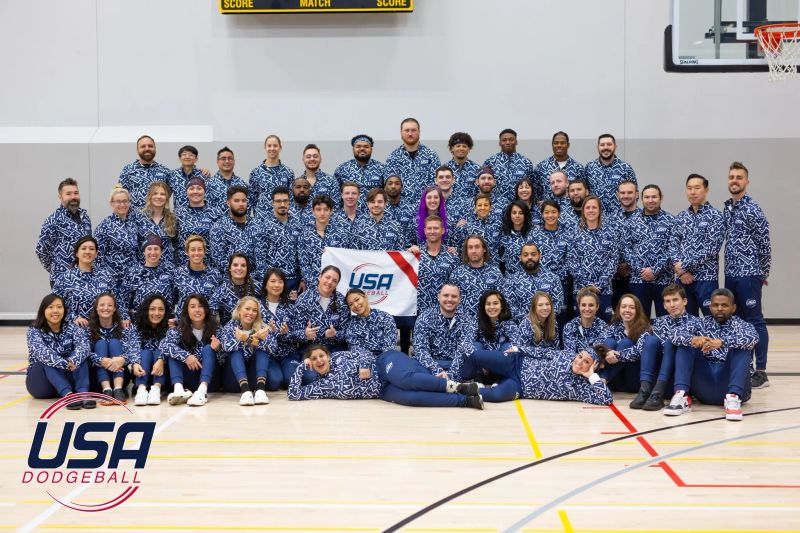
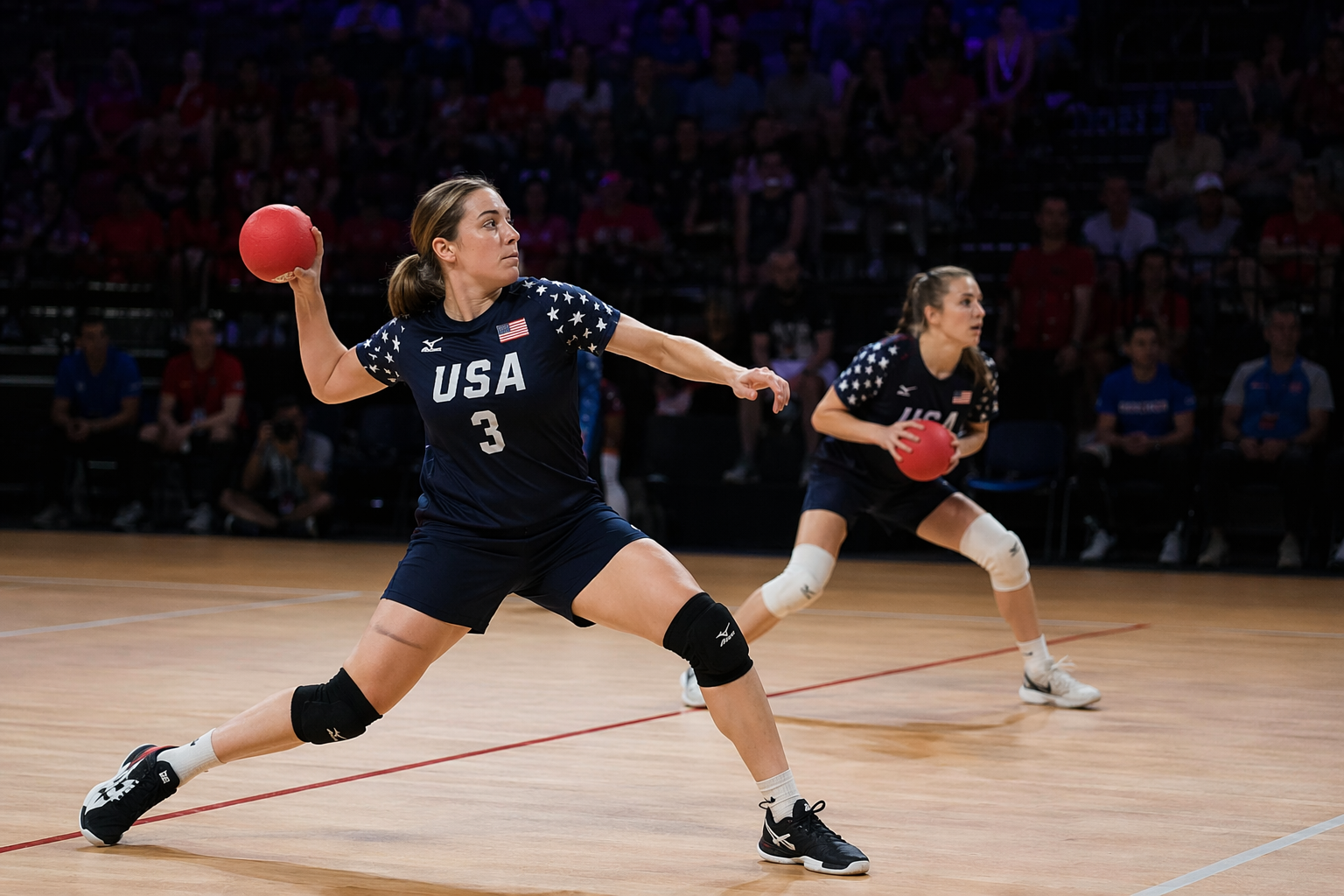
Seventeen team medals and two double-gold sweeps give Team USA dodgeball a résumé that looks less like a hot streak and more like an operating model. The men’s and women’s programs have turned the United States into the only country to sweep both gold medals twice, first on home soil in 2015 and again in Cancún in 2019.
Team USA is built to last
USA Dodgeball presents Team USA as the United States’ international representative, but the more revealing detail is how that team is assembled. The roster is not pulled from one centralized academy or a single all-star camp. Instead, players are drawn from member leagues and teams across the country, which makes the national program feel decentralized, searchable, and repeatable rather than improvised.
That matters because durability in a national program comes from more than talent. Team USA’s record shows a system that can identify players in local competition, absorb them into a national structure, and keep the level high across multiple championship cycles. The result is a program that has stayed relevant across changing hosts, changing formats, and a broader international field.
The pipeline runs through leagues, not a closed shop
USA Dodgeball says its mission is to promote and develop the sport across the United States, and it describes itself as the national governing body for dodgeball in the country. It is also a registered 501(c)(3) nonprofit, which gives the operation a formal structure that looks closer to a sport federation than a casual recreational league.
The organization’s membership model is the real engine underneath Team USA. Member organizations feed athletes into the national system, while the USA Dodgeball Premier Tour serves as the flagship event series across the country. The tour includes women’s, men’s, and coed divisions, giving athletes a regular competitive track before they ever reach international selection.
That kind of setup creates continuity. Players develop within a shared competitive culture, see the same standards in domestic events, and arrive at national-team camps with a clearer understanding of what the program expects. In a sport where reaction time, coordination, and communication decide matches in seconds, that familiarity can be as valuable as raw speed.
Selection is formal, not improvised
USA Dodgeball’s selection process says the coaching team chooses the final Team USA rosters for the World Championship and other events. That detail matters because it turns national-team selection into a defined process instead of a one-off showcase.
A formal selection pathway gives the program something that many emerging sports still lack: continuity from one championship to the next. Athletes know where the standards are, coaches know which traits translate to international play, and the national team can keep a recognizable identity even as individual players cycle in and out.
The organization also maintains a resource center that includes a national-team code of conduct, selection and eligibility policy, anti-doping policy, background screening policy, athlete safety and misconduct prevention policies, and a trans and gender inclusion and eligibility policy. Those policies do more than fill a compliance binder. They show a sport that is trying to act like a mature governing body, with rules and safeguards that match its competitive ambitions.
The world championship calendar has made dodgeball a real international sport
The Team USA medal count becomes more meaningful when you place it inside the World Dodgeball Federation’s championship structure. The WDBF says its World Championships are held every two years, and the event now spans six divisions: women’s foam, men’s foam, mixed foam, women’s cloth, men’s cloth, and mixed cloth.
That format creates a broader competitive test than a single bracket ever could. Teams have to prepare for different gender divisions and different ball types, which means the best programs are the ones that can adapt talent, tactics, and training across multiple styles. Team USA’s 17 medals sit inside that system, not outside it.
The host cities map tells the same story. Recent championships were held in Graz, Austria, in 2024 and Edmonton, Canada, in 2022. Earlier editions reached Cancún, Los Angeles, Toronto, Melbourne, Hong Kong, Queenstown, Kuala Lumpur, and Las Vegas, showing a sport with a real travel schedule and a growing international footprint.
The 2024 World Championships drew 1,400 athletes and officials from 36 countries, a scale that makes the tournament feel less like a niche gathering and more like a recurring global circuit. The federation says it was formed in July 2011, and its current rules framework for 2026 was developed with input from athletes, referees, continental confederations, national federations, and technical leaders. That consultation matters because it signals a governing structure that is still evolving while trying to standardize elite play.
A federation model that mirrors bigger sports

USA Dodgeball’s WDBF page says the federation includes member countries such as the United States, Canada, Hong Kong, New Zealand, Australia, Malaysia, Mexico, Great Britain, and Austria. It also says the WDBF aims to see dodgeball played at the highest levels of local, regional, continental, international, and Olympic competition.
That is the key reason Team USA’s dominance should be read as a systems case study. The program is not only winning medals; it is operating inside a federation model with membership, rules, qualification pathways, and recurring championships. Those are the same ingredients that help more established sports build lasting national teams.
The next major test is already on the calendar. The 2026 WDBF World Championships are scheduled for Bangkok, Thailand, from December 5-13, 2026. If Team USA wants to extend its edge, it will need the same formula that built the dynasty in the first place: a deep player pool, a clear selection process, domestic competition that stays sharp year-round, and enough international preparation to handle a sport that now travels from continent to continent with real stakes attached.
In dodgeball, the medals are the headline. The machinery behind them is the story that keeps repeating.