Three padel basics that make the sport easier for beginners
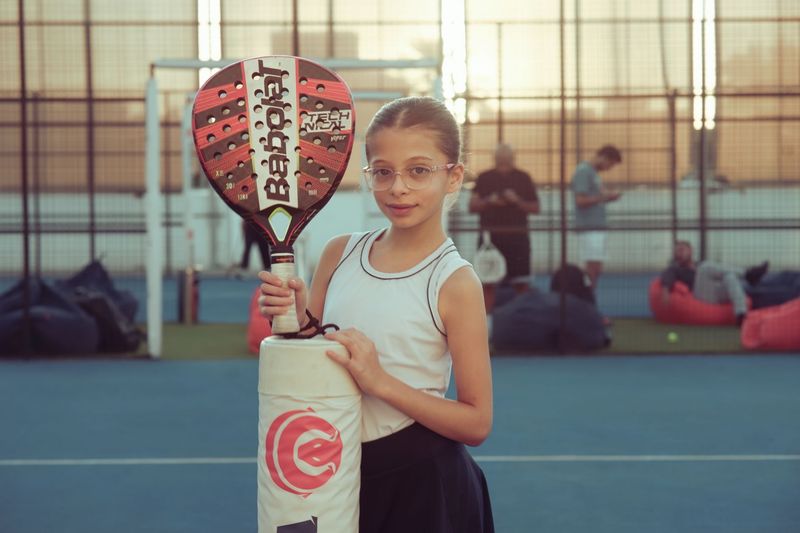
On padel’s smaller enclosed doubles court, the first-session survival guide is simple: stay compact at the net, choose control over power, and let the glass help you instead of startling you. Those habits fit the way the sport is actually played, where positioning and partnership matter as much as contact.
Start close, stay compact, and make the net your home base
The quickest way to feel less lost in padel is to simplify where you stand. Because the game is played in doubles on a compact enclosed court, a player who drifts too far back gives away the middle, and a player who crowds the tape without a plan gets exposed by a soft lob. The safer habit is to recover to a balanced position after every shot, then work with your partner to protect the center of the court.
That is why positioning and serving basics matter so much. You do not need a long technical build-up to begin making sense of the game. You need to know where to stand after the serve, how to reset your feet after a return, and how to avoid leaving open space between you and your partner.
At the net, compact means two things: keep your racket ready and keep your movement small. If you are reaching wildly for every ball, you are usually too far out of position. If you can hold shape, cover the middle, and communicate who takes the next ball, points become far less chaotic.
Choose control over power every time the rally starts to speed up
Padel rewards the player who keeps the ball alive. That is one reason beginners often improve faster than they expect, because the sport gives you time to learn patience, placement, and consistency before you worry about big winners. Resist the urge to force shots or volley everything too early.
This is where newcomers often make the sport harder than it needs to be. A hard swing does not help if the ball flies into the glass, clips the net, or hands your opponents an easy counter. A softer shot aimed to a safe zone, by contrast, buys time for you and your partner to reset and often creates a better ball on the next exchange.
The useful mental switch is to think about building the point rather than ending it immediately. That means placing the ball away from opponents, keeping returns deep enough to make them work, and accepting that some rallies will take a few more shots than you are used to in tennis. Beginners who trust consistency over flash usually settle into the sport faster and enjoy it more.
A few practical habits make that easier:

• Aim for clear targets, not pure pace • Keep the ball in play when you are off balance • Use your partner to cover space, not just to chase the same ball • Delay the smash until the ball and your position truly set it up
Let the glass work for you instead of treating it like a wall of danger
The walls are the part of padel that most often intimidate first-timers, but they are also what make the game playable and tactical. Wall interactions are central to the sport’s rhythm. Once you understand that the glass can help the ball slow down, bounce into a hitting zone, and create a more manageable reply, the court stops feeling like a trap.
The key is to watch the ball travel all the way to the back or side glass before you decide on your swing. Many new players panic and strike too early, which usually produces rushed contact and a weak result. Give yourself an extra beat, let the rebound come to you, and use the wall as part of your setup rather than something to escape.
This also connects to the other basics: serving, scoring, and recovery positioning. If you know the service rules, know how the score is counted, and know where you should be after the serve or return, the walls become one more tool instead of a mystery. Wall play is something to learn step by step, not something to fear.
A simple first-session goal: let one or two balls bounce off the glass, judge the angle, and choose a controlled reply instead of swinging early.
Why the sport is growing, and why simple beginner advice matters
The International Padel Federation’s FIP World Padel Report 2025 puts the sport at more than 35 million players worldwide and records a 15% rise in court numbers in 2025. In Great Britain, the Lawn Tennis Association released participation figures in 2025 showing record growth, a sign that more newcomers are stepping onto padel courts for the first time.
The Lawn Tennis Association credits Enrique Corcuera with padel’s 1969 invention in Acapulco, Mexico, and traces its later spread from Mexico into Europe.
Sources
- [1]malaysia.news.yahoo.com
- [2]padelfip.com
- [3]sgieurope.com
- [4]linkedin.com
- [5]babolat.com
- [6]playtomic.com
- [7]padelunitedsportsclub.com
- [8]thepadelschool.com
- [9]ltapadel.org.uk
- [10]padel1969.com