Top Padel Toulouse aims to redefine premium padel clubs in France
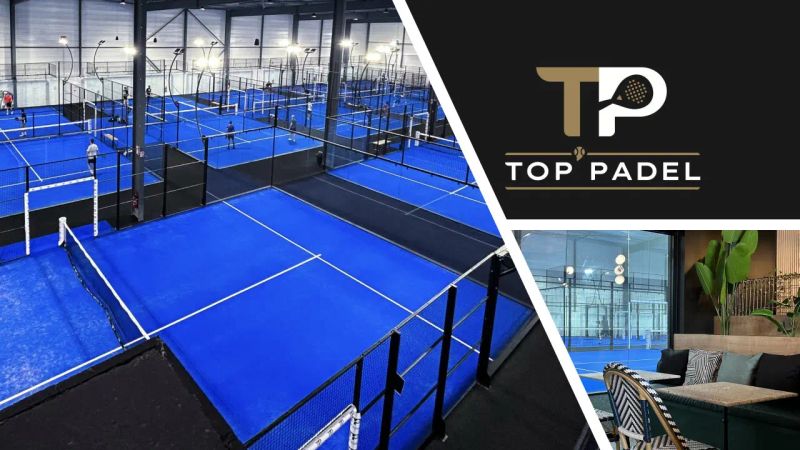
At 1 rue Isaac Newton in Plaisance-du-Touch, Top Padel is trying to make a simple court booking feel like a premium outing. The club positions itself as a premium padel center open seven days a week, built around 10 indoor courts, a large hospitality footprint and enough ancillary space to keep players and non-players on site. In a Toulouse market already crowded with clubs and courts, that is a deliberate test of whether experience can justify a higher-end model.
A premium build in the western Toulouse corridor
Top Padel says the site covers 4,400 square meters indoors and was designed to put the player at the center of the project, before, during and after matches. The playing hall includes 10 indoor courts, with 9 doubles courts and 1 singles court, and a ceiling height of 11 meters, a detail that matters in a sport where overhead space affects the feel of play. The club also points to 140 square meters of changing rooms, 330 square meters devoted to bar, restaurant and pro shop space, and 180 private parking spaces.
That layout is not just about aesthetics. Top Padel says it can host around 400 players per day, which signals a business model built on volume as much as exclusivity. The structure suggests a venue meant to hold people on site longer than a standard court rental, with room for warm-up, post-match dining, shopping and social time.
Why Toulouse is a difficult place to stand out
The timing of the project makes sense because Toulouse is already one of France’s most active padel markets. Independent club directories list roughly 20 clubs and 52 courts in the city, while another directory places the broader metropolitan area at 29 active clubs, including 14 indoor venues. Earlier padel reporting has also described Toulouse as a city that breathes the sport, helped by the fact that it hosted the World Padel Tour for two seasons and the French team championships.

That crowded backdrop explains the logic behind Top Padel’s positioning. Emmanuel Alexandre Lledo, the club’s co-founder, said the concept grew out of the frustration of not being able to book a court easily in the Toulouse area. In other words, the venue is responding to supply pressure as well as to demand for a more polished setting. The real question is not whether Toulouse wants padel. It is whether enough players will pay for, and regularly use, a premium version of it.
More than court time: hospitality, business and social play
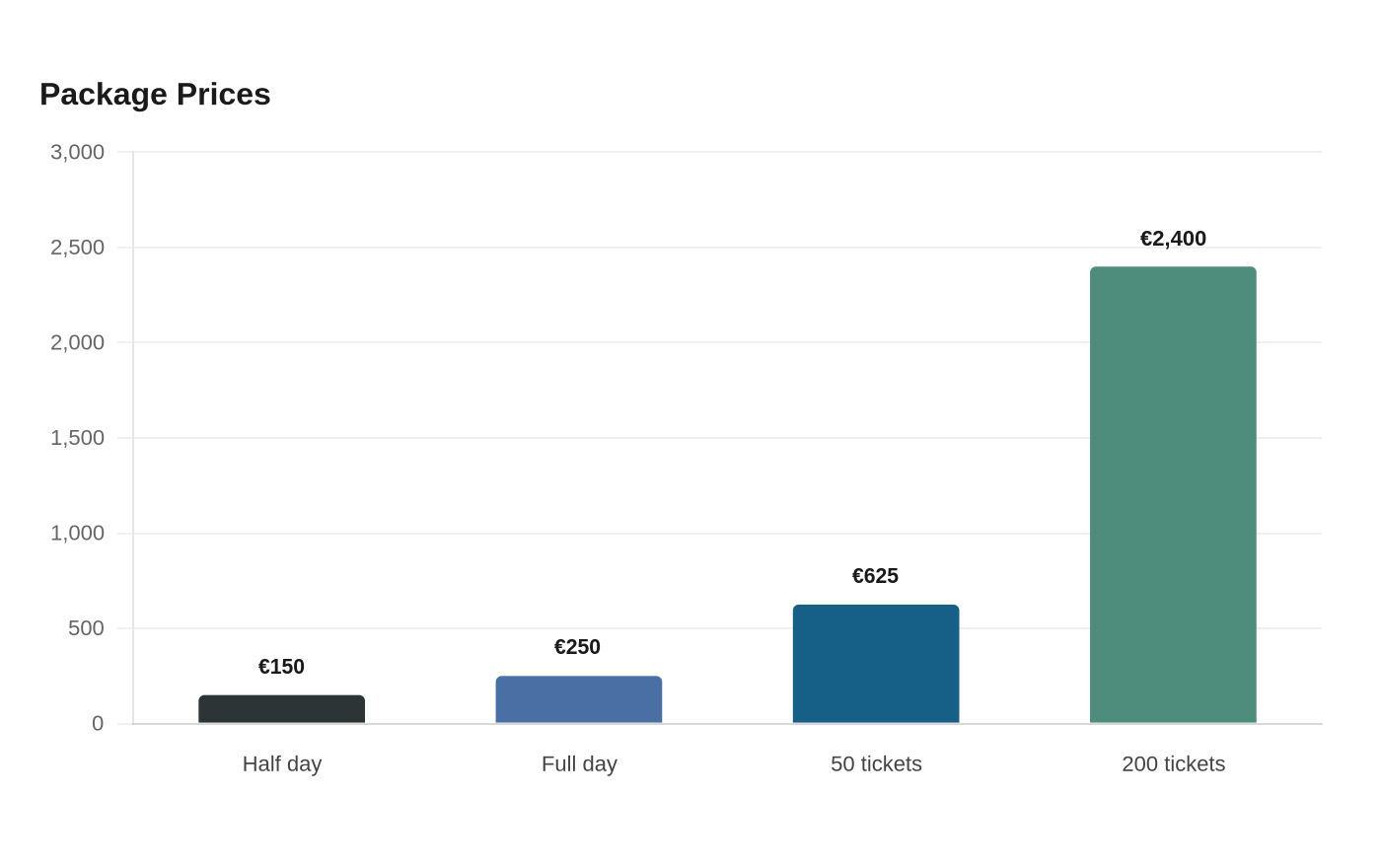
Top Padel is not presenting itself as a place for matches alone. The club advertises a 140 square meter seminar room with capacity for up to 100 people depending on configuration, alongside pricing of 150 euros for a half day and 250 euros for a full day. It also offers CSE packages, a corporate works council format, with 50 tickets priced at 625 euros and 200 tickets at 2,400 euros.
That business-facing layer matters because it broadens the customer base beyond regular players. Top Padel says it organizes tournaments, internal events, social evenings and partner-finding meetups, using its booking app and community groups to help players connect for games. The club’s events calendar also includes homologated tournaments and collective coaching sessions led by Anthony Pintenat, reinforcing the idea that the venue is built to keep people engaged even when they are not on court.
For a padel club, that mix is increasingly the product. A venue that can sell a league night, a company seminar, a social session and standard court time has more ways to fill the week than a facility that relies only on peak-hour bookings. Top Padel’s pitch is that premium is not just about nicer glass and brighter lighting. It is about making the club useful across sport, work and social life.
France’s boom makes the premium bet easier to understand
The club opens into a national market that is still expanding fast. The French Tennis Federation says 850,000 people in France were playing padel in November 2025, including 272,000 licensed players. The federation also counted 4,000 courts and 1,027 clubs in 2025, compared with only 10 clubs in 2014, a scale of growth that helps explain why operators keep entering the market with more ambitious formats.
The event calendar tells the same story. The FFT says France hosted 33,310 padel events in 2025, up from 274 in 2018. That volume supports a more segmented market, where some clubs can thrive as entry-level venues and others can pursue a premium lane. In Toulouse, where the sport is already deeply embedded, the premium lane has to be earned with more than a court count.
What Top Padel is really trying to prove
Top Padel Toulouse is less a one-off opening than a market test: can a club in an already saturated area win by being more comfortable, more social and more versatile than the competition? The club has built its answer into the design itself, from indoor volume and parking to seminar space and event programming. If that mix can keep the building active outside prime playing hours, it will show that premium padel in France can be a distinct business model, not just a higher price attached to the same old court economics.
Sources
- [1]padel-magazine.co.uk
- [2]toppadel.fr
- [3]fft.fr
- [4]padelmaps.org
- [5]regles-padel.fr