Toronto Rush build playoff case behind Pettenuzzo and Zuang

Toronto’s 5-4 start is enough to make the Rush look legitimate, and enough to keep the trap door open underneath them. Max Pettenuzzo has been the cleanest offensive answer, Eric Zuang has been the league’s turn generator, and the Rush’s +23 point differential says this is more than a lucky first-half heater. The next three games, starting Sunday in Montreal and then back-to-back home dates at Varsity Stadium, will tell you whether Toronto is building a playoff résumé or simply surviving a soft opening half.
The record is good, but the margin is the real clue
Toronto sits third in the Eastern Conference behind Boston Glory at 9-1 and New York Empire at 6-2, with Montreal Royal at 2-8 and Philadelphia Phoenix at 1-7 trailing in the table. The gap between Toronto’s +23 and the East’s top two, Boston at +59 and New York at +58, is the cleanest reminder that the Rush are in the conversation without yet being in the class of the conference leaders. That is why the record alone is not the story; the margin says Toronto has substance, but not yet enough cushion to relax.
The season context matters too. The UFA runs across North America from April through August, which means Toronto is only now entering the portion of the calendar where contender status gets sorted out, not awarded. A team can survive its opening run on streaks and favorable pairings; a team that stays in the East’s top tier usually has to prove it can keep winning when opponents know exactly what it is.
Pettenuzzo gives Toronto an offense that can win more than one way
Pettenuzzo’s value is not just volume, it is versatility. His league page shows 16 assists and six goals in four games, plus a 92.86 percent completion rate, which is the profile of a handler who can both move the disc and finish possessions instead of handing the scoring load to somebody else. Toronto does not need him to be a one-note distributor, and that matters in the UFA because the best defenses force teams into predictable possessions fast.

That versatility showed up in Toronto’s best early wins. In the 18-17 home win over Montreal on May 9, Pettenuzzo had four assists and Toronto converted 6 of 17 D-line chances. In the 21-16 road win over the Royal on May 23, he added five assists, and the Rush turned 8 of 17 defensive possessions into goals. Those are not blowout numbers, but they are the numbers of a team that can take care of business in two different buildings against the same opponent.
Zuang is the possession thief Toronto needs
Zuang’s 16 blocks put him among the league’s elite disruptors, and the number matters because blocks are the currency that turns close games into controlled ones. His player page also shows a 26 plus/minus, which fits the eye test: Toronto gets its best defensive stretches when he is forcing opponents into rushed throws, broken timing and short fields. If Pettenuzzo is the handle on the offensive side, Zuang is the reason the Rush can steal extra cracks at a possession.
The clearest evidence is Toronto’s 33-11 demolition of Pittsburgh on June 13. In that game, the Rush converted 22 of 30 D-line chances, a 73 percent rate, while piling up 21 blocks and limiting the Thunderbirds to 11 goals. That is the kind of game that changes the conversation, because it is not just a narrow escape or a tidy win over a weak opponent; it is Toronto showing it can overwhelm a team once the defense starts feeding the offense.
The good wins are real, but the elite tests have not gone away

Toronto’s two wins over Montreal already tell a useful story. The first was a one-goal escape, 18-17 on May 9, and the second was a 21-16 road win on May 23, for a combined +6 against a Royal team sitting 2-8 in the East. Those results are good enough to bank, but they also show why the Rush still have to prove the gap between themselves and the conference’s bottom tier is wider than a couple of late breaks.
The losses are the other half of the evaluation. Toronto fell 24-15 to New York on May 1, 18-16 to Boston on May 31 and 23-18 to DC on May 29, which is the shape of a team that can hang around but has not yet consistently closed against the better Eastern sides. The May 1 New York result is the most relevant benchmark for July 12, because it was a nine-point reminder of how far Toronto still has to go before it can claim equality with the Empire.
The defensive conversion numbers reinforce that picture. Toronto’s D-line conversion sat at 35 percent in the 18-17 win over Montreal, rose to 47 percent in the 21-16 road win, and then jumped to 73 percent in the Pittsburgh rout. In the 23-18 loss to DC, it fell to 26 percent. That spread is exactly why the next stretch matters so much: Toronto has shown the ceiling, but not enough week-to-week stability to call the first half a finished proof.
The schedule will decide whether the surge holds
The Rush’s next three listed games are Sunday, July 5 at Montreal, then Saturday, July 12 against New York at Varsity Stadium, and Saturday, July 18 against Indianapolis at Varsity Stadium. Montreal is the easiest read because Toronto already swept the Royal, and Montreal’s 2-8 record leaves little margin for a slip. Indianapolis is sitting at 2-4 in the Central, so that home date should also be one Toronto expects to own.
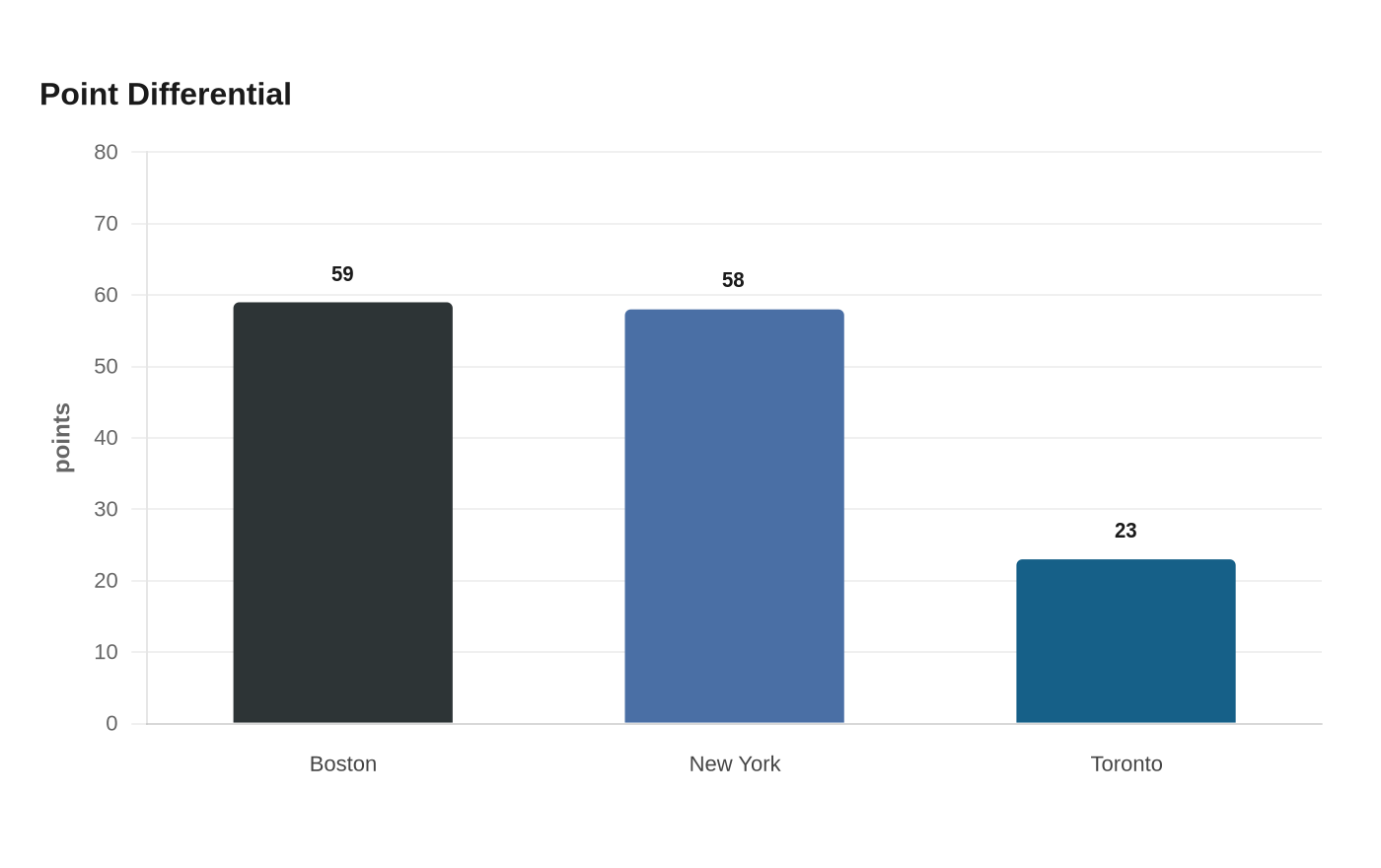
The New York rematch is the real separator. Toronto’s first meeting with the Empire was the 24-15 loss on May 1, and that is the game that will tell you whether the Rush can trade punches with one of the East’s top two teams or whether the middle of the conference still sits below them for a reason. If Toronto comes through July 5 and July 18 and looks competitive on July 12, the Rush’s playoff case gets much harder to dismiss.
Varsity Stadium has become part of the argument
Toronto’s home dates are not just about standings, they are about the scale of the franchise. The Rush were the first Canadian franchise in the AUDL, now the UFA, and Varsity Stadium remains the stage where Toronto keeps trying to make elite ultimate feel permanent in the city. Cosmos Sports and Entertainment handles ticket sales, game-day operations, social media coverage and live statistical support, which matters because the home product is now part of the pitch, not just the on-field result.
The May 9 home opener showed how that presentation is built. Fans were promised inflatable games, face painting, balloon artists, live music, prize giveaways and a beer garden, all of it wrapped around the 4 p.m. opening pull at Varsity Stadium. That kind of setup is not window dressing for Toronto; it is part of the franchise’s attempt to keep ultimate visible, credible and loud in a crowded sports market while the team tries to turn this 5-4 start into something bigger.
Sources
- [1]cosmossports.com
- [2]watchufa.com