Triay and Brea rise as women's padel power shifts again
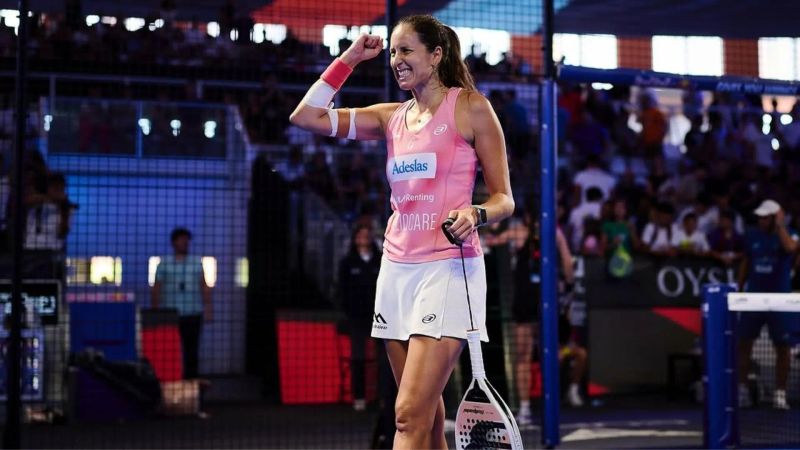
Triay and Brea have changed the top of women’s padel, but the larger lesson is sharper than a ranking swap. Sustained dominance in this sport comes from a partnership that knows its lanes, absorbs pressure and adapts faster than the pair across the net.
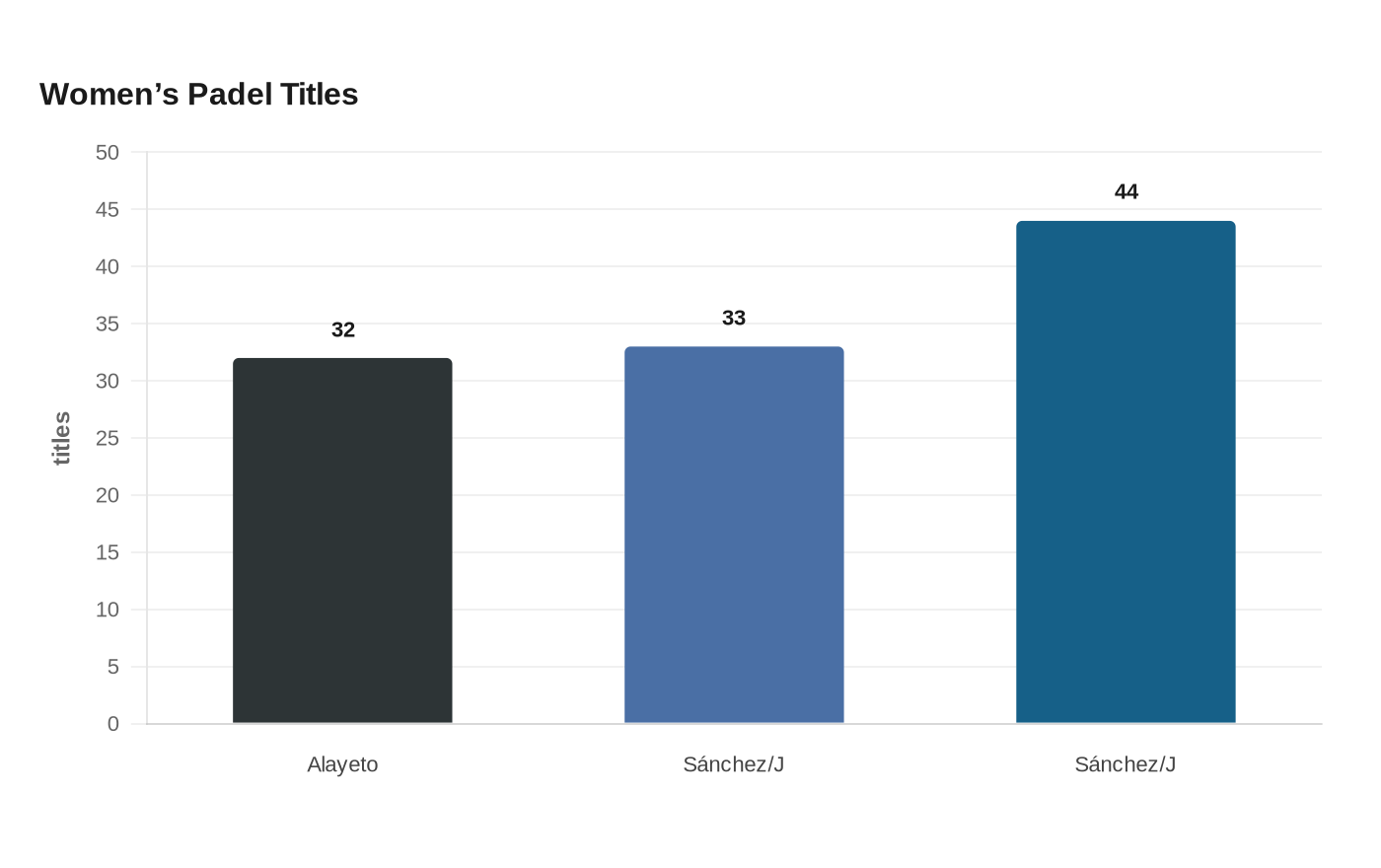
The modern benchmark still begins with Ariana Sánchez and Paula Josemaría, the duo Premier Padel has called the most successful partnership in the history of women’s padel. Their record grew in stages: 33 titles together after Finland P2, when they passed the Alayeto sisters’ long-standing mark of 32, and later 44 titles after five years as a pair. That kind of run is not just a trophy count. It shows how a women’s team can become a tactical system, a brand and a standard that every challenger has to solve.
The dynasty blueprint starts with chemistry
Sánchez and Josemaría matter because their success has been cumulative, not momentary. Their numbers tell the story of a partnership that kept renewing itself as the field evolved, from the record-breaking 33-title moment at Finland to the later 44-title total. In a sport where tiny shifts in positioning, transition defense and net control can decide a match, the great pairs are the ones that keep their internal order intact when opponents change pace.
That is the real lesson for anyone studying women’s padel: star power helps, but it does not sustain an era by itself. The best pairings build repeatable patterns, define responsibilities clearly and trust those roles under stress. Sánchez and Josemaría have turned that into a historical run, and the fact that every match can feel like another chapter in the same story is part of why their partnership has carried so much weight.
Triay and Brea won the present by winning the matchup
Gemma Triay and Delfi Brea did not simply wait for the No. 1 door to open. At Tarragona, Premier Padel said they became the first pair to take over the women’s top spot since women joined the circuit in July 2023. That change was backed by evidence, not symbolism: Triay and Brea held a 5-1 head-to-head advantage over Sánchez and Josemaría after Tarragona, which is the clearest sign that the new leaders had found a way to consistently tilt the matchup.
The timing of that breakthrough mattered too. Tarragona P1 was the 14th tournament of the 2025 season, the sixth P1 event on the calendar and the final stop before the August break. In a long season, that is exactly the kind of moment when momentum becomes leverage. Triay and Brea did not just rise in the rankings; they did it when the calendar was tightening, the summer pause was approaching and the field was looking for the pair most likely to control the final stretch.
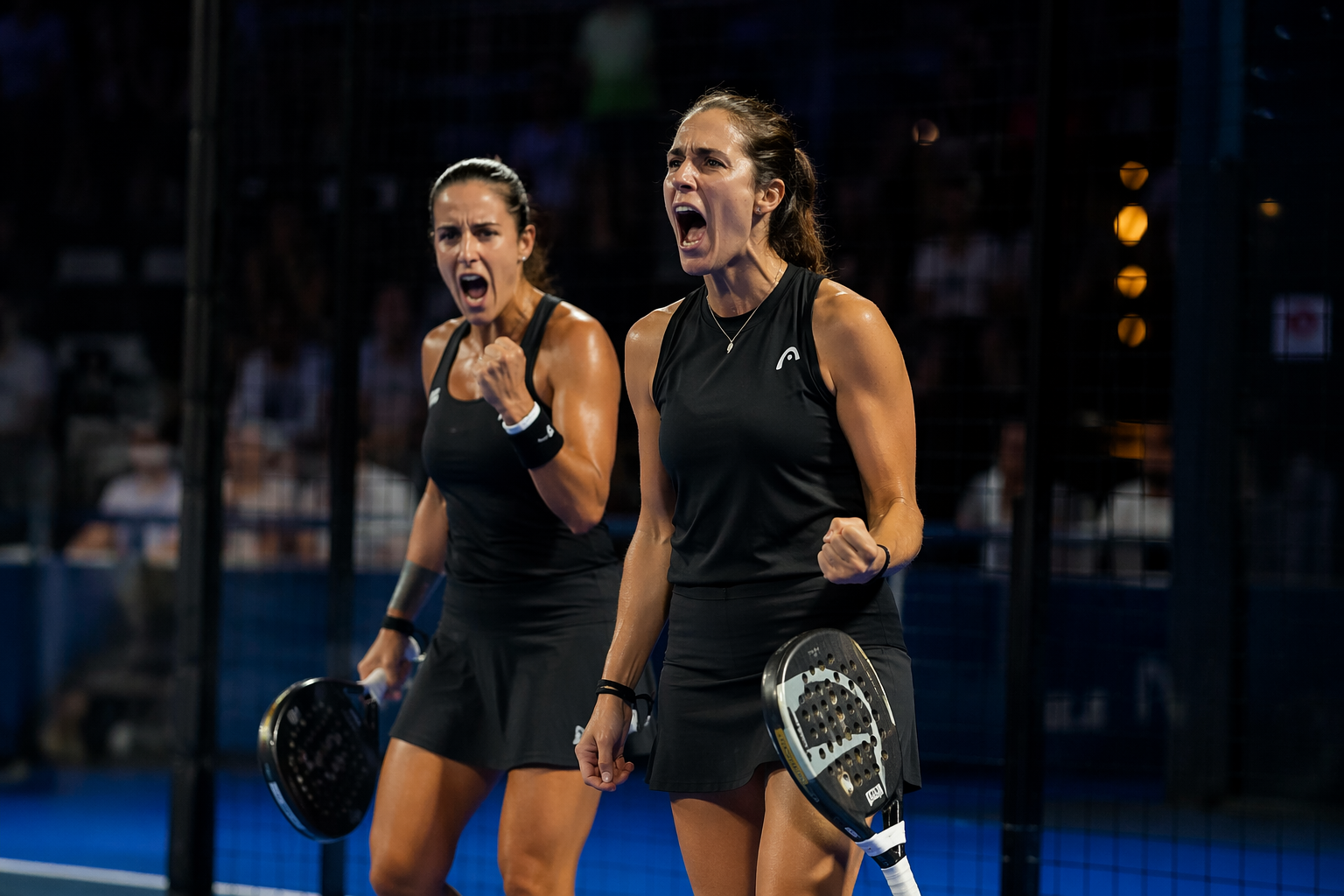
Their advantage has the feel of a pair that wins by balance. Triay brings the kind of all-court authority that can anchor pressure points, while Brea gives the partnership the speed, aggression and court coverage needed to keep opponents from settling into rhythm. The result is not a one-player rescue act. It is a two-player structure that makes it harder for rivals to pick a weakness and easier for Triay and Brea to turn a tight scoreline into a controlled finish.
Roland-Garros showed how pressure is managed at the highest level
If Tarragona proved the switch at the top, Roland-Garros showed that Triay and Brea can carry it onto the biggest stage. They won their seventh title of the 2025 season and their third Major of the year, completing a flawless Major campaign in Paris. That level of consistency matters more than a single peak because it shows the pair can repeat its best tennis when the stakes are highest.
The defining individual milestone belonged to Triay. Premier Padel said she became the first player in circuit history, male or female, to win all four different Majors consecutively. Those wins came in Mexico 2024, Qatar 2025, Italy 2025 and Paris 2025. That sequence says something important about dynasty-building in padel: greatness is not only about having a dominant partner, but about arriving at each major venue with the same clarity, the same emotional control and the same willingness to adjust to a different opponent or setting.
Pressure management is where the best pairs separate from a hot streak. Triay and Brea have shown that they can translate ranking pressure into performance instead of letting it become noise. Their 5-1 head-to-head edge over Sánchez and Josemaría is not just a number for the standings page. It is a sign that they have learned how to keep their best patterns intact when the match matters most.
The next generation is already pressing on the old guard
The rivalry at the top is also taking place inside a wider generational squeeze. Premier Padel highlighted Alejandra Salazar and Martina Calvo as a landmark pairing for another reason entirely: Calvo became the youngest finalist in history at 17 years and 3 months, while Salazar became the oldest at 39 years and 10 months. That contrast is more than a curiosity. It shows how compressed the women’s field has become, with the youngest challengers and the most experienced veterans meeting in the same late rounds.
For the elite pairs, that means adaptation has become non-negotiable. New combinations can challenge established ones faster than before, especially when a younger player brings pace and fearlessness while a veteran brings pattern recognition and match control. The Salazar-Calvo final illustrated how a top-level partnership can bridge generations, and why the strongest teams are usually the ones that can evolve without losing their identity.
The business side is growing around the rivalry
The rise of these pairings is unfolding inside a tour that is expanding in scale and structure. Premier Padel and the International Padel Federation announced the 2026 Qatar Airways Premier Padel Tour calendar would feature 26 tournaments across 18 countries, with nearly 75 percent indoors. That spread matters because it signals a more standardized global circuit, one where the best partnerships must be ready to win in different cities, different atmospheres and different venue conditions.
The sport’s leadership is also trying to keep pace with that expansion. Premier Padel said its steering committees met in Barcelona with players, coaches, promoters, commercial partners, broadcasters, officials and independent members to review the 2025 season and discuss the 2026 calendar, scoring, competition regulations, promoter financial sustainability, commercial growth, broadcast expansion and strategic partnerships. Those are the issues that decide whether women’s padel remains a collection of standout events or becomes a durable, global product.
That broader push reached beyond the tour itself in June 2026, when Qatar Sports Investments led a United Nations event focused on women in sport and the continued professionalisation and growth of women’s padel. The message is clear: this is no longer just about who owns the No. 1 ranking. It is about building a stable ecosystem where the best partnerships can become enduring institutions, not one-season bursts of brilliance.
The women’s game is moving because the strongest pairs are proving that chemistry, role definition and adaptability outlast individual flash. Sánchez and Josemaría set the standard; Triay and Brea are showing how to take it over.