Troy pickup session highlights quadball’s grassroots growth
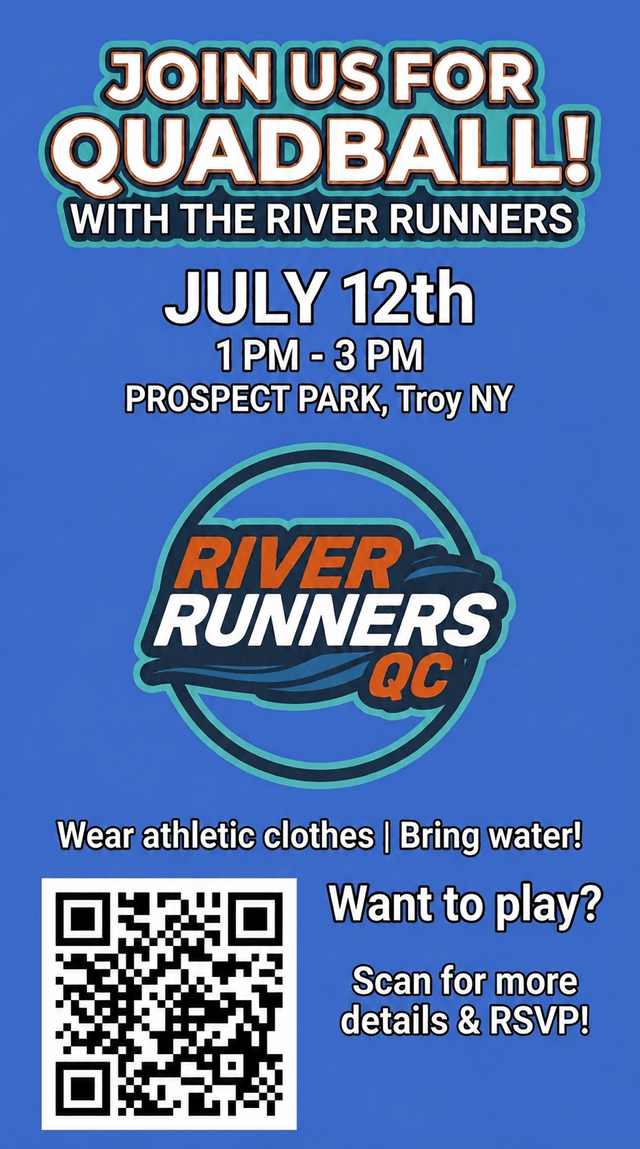
The Troy pickup at Prospect Park Road on Sunday, July 5, 2026 ran from 1:00 p.m. to 3:00 p.m., and its selling point was simplicity: River Runners Quadball Club offered a low-risk, no-stakes way to play, learn or sharpen skills.
The listing made clear that newcomers did not need to arrive prepared. River Runners said it had a full set of hoops and equipment ready to go, which turned the session into a ready-made on-ramp for first-timers and an easy return point for players who have drifted away from organized competition. The post also pointed players to the club’s Instagram account, @518riverrunners, a reminder that much of quadball’s day-to-day organizing still happens through social channels and recurring calendar posts rather than through large marketing campaigns.
That local model matters because US Quadball still relies on both big-stage events and small weekly touchpoints to keep the sport moving. US Quadball describes itself as a nonprofit national governing body that organizes events and programs to build community and empower adult and youth athletes of all identities. Its annual US Quadball Cup remains the season’s main event, drawing more than 50 teams and more than 1,000 athletes each year, but the sport’s real access point is often a pickup session like the one in Troy, where a player can show up, borrow gear and get on the field immediately.

That pathway has become more important as quadball continues to define itself in the years after its modern birth. US Quadball traces the sport’s first game to October 9, 2005, at Battell Beach at Middlebury College, and says thousands of players, coaches, volunteers, officials and supporters have shaped the game since then. The name change to quadball, announced by US Quadball and Major League Quadball on July 19, 2022, gave the sport a new public identity, but local sessions are what make that identity visible in weekly use across places like Troy.
US Quadball’s own membership pages frame the same point from a practical angle, saying the organization helps connect new players with teams near them. Its college page also encourages people to join, start or coach a team. The Troy listing fit that pattern, and its place on a summer calendar that also included other pickup dates and a July 10 youth clinic in Queens showed how the sport is building from the ground up, one accessible session at a time.
Sources
- [1]usquadball.org
- [2]mlquadball.com