Trump Executive Order Shakes Up College Sports: NCAA Gains Expanded Power, NIL Faces New Limits
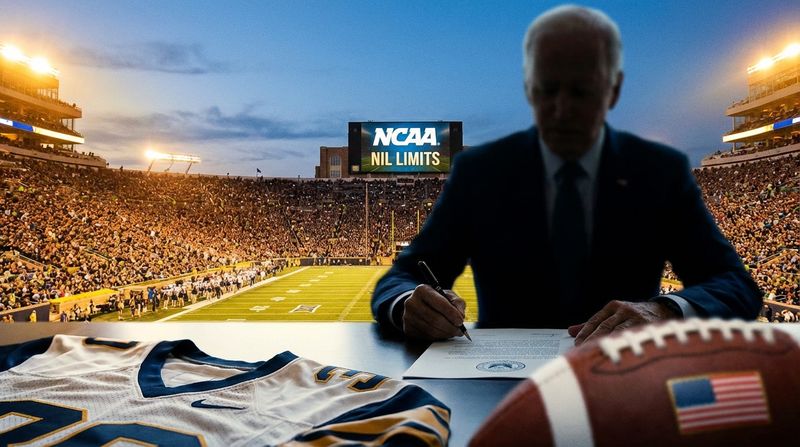
President Trump signed a landmark executive order on April 3, 2026, fundamentally altering the landscape of college sports by expanding the NCAA's regulatory authority and introducing new federal guidelines for Name, Image, and Likeness (NIL) compensation and athlete transfers. The move, reported widely across major outlets, signals a pivotal moment for NCAA governance and student-athlete rights as national debate over NIL and transfer policies intensifies.
The executive order, which was anticipated throughout the day according to NBC Sports and Fox News, aims to address concerns about instability and inconsistent enforcement in college athletics. The White House framed the order as a response to growing calls for clarity amid rapid changes brought by NIL deals and transfer portal activity. Multiple sources confirm the order directs federal agencies to collaborate with the NCAA, giving the organization expanded power to create and enforce rules in areas previously contested between state legislatures, conferences, and schools.
- NCAA Regulatory Expansion: The order empowers the NCAA to set national standards on NIL compensation, transfer limits, and eligibility, overriding conflicting state laws and school policies.
- NIL Oversight: Fox News and CBS News highlight that the executive order seeks to "regain control of NIL," mandating stricter guidelines on athlete endorsements and compensation agreements.
- Transfer Portal Restrictions: On3 reports that the order introduces new federal-backed limits on athlete transfers, including potential waiting periods and eligibility requirements intended to "stabilize college sports," as described by LancasterOnline.
In recent years, the explosion of NIL deals has fueled a patchwork of regulations across states, creating confusion for athletes and programs. The NCAA has struggled to enforce uniform policies, while high-profile transfers have sparked controversy and calls for reform. The Trump administration's executive order is designed to create a centralized framework, with enforcement falling to the NCAA and supported by federal agencies.
According to CBS News and AOL.com, the order marks a significant shift, expanding the NCAA's jurisdiction and giving it the ability to issue penalties for violations of NIL and transfer rules with federal backing. The move is expected to streamline compliance, but could face legal challenges from states that have enacted their own NIL laws.
- Multiple sources agree the executive order:
- Expands NCAA control over NIL and transfers
- Establishes federal support for NCAA enforcement
- Seeks to "stabilize" college sports amid rapid changes
- Overrides conflicting state NIL regulations
Fox News reports that the order is a direct response to mounting concerns about the "wild west" nature of NIL deals, where athletes can sign lucrative endorsements with minimal oversight. NBC Sports notes that transfer portal activity has also raised questions about competitive balance and athlete welfare. The new federal guidelines are intended to address these concerns by standardizing rules and reducing uncertainty.
On3 emphasizes that transfer limits will be a key component, potentially restricting the number of times an athlete can switch schools without penalty. While details are still emerging, early indications suggest a combination of waiting periods and eligibility reviews for transfers, which could impact roster management and recruiting strategies across college sports.
As reported by LancasterOnline, the executive order is positioned as an effort to "stabilize college sports," with the administration arguing that a unified approach will benefit athletes, coaches, and schools. However, the NCAA's expanded power may spark debate over athlete rights and state autonomy, particularly in states with progressive NIL laws.
The full impact of the executive order will depend on how the NCAA implements new standards and how federal agencies support enforcement. Legal experts anticipate challenges from states and athlete advocacy groups, but for now, the NCAA is poised to take a more active role in governing college sports under the new federal mandate.
For more on athlete transfer rules and NIL regulations, visit the NCAA's official homepage and their college athletics policy page.
Sources
- [1]AOL.com
- [2]LancasterOnline
- [3]foxnews.com
- [4]NBC Sports
- [5]On3
- [6]CBS News