Twinsburg turns backyard Wiffle Ball into world’s largest tournament
What started as a winter 2013 publicity stunt now has its own bracket, rule book and return date. The World Series of Wiffle Ball is scheduled for Aug. 13-16, 2026 at Liberty Park in Twinsburg, Ohio, and the tournament still leans into the line that built its identity: “If you build it, they will come.”
From field-fundraiser to signature event
The origin story matters because it explains why this tournament lasted. The World Series of Wiffle Ball was conceptualized by the Twinsburg Baseball League Board of Directors as a way to raise awareness for the need for a sports field, and organizer Rich Swerbinsky later put it bluntly: the whole thing began as a joke while fundraising for that field. He also described it with a kind of tongue-in-cheek pride that fits the event’s personality, calling it “America’s greatest event.”
That mix of purpose and play is the foundation of the tournament’s staying power. It was never built as a one-off novelty. It was built as a repeatable annual championship, and the current site reflects that with dedicated pages for About, Rules, Sign Up, History, Photos, Contact, Store and Updates. That is the footprint of a real sports property, not a backyard stunt that outgrew its welcome.
The numbers show how fast it scaled
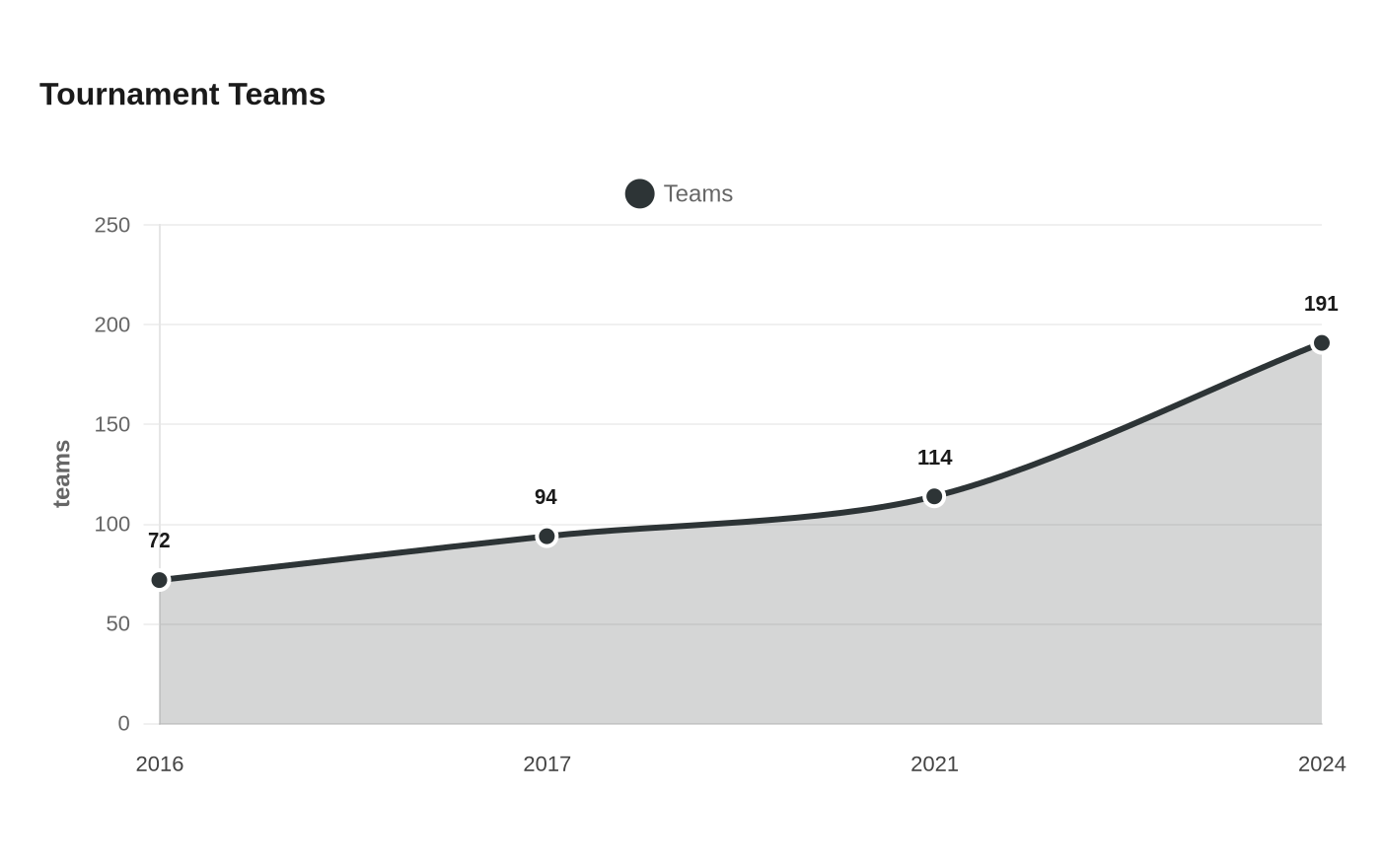
The growth arc is what turns the Twinsburg story from local color into a legitimate sports case study. A 2018 SportsEngine listing said 94 teams from five states played in 2017, up from 72 teams in 2016, and organizers were expecting well north of 100 teams that year across five age divisions: 7-9, 10-12, 13-15, 16-29 and 30-plus. In 2021, after a year on hiatus, News 5 Cleveland reported 114 teams across six age divisions at Liberty Park in a two-day tournament.
By 2024, cleveland.com said the event had grown both in participants and in the number of days it is held. Other tournament materials pushed the scale even higher, with the event reaching 191 teams in 2024 and promotional materials later referencing more than 200 teams. That is how a niche local idea becomes a destination: the field remains accessible, but the demand keeps climbing.
Why Liberty Park works
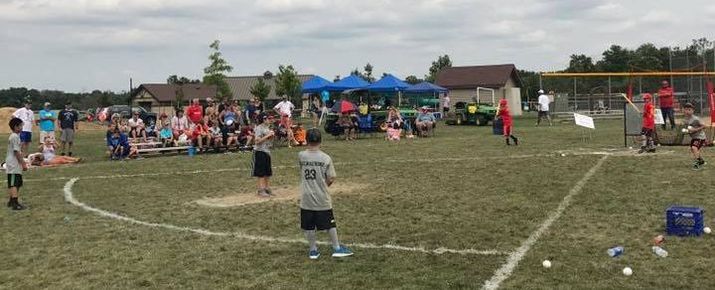
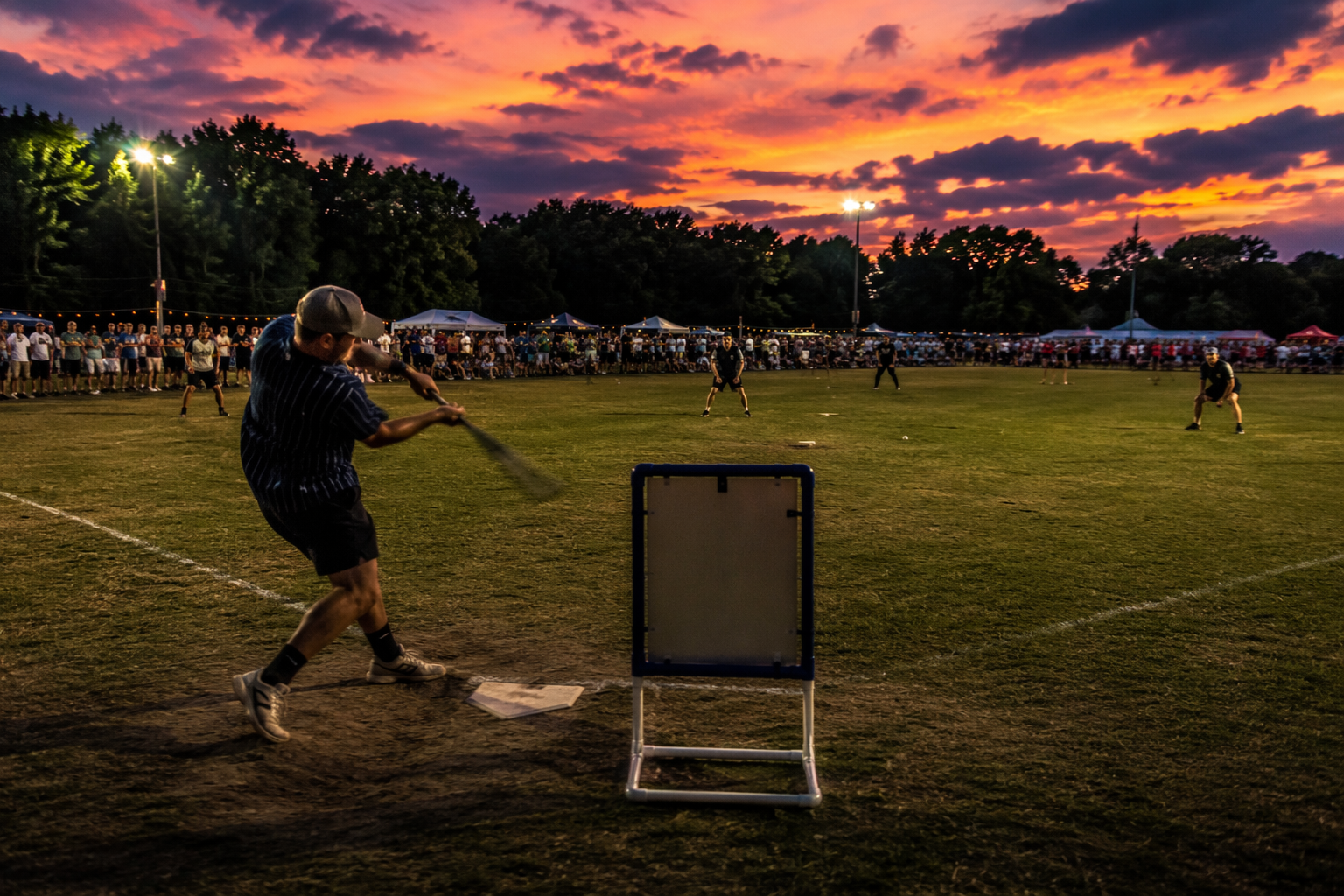
Liberty Park is more than a venue. It is the stage that lets the event feel official without losing its homemade edge. Official rules from 2019 and 2021 say three Wiffle Ball fields are built in the outfields of fields 1, 2 and 3 at Liberty Park, creating nine tournament fields total. That setup lets the event handle the volume without turning into chaos, and it gives the tournament a visual identity players remember.
The field dimensions make the game feel both familiar and specific. The 2021 rules set the singles line at 42 feet, the doubles line at 65 feet and the home run fence at 90 feet, with modified dimensions for the 7-9 division. Those numbers matter because they shape the style of play. A 42-foot singles line rewards contact and placement, while a 90-foot fence keeps power in the game without letting it overwhelm skill.
The details get even sharper in the 2024 updates. Strikes must strike and “ping” the metal, while hitting the PVC pipe counts as a ball. That kind of rule clarification says a lot about where the tournament is now. Once a game grows this large, the edges have to be precise.
The appeal is bigger than nostalgia
Wiffle ball works because everyone already knows the basic language of the sport. The Twinsburg version adds enough structure to make that language feel like a championship: uniforms, brackets, age divisions, field geometry and a venue built for repeat use. That is the key turn from backyard game to destination event. It still feels accessible, but it also has the stakes and ceremony that make people return.

The tournament’s own recaps have pointed to the culture it creates around the game. People build backyard fields, make homemade strike zones and treat the tournament like a community ritual. That ripple effect matters as much as any individual title run. Once a local event starts shaping how people play at home, it has moved beyond promotion and into tradition.
A fundraiser with real local impact
The civic side of the story is easy to miss if you only look at the bracket size. Local coverage in 2023 said every local baseball program needs fundraisers to keep costs low, maintain fields and keep everything running, and Twinsburg found a way to do that while making the event fun. The same coverage said the tournament benefits youth baseball in Northeast Ohio.
That is the part that gives the event staying power in the city. It is not just a weekend of games. It is a mechanism for supporting youth baseball, and that gives residents a reason to treat the tournament as part of the town’s calendar rather than a novelty passing through it.
Part of a larger Wiffle ball world
Twinsburg also sits inside a broader organized Wiffle ball ecosystem. The World Wiffle Ball Championship has its own history and Hall of Fame, which helps frame the Twinsburg tournament as part of a real niche-sports culture rather than an isolated local stunt. That context matters because it explains why the “world’s largest” label resonates. It is not just a marketing line. It is a claim backed by scale, structure and a community that has kept showing up.
The formula is clear now: a fundraising idea, a permanent home at Liberty Park, strict enough rules to legitimize the competition and enough local buy-in to keep the field full. That is how Twinsburg turned a backyard pastime into a place Wiffle ball players circle on the calendar.