Ugandan village quadball team dreams of World Cup debut
In Katwadde, a clearing ringed by banana trees about 135 kilometres from Kampala, young Ugandan athletes sprinted after a ground-based snitch with broomsticks between their legs, chasing a World Cup dream as much as the ball. The village side plays quadball, the sport formerly known as quidditch, and its case for inclusion is simple: the talent is there, but the airfare is not.
Quadball arrived in Katwadde in 2013 through John Ssentamu, a primary-school teacher at Good Shepherd Primary School who said he first noticed the game after reading over someone’s shoulder on a bus and then searching Google. “The word ‘Quidditch’ meant nothing to me, neither in English nor in any other language, so I went on Google,” Ssentamu, 47, said. He built the team around the school, turning a rural field into a place where players learn the sport’s seven-on-pitch structure, its 21-player roster limit and the rule that no more than three players of the same gender can be on pitch at once.
The sport itself has moved far beyond its Harry Potter origins. The International Quadball Association renamed quidditch to quadball in July 2022 and says the game is now played by nearly 600 teams in 40 countries. Its World Cup, the premier event for elite national teams, has been staged every two years since 2012, with the 2025 edition held in Brussels and Tubize, Belgium, from July 11 to 13, and the 2027 tournament set for London from July 23 to 25.
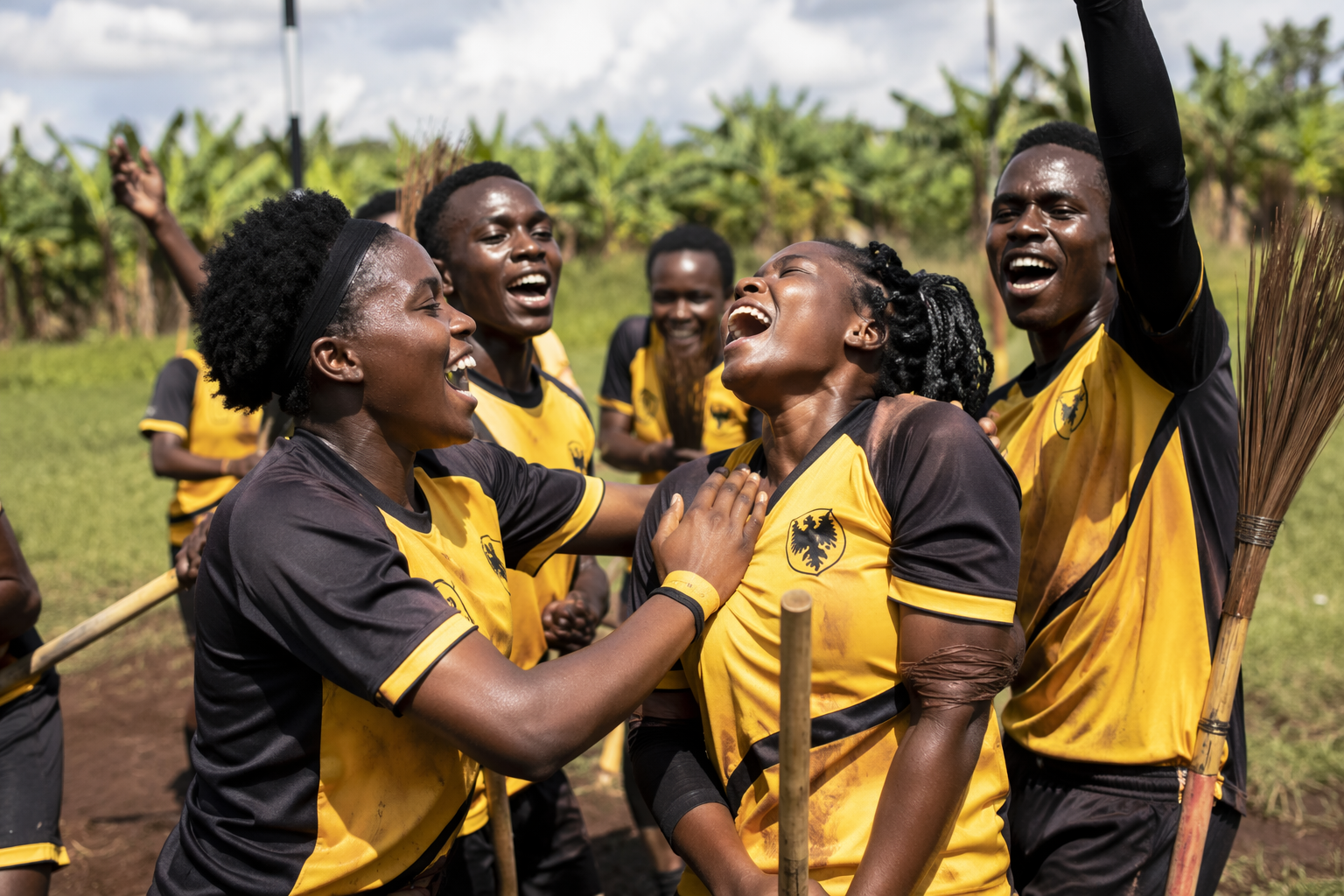
That scale has not yet translated into access for Katwadde. The village team has had invitations but still lacks the funds to travel, leaving it on the outside of the sport’s central stage even as quadball expands into new countries. In Uganda, the pathway is only beginning to take shape: one report said the country’s first national tournament was held in 2023, and Quadball Uganda also appeared at the Ubuntu Sports Festival in 2025.
Ssentamu’s ambition reaches well beyond one school field. He wants to see a Ugandan team at the World Cup, and said it “would be a revelation for the world.” For now, Katwadde shows both sides of quadball’s global growth: a sport that is genuinely spreading, and a future that still depends on extraordinary personal effort to make it from a village in Lwengo District to the game’s biggest stage.
Sources
- [1]x.com
- [2]france24.com
- [3]newvision.co.ug
- [4]taipeitimes.com
- [5]thestar.com.my
- [6]iqasport.org