UK padel growth hinges on weatherproof courts as rain cuts playtime

Britain now has more than 1,825 padel courts, but annual playing time at outdoor venues falls by 30% to 50% because of rain, wind, damp conditions and cold temperatures. Weather is no longer an inconvenience. It is a direct test of whether an operator can keep bookings, retain members and earn back the capital it has put into the site.
Weather is now a commercial variable
The fastest-growing lesson in UK padel is that uncovered courts do not just lose sessions when the rain starts. They lose revenue, rhythm and repeat use, especially at sites that are partially exposed and must hold onto players across a full year. In a market that has expanded this quickly, a club that cannot offer consistent access can find itself fighting cancellations, shorter visits and weaker social traffic even when overall demand remains strong.
That pressure is sharper in Britain than in warmer padel markets because the operating model has to absorb more than bad weather on a single afternoon. Clubs need drainage that clears water quickly, lighting that extends usable hours, and layouts that let members stay on site rather than leave as soon as play stops.
Demand has surged faster than the infrastructure
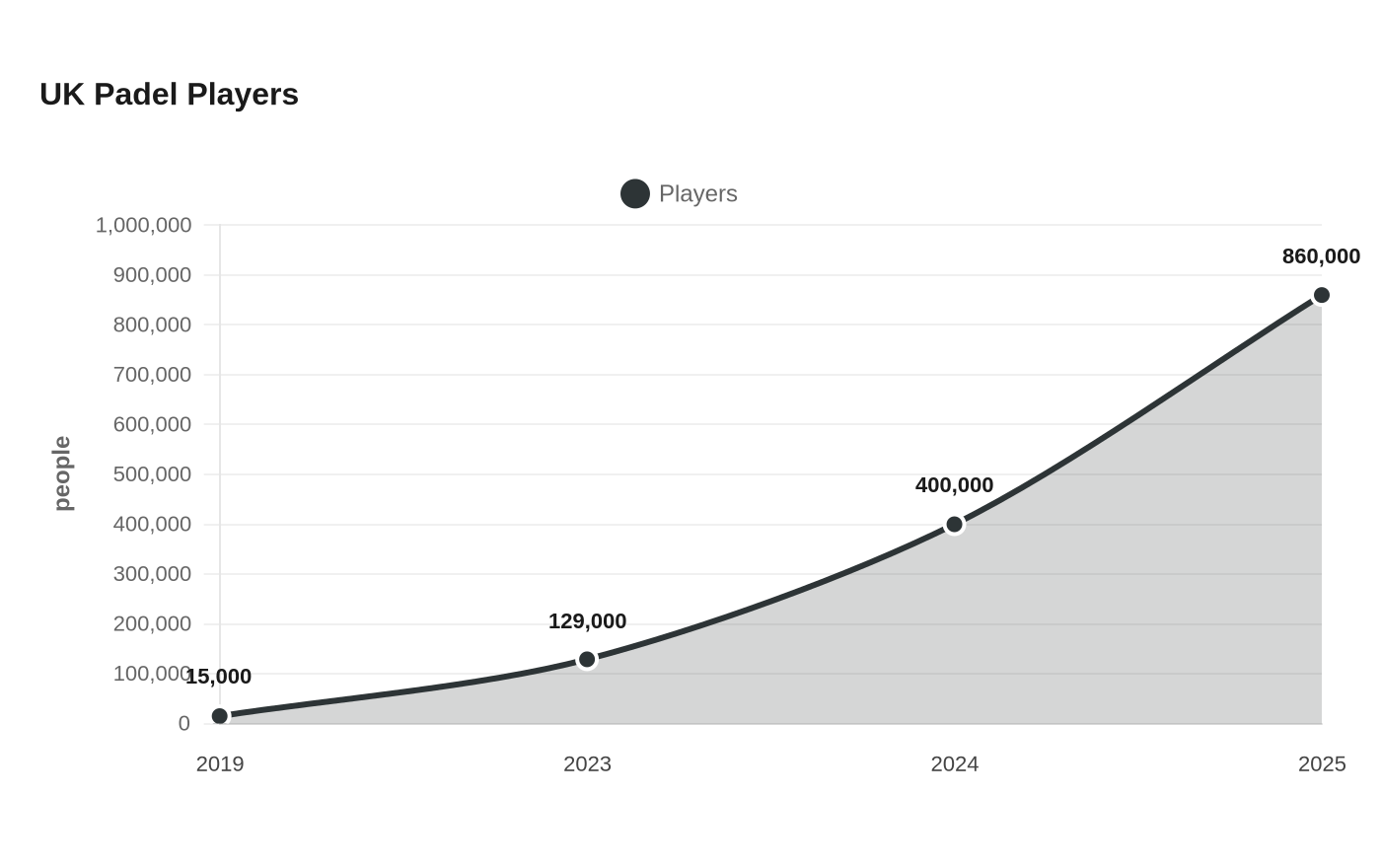
LTA figures put the number of adults and juniors who played padel at least once in 2025 at 860,000, up from 400,000 in 2024, 129,000 in 2023 and 15,000 in 2019. The customer base is growing at a pace that can mask weak venue design in the short term, but not indefinitely. The LTA launched a new padel strategy in September 2024 covering 2024 to 2029, with a stated aim of opening the sport up to more people across the country.
The facilities side has tried to keep pace. Savills puts the number of UK padel courts at fewer than 40 in 2016 and 710 by the end of 2024. But that growth is uneven. Savills also puts 72% of courts in southern England, with limited access in Wales, Northern Ireland and the Midlands.
The LTA has put more than £6 million into British padel, including £4.5 million toward 80 courts at 42 venues. Its facilities strategy uses insight data and mapping technology to identify unmet demand for covered tennis and padel.
What a weatherproof venue actually looks like
East Grinstead Padel in Sussex shows how the model is changing on the ground. The club now has four covered courts, more than 1,200 active members and a WhatsApp community of over 5,500 registered users, giving it a level of engagement that goes well beyond simple court hire. Duncan Maclay, the club’s director of padel, has built the site around repeat use, not one-off novelty.
The club’s courtside viewing area was also upgraded with a roll-down mesh weather screen. If spectators and social groups can stay comfortable longer, they are more likely to use the space for events and hospitality when the weather turns. Return on investment starts to improve not only in court occupancy, but in dwell time, food and drink, and the ability to host a full club atmosphere even on grey days.
It offers pay-and-play, open matches, mix-ins, social padel, tournaments, box leagues and coaching, and players register through its app.
East Grinstead’s project was officially opened on Sunday 18 May 2025 by LTA President Sandi Procter, joined by Mims Davies MP and John Belsey, the East Grinstead Mayor. The courts were supported by an LTA Tennis Foundation Quick Access Loan, the charity’s second-largest award to date.
The venue models most likely to last
The clubs most likely to last in the UK market are the ones that build for weather from the start. That means covered courts first, but it also means drainage that keeps turnaround times short, lighting that makes evening play viable, and indoor-outdoor mixing that lets a club preserve atmosphere when the skies change. It also means designing for retention, because players who can train, compete, socialise and watch matches in one place are more likely to come back.
A few priorities stand out:
• Covered or fully protected courts, with the LTA’s facilities strategy already focused on unmet demand for covered tennis and padel. • Social space that can stay usable in poor weather, so spectators and members do not disappear when play pauses. • Booking systems and membership tools, like East Grinstead’s app and WhatsApp community, that keep casual players connected between sessions. • Event, coaching and league programming, which helps a venue fill quieter hours and reduce dependence on perfect weather.
The LTA backs a proposal for 40 covered community tennis, padel and multi-sport hubs across Britain by 2030.