UK padel participation doubles in 2025 as mainstream growth accelerates

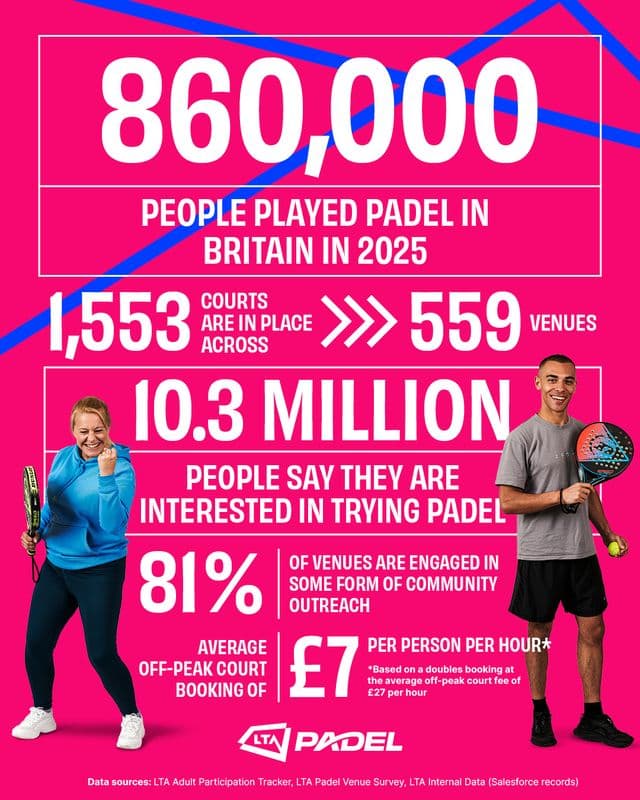
Over 860,000 people were playing padel across Great Britain as the Lawn Tennis Association said participation more than doubled in 2025, a jump that says as much about the sport’s business case as its popularity. The governing body said the growth came alongside rapid court expansion and rising public interest, pushing padel well beyond the early-adopter stage.
That matters because the headline number is only useful if the infrastructure can absorb it. The LTA has already pointed to a market that is widening geographically, with an update saying every county in Great Britain had at least one padel court by August 2025. Earlier in the year, figures cited in May showed 400,000 players and 893 courts, a snapshot that underlined how quickly new facilities were still being added even before the later surge in participation.
The funding behind that growth was moving just as fast. The Padel Paper reported in May 2025 that the LTA had invested more than £6 million in padel growth across Britain, including £4.5 million toward development. That kind of spend does more than add court surfaces. It supports beginner sessions, coaching pathways, social doubles formats and the league structures that turn curious first-timers into repeat players.

The LTA’s own governance papers show that the organisation was tracking the rise closely. September 2025 board minutes referred to participation data and noted that the board had received an update on August 2025 figures, while the association’s annual report and accounts page also pointed to growth in tennis and padel in 2025. The structure matters because the LTA has officially recognised padel as a discipline of tennis and serves as the national governing body for the sport in Great Britain.
The participation mix also helps explain why padel has cut through so quickly. It is drawing tennis players, fitness-focused newcomers and casual players who want a shorter learning curve than the traditional game. The LTA has also pushed women-only sessions and female participation days, a sign that the sport’s growth is being built through organised access as much as raw demand.
The broader pressure point is no longer whether padel can attract attention. It already has. The harder task is converting that attention into regular court time, enough coaching supply and facilities in the right places, because a sport that doubles this quickly can just as easily expose the limits of its own build-out.
Sources
- [1]thepadelpaper.com
- [2]x.com
- [3]lta.org.uk