UK padel report warns growth depends on affordability and repeat play
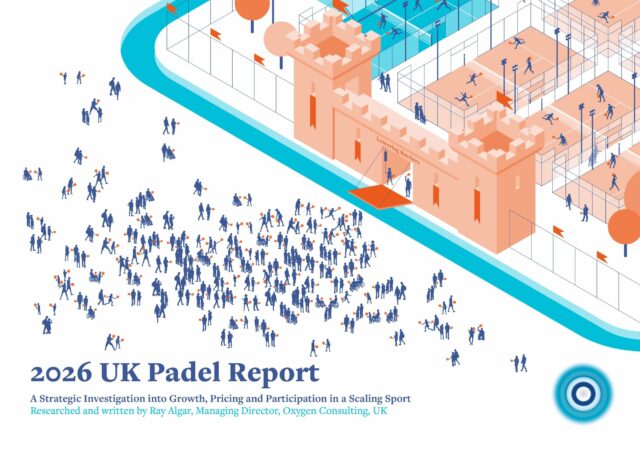
A 70-page report published on 24 June 2026 says British padel’s next phase depends on turning first-time curiosity into repeat bookings, not just adding more courts. The study, written by Ray Algar of Oxygen Consulting and launched at a Savills event in London attended by more than 100 senior figures from the padel, sport, leisure and property sectors, puts affordability, access and venue quality at the center of the sport’s next hurdle.
The clearest warning is price. Savills says the UK’s nine largest operators, measured by court count, have a median peak-time price of £42 per court hour, while player research in the report puts acceptable ranges much lower: £13 to £21 for outdoor uncovered courts, £15 to £25 for outdoor covered courts and £18 to £28 for indoor courts. Those figures are presented as benchmarks, not recommended tariffs, but they show how quickly high-demand padel can still lose casual players if the price does not match the venue.
Access is no easier. Savills says court occupancy in the sector can exceed 85%, yet nearly half of surveyed players still reported difficulty securing court time. That squeeze is magnified by the fact that 55% of courts are uncovered, leaving weather dependency as part of the booking decision for much of the market. The report’s point is blunt: repeat play cannot be built on enthusiasm alone if players cannot get a court at a time and price they will accept.

The operator landscape is also tightening around a small group. Savills identifies David Lloyd Leisure as the largest padel operator in Britain, with 66 courts across 26 clubs and plans to double its footprint in 2025. The top 10 operators collectively manage 262 courts across 79 venues, which amounts to 37% of all UK padel courts. That concentration gives larger groups the scale to invest in facilities and booking systems, but it also raises the bar for everyone else trying to stay competitive on service and availability.
The broader growth story is still striking. The Lawn Tennis Association says participation in Great Britain rose from around 15,000 players in 2019 to more than 860,000 at the end of 2025, alongside 1,553 courts across 559 venues. Savills says UK courts climbed from fewer than 40 in 2016 to 710 by the end of 2024, while also noting that padel first took off after originating in Mexico in 1969 and later gaining traction in Sweden around 2016.

The report also ties commercial success to wider access. In England’s most deprived neighbourhoods, venue provision rose from six padel venues in December 2024 to 33 in December 2025, lifting the share from 3% to 8% of English venues, though distribution remains tilted toward less deprived areas. Algar’s argument is that padel’s durable future will come when price, access and venue quality are good enough to make the second booking as easy as the first.