Ultimate Frisbee began as a Columbia High School student council game
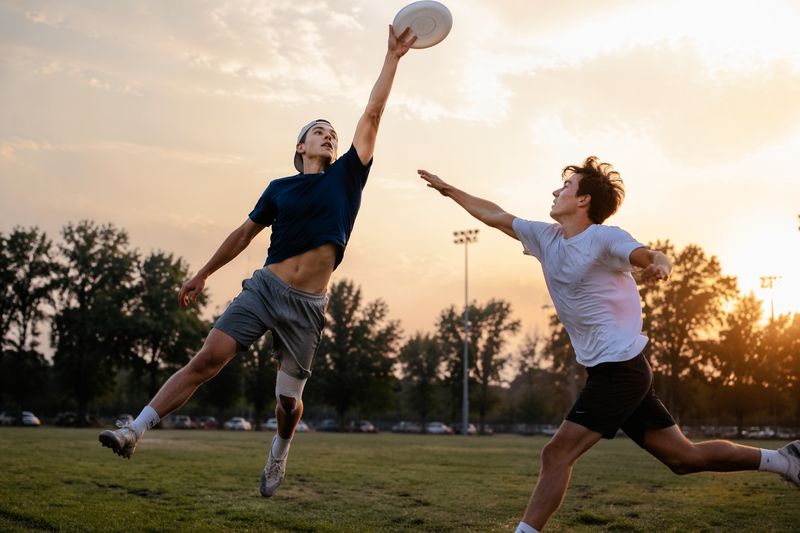
A student-council pitch at Columbia High School in Maplewood, New Jersey, grew into a game that still carries the fingerprints of its teenage creators. What began with a Wham-O Master disc and a parking lot became a sport defined by self-officiation, improvisation, and player ownership, not just athleticism.
From Maplewood experiment to organized game
Ultimate’s origin is unusually specific for a major sport, and that specificity is part of its identity. USA Ultimate says the game was developed in the summer of 1968 by Columbia High School students, and the World Flying Disc Federation traces the idea to Joel Silver introducing it to the Columbia High School student council in Maplewood that same year. CHS historical material adds an even more personal detail: Silver learned a disc game at summer camp in Northfield, Massachusetts, then brought it home to Maplewood and taught it to friends.
The first known game followed quickly, played in 1969 between the student council and the school newspaper staff. The players used a Wham-O Master disc, and the setting was as makeshift as the idea itself. WFDF says a team had formed at the school by 1969 and was playing in a parking lot, which is the kind of origin detail that explains why ultimate still feels open-ended even at the highest levels.
How the first field looked and why that mattered
The early playing space had almost none of the markings fans now associate with the sport. WFDF’s history says there were no painted sidelines, only goal lines, and those boundaries could be marked by telephone poles or even piles of players’ coats. That kind of setup mattered because it forced the players to define the game themselves, piece by piece, before the sport ever had a settled public identity.
By 1970, the first and second editions of the rules had been written by Joel Silver, Bernard “Buzzy” Hellring Jr., and Jon Hines, also identified in Columbia High School historical-marker material as Jonny Hines. Those rules turned a campus improvisation into something repeatable, and the speed of that transition is one of the sport’s defining facts: a hallway idea became a codified game in barely two years.
The self-officiated model at the center of the sport
Ultimate did not just inherit its playing surface from that era, it inherited its culture. USA Ultimate describes the sport as unusual because it remains self-officiated even at the highest levels of competition, and it names that principle Spirit of the Game. That concept is now one of ultimate’s central pillars, but it traces directly back to those early Columbia High School years, when the players had to create both the contest and the code.
That structure still separates ultimate from most other team sports. Players are expected to enforce the rules on the field, settle disputes without referees, and protect the integrity of play themselves. The result is a sport where the founding values are not decorative history, they are operational rules that continue to shape club, college, and international competition.
How fast the game spread
Once the rules were printed and circulated, the game moved well beyond one New Jersey school. The first interscholastic ultimate game was played on November 7, 1970, when Columbia High School beat Millburn High School 43-10. Two years later, on November 6, 1972, Rutgers beat Princeton 29-27 in the first college ultimate game, played on the same ground where the first intercollegiate football game had taken place 103 years earlier.
The first organized tournament followed in 1975 at Yale University, where eight teams came together for the sport’s first real bracketed test. Rutgers beat Rensselaer Polytechnic Institute 28-24 in the final, giving the game an early competitive landmark that stretched far beyond Maplewood. Columbia High School’s own historical material says the sport spread to nearby high schools after the rules were published, which shows how quickly a student invention became a regional game.
From local invention to world sport
The next stages of ultimate’s growth took it from East Coast campuses to a global calendar. WFDF says the first true World Ultimate Championship was held in Gothenburg, Sweden, in 1983. The sport later appeared as an exhibition at the World Games in 1989, a sign that it had moved from novelty status toward formal international recognition.
By 2001, ultimate had become a medal sport at the World Games, and Canada defeated the United States in overtime for gold. WFDF says ultimate is now played in more than 50 countries, which puts the scale of the sport in plain view: what started as a student council proposal in Maplewood became an international game with its own championships, governing structures, and competitive history.
Why the Columbia High School story still defines the modern game
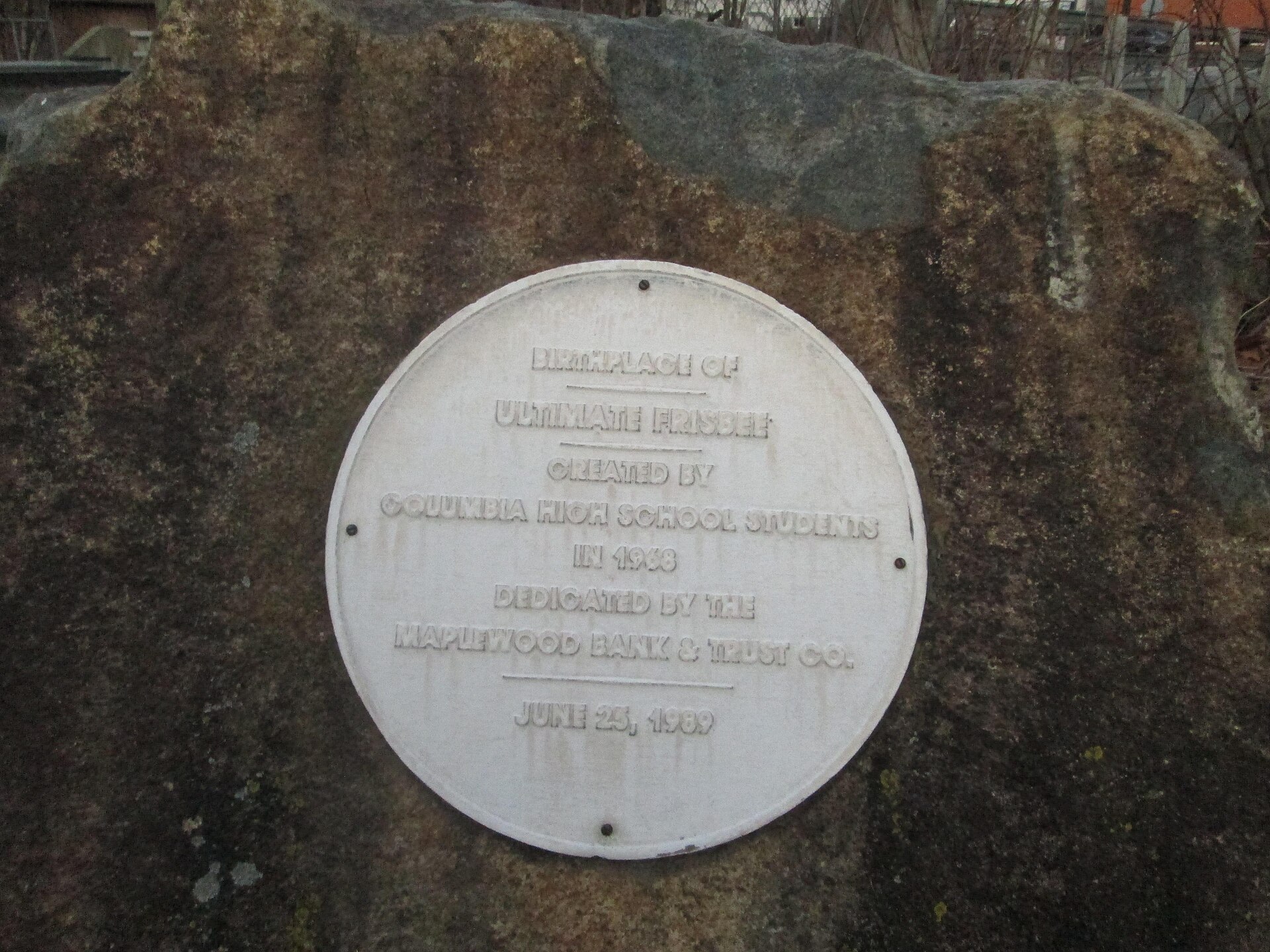
The Columbia High School origin story explains why ultimate still looks and feels different from many other sports. Columbia High School’s historical-marker material names the founders as Joel Silver, Bernard “Buzzy” Hellring Jr., and Jonny Hines, and the facts of the first games show how much of the sport was built by players solving immediate problems in real time. No sideline paint, no full field infrastructure, and no outside authority to impose order meant the students had to invent the game and the norms together.
That is why the sport’s modern identity still circles back to Maplewood. Club players, college teams, and international squads compete for titles now, but they do so inside a framework built by teenagers who treated a parking lot like a laboratory. Ultimate’s DNA is still there in every self-officiated call, every game played without referees, and every rule dispute resolved by the people closest to the disc.
Sources
- [1]wfdf.sport
- [2]archive.usaultimate.org
- [3]chsultimate.org
- [4]hmdb.org
- [5]youtube.com
- [6]ultimatehall.org