Ultimate Frisbee’s low-cost, low-barrier appeal drives global growth

A single disc and eight cones can get Ultimate moving fast, and USA Ultimate says the basics can be taught in 30 to 60 minutes. That compact starter kit helps explain why the sport turns up in gym classes, on grass, on sand, and in community programs that do not have the budget or infrastructure for heavier sports.
A starter kit built for speed
USA Ultimate’s educator quick reference guide frames Ultimate as a fun, fast-paced team sport that blends the best elements of soccer, football, and basketball. The practical details matter even more than the description: the initial equipment cost can be as low as $10 to $20, and the guide lists the injury risk as low. For schools, camps, and recreation directors, that means Ultimate can start with one disc, eight cones, and a marked space rather than a full equipment closet.
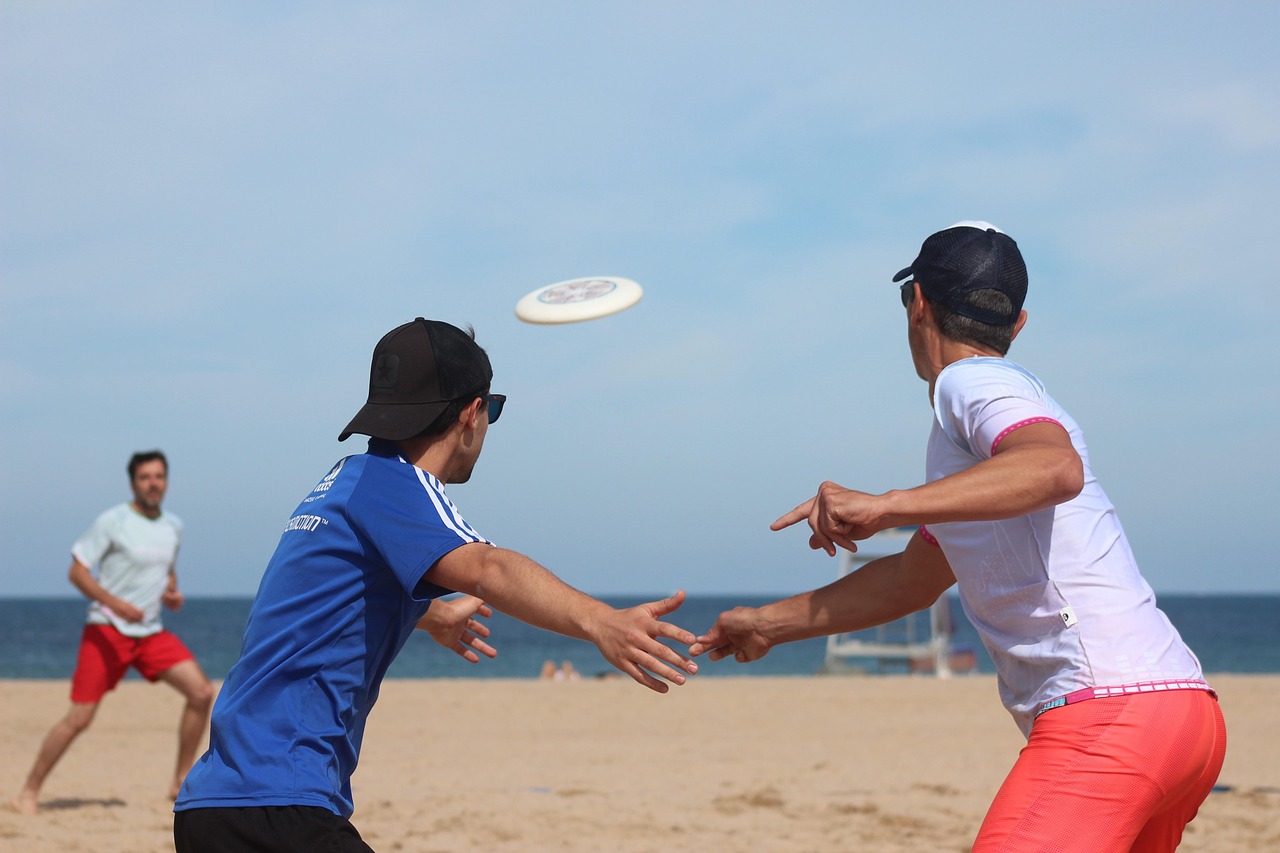
The teaching model is just as compact. The same guide says the basics can be taught in 30 to 60 minutes, which is short enough to fit into a physical education block or a community clinic. Because the game can be played in a field, gym, on grass, or on sand, the venue can be chosen around availability instead of forcing the sport to wait for a perfect facility.
• One disc • Eight cones • 30 to 60 minutes to teach the basics • $10 to $20 in equipment cost • Field, gym, grass, or sand

Why the rules travel so well
Ultimate’s rules help keep that low-cost model intact. WFDF describes the sport as non-contact and self-refereed, which cuts out the need for pads, goalposts, and a complex officiating crew. USA Ultimate’s materials also place Spirit of the Game at the center of play, making fair play part of the sport’s structure rather than an afterthought.
That design has clear consequences for PE classes and youth programs. A teacher or organizer does not need to wait for referees, build a specialized field, or install expensive equipment before the first throw. The sport’s responsibility-based culture, where players manage the game themselves, makes it easier to run in a school gym, on a patch of grass, or in a temporary setup at a camp or rec league.
From a New Jersey parking lot to a formal global sport

Ultimate’s portability is not a recent marketing angle. WFDF says Joel Silver introduced the idea of Ultimate Frisbee to the Columbia High School student council in Maplewood, New Jersey, in 1968, and the first game was played the next year. The same history places the early team in a parking lot at Columbia High School, a detail that captures how little the sport needed to function at the start.
Buzzy Hellring and Jonny Hines are identified as key early founders, and their work helped turn a school-based experiment into a sport with its own rules and culture. That origin still shows up in the way Ultimate is taught today: school-friendly, low-cost, and built around simple spaces rather than permanent facilities.
Where the sport keeps finding new entry points
The most useful thing about Ultimate is how many kinds of programs can absorb it. Its low equipment burden makes it a natural fit for PE classes, youth programs, camps, and recreational leagues, but it also gives community organizers a sport that can be launched quickly in places with limited resources. That matters in underserved programs, where a low startup cost can be the difference between a sport that is possible and one that is not.
Educational materials have followed that logic. The Ultimate Frisbee Teacher Resource Package, supported by the Queensland Ultimate Disc Association and other Australian sport organizations, is designed to adapt the game for different ages in school settings. WFDF has also published an e-book for school and university teachers on flying disc sport, backed by its Development Programme and cooperation with the International Olympic Committee, which shows that the sport’s school-based growth has become part of a broader international development effort.
The numbers behind the global rise
WFDF’s global description puts the scale in sharp terms: Ultimate is played in over 100 countries by millions of athletes of all ages. It also identifies Ultimate as the largest and fastest-growing discipline in flying disc sports, a claim that makes sense when the game’s structure is stripped down to its essentials. Two teams of seven play on a 100-meter by 37-meter field with an end zone at each end, which is enough geometry to give the game shape without demanding a specialized stadium.
That standard format also helps the sport cross borders. A disc, a marked space, and enough players to make two teams can be reproduced almost anywhere, from a school courtyard to a beach to an indoor gym. In a sport world where many games depend on expensive infrastructure, Ultimate keeps proving that simplicity can be a growth engine, not a limitation.
Sources
- [1]usaultimate.org
- [2]wfdf.sport
- [3]ultimatehall.org
- [4]dev.aa-dc.org
- [5]njspotlightnews.org
- [6]ultimate.mobilecoach.org
- [7]youtube.com