Ultiworld D-III snubs and superlatives highlight overlooked standouts
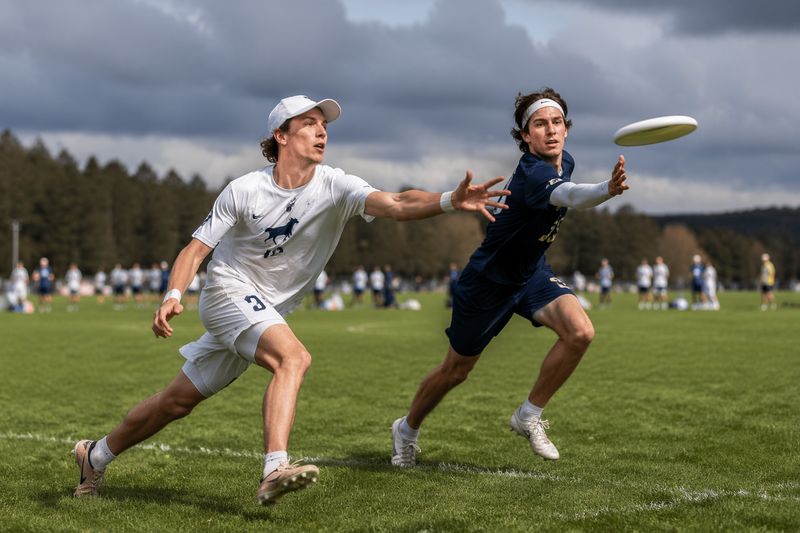
Middlebury left Waukegan with both D-III titles, but the more revealing story may be how Ultiworld finished its awards season. The July 3 snubs-and-superlatives column turns a month of formal honors into a last pass over the names that shaped the year, and in D-III that debate matters because different reporters see different teams, styles, and levels of competition.
A division that rewards the people you had to chase
D-III has long carried a different feel from the sport’s biggest stage. The division is defined by personality, regional variety, and wildly different competitive environments, which makes any single awards ballot an imperfect map of the season. That is exactly why the snubs-and-superlatives format works so well here: it gives room for disagreement, and it turns those disagreements into part of the story instead of treating them as a flaw.
Ultiworld’s rollout made that clear. The D-III awards cycle began with All-Region on June 2, moved through All-American First Team on June 8, Player of the Year on June 9, All-American Second Team on June 12, Offensive Player of the Year on June 16, Defensive Player of the Year on June 17, Breakout Player of the Year on June 18, Rookie of the Year on June 22, and Coaches of the Year on June 23. By the time Snubs & Superlatives arrived on July 3, the column had become the capstone, not a standalone list.
That structure says a lot about how D-III recognition works. First comes the formal hierarchy, then comes the more playful and revealing second look, where the staff can point out who slipped through the cracks, who inspired debate, and which performances were too specific to fit neatly into a standard award category.
Waukegan gave the awards context
The championships themselves gave the conversation weight. The 2026 USA Ultimate D-III College Championships ran May 16-18 at Greg Petry Sports Park in Waukegan, Illinois, and were co-hosted by USA Ultimate and Illinois Ultimate. USA Ultimate said the tournament featured 32 streamed games across the three days, amounting to about 52 hours of live college ultimate coverage, and estimated more than 1,200 visitors came through the event.
The numbers show why the weekend mattered beyond the bracket. USA Ultimate put the direct local economic impact between $550,000 and $650,000, a meaningful boost for Waukegan and Lake County, and noted that this was only the third time the D-III Championships had been hosted in the greater Chicago area, after Rockford in 2015 and 2018. The event also posted average spirit scores of 6.69 in the men’s division and 6.71 in the women’s division, a reminder that the sport’s competitive edge still sits alongside the culture that surrounds it.
Middlebury’s sweep sharpened the stakes. The men beat Carleton College-CHOP 15-7 in the final, and the women beat Whitman 15-6. One school taking both titles is historic, but it also heightens the tension around individual recognition: when the top of the bracket is that decisive, the arguments about who was overlooked often become more interesting than the final scoreline.
Why the snubs matter in a scattered season
The D-III field is built around the top 16 men’s and women’s teams, but the path through that field is uneven enough to make blanket judgments risky. Pool play showed the kind of range that creates award debates: Carleton edged Whitman 15-14 on the men’s side, St. Olaf beat Lewis & Clark 15-13, Whitman handled Haverford/Bryn Mawr 15-4 on the women’s side, and Middlebury got past Wesleyan 15-12. Those are the kinds of results that make it easy for one reporter to come away convinced a player was indispensable while another, seeing a different stretch of the bracket, ranks someone else higher.
That is where the July 3 column does its best work. It gives the staff room to revisit the season through a wider lens and to point toward players who may not have made the formal lists but still shaped the year’s biggest conversations. The visible tags on the page point to Allee Garver, Eli Hoshide, Elleythea Smith, Gabbie Campbell, Jedidiah Friendly, Jonas Geere, Jude Schmiesing, Mercy James, and Sofia Canoutas-Nadel, a cross-section that reflects how broad the talent pool was across the division.
The format also fits D-III because the division produces memorable team identities as often as it produces clean, consensus-driven superstars. Some players become impossible to ignore because of a huge statistical line, a signature matchup, or the way they carried a regional program into nationals. Others matter because they were essential in ways that are harder to quantify, and those are exactly the names that tend to surface in a snubs-and-superlatives discussion.
The top-line awards frame the debate, but do not settle it
The Player of the Year honors show how high the bar was. Ultiworld named Middlebury’s Louis Douville Beaudoin the 2026 men’s D-III Player of the Year, while Rice’s Ria Stevens took the women’s award. Those choices anchor the formal awards conversation, but the snubs-and-superlatives piece is built to ask the next question: who else lived close to that level without landing the headline honor?
That is where the rest of the award roll-out matters. When a division spends weeks handing out All-Region, All-American, offensive, defensive, breakout, rookie, and coaching honors, the final pass becomes less about repeating the obvious and more about correcting the record in smaller ways. In a division shaped by limited visibility and regional isolation, that correction is not cosmetic. It is the only way to capture a season that unfolded across different brackets, different styles, and different levels of attention.
What the final pass says about D-III
The July 3 column closes the 2026 awards process in the same spirit that defined the national tournament: competitive, varied, and deeply personality-driven. Middlebury’s sweep gives the season its cleanest headline, but the awards discussion captures the division’s real texture, where recognition can depend on who saw the game, where it was played, and how much of the season a reporter had a chance to witness.
That is the lasting value of the snubs and superlatives format in D-III. It does not just identify who won. It shows how the division thinks about itself, who gets elevated, who gets missed, and why the sport’s most geographically fractured landscape still produces a shared argument about excellence.