US Quadball backs college teams with recruiting and retention toolkit
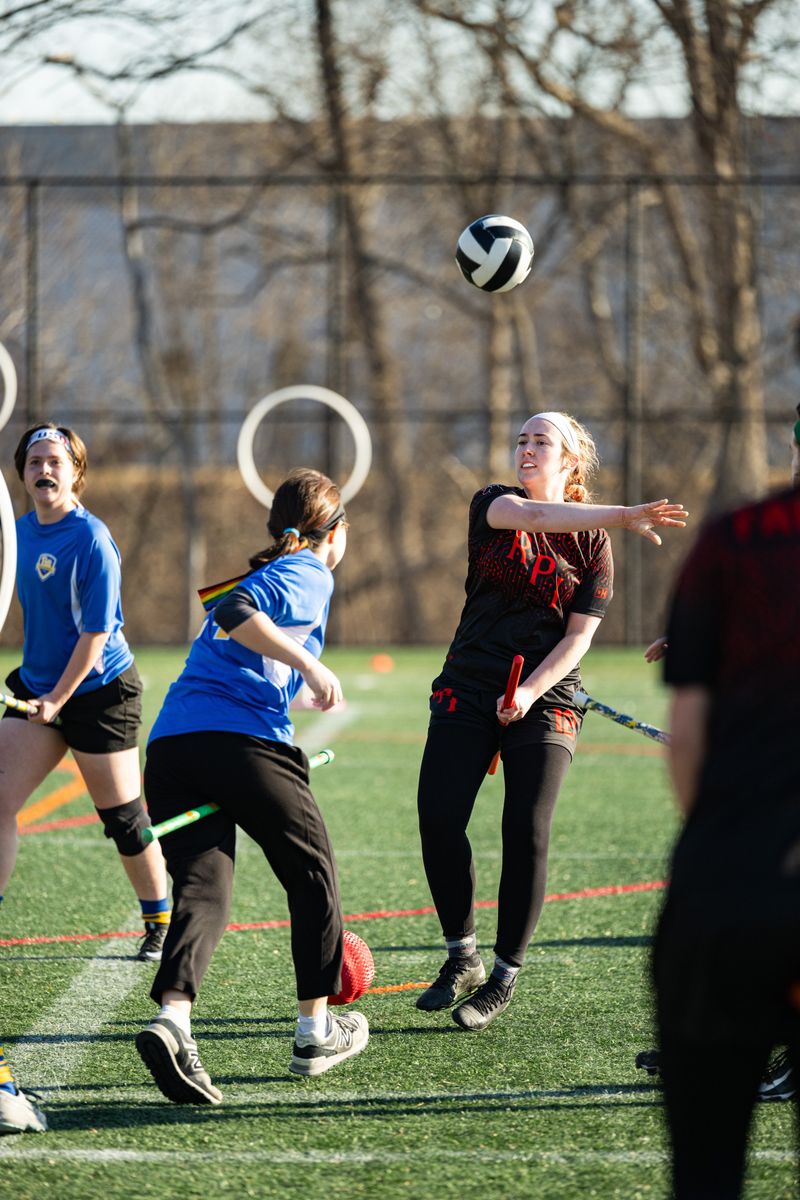
US Quadball is treating the college game as its deepest roster pipeline. The organization’s campus message is unusually direct: join a college team, start one, or coach one. That approach fits the sport’s origin story, which began in 2005 at Middlebury College with Xander Manshel and Alex Benepe and has since expanded from a few dozen students in rural Vermont into a national structure with thousands of athletes, coaches, and volunteers.
Campus is where the sport keeps refilling its ranks
The college model matters because quadball does not recruit in the same way a traditional pro sport does. New players usually arrive through campus, stay through repeated seasons, and then carry the game into club and national pathways after graduation. US Quadball has built its own college-facing pitch around that reality, presenting collegiate play as both a place to find a community and a place to build something that outlasts one class of officers.
That continuity is also baked into the sport’s history. US Quadball says the national championship was called World Cup before 2016, and its Cup history shows the first national championship was held in 2007 in Middlebury, Vermont. The arc from a two-team beginning to a modern national circuit is why the college side cannot be treated as a side note. It is the base layer of the sport’s identity, development and competitive depth.
The toolkit behind retention is practical, not cosmetic
US Quadball’s resources page reads like an operations manual for student-run teams. It includes guides for starting, registering, recruiting for, competing with and retaining a team, plus separate college team recruitment and college team retention guides. Around those are concrete support tools that speak directly to campus life: Fundraising 101, a Leadership Team Contract Template, a Player Travel Guide and Practice 101.
That mix matters because college teams are built to survive two familiar pressures: budget constraints and officer turnover. A Leadership Team Contract Template helps handoffs between outgoing and incoming captains become a transfer of knowledge instead of a reset, while the fundraising tools are aimed at the reality that student groups often need to piece together money for travel, equipment and league fees. USQ also says membership benefits now include fundraising resources, team GiveButter pages for tax-deductible donations and informational sessions on recruitment, retention and team-building, which turns the campus club from an informal hobby into a supported organization.

• Fundraising 101 helps teams build money instead of waiting for it. • The sponsorship packet gives captains something ready to send to local supporters. • Practice 101 and the Player Travel Guide give young teams enough structure to function beyond their first burst of enthusiasm. • The retention guide is there for the long middle, when the first wave of excitement has to become habit.
US Quadball has turned growth into a department
The clearest sign that this is strategic, not symbolic, is the Collegiate Growth Department. US Quadball launched it to reverse declining participation numbers and strengthen the next generation pipeline. The department includes a Collegiate Growth Director, a Recruitment Manager, a Retention Manager and five territorial coordinators covering the Northeast, Southeast, Midwest, Southwest and West.
That staffing chart says a lot about how the sport sees itself. College teams are described by USQ as the lifeblood of quadball, the primary entry point for new players and the foundation of the competitive structure. The department also has roles tied to program development, marketing, fundraising, events, data and analytics and intramural pathways, which shows the sport is trying to capture students in more than one way. Some will arrive through a club fair, some through intramural exposure, and some through a friend who already knows the rules.
US Quadball has also been willing to respond when participation wobbles. In a 2024 CEO note, the organization said it had seen the return of Columbia College Chicago and the addition of three new club teams. That same period brought a collegiate retention guide, a Sponsorship 101 guide and a sample sponsorship packet, along with a revamped Team 101 guide and separate College Recruitment Guide and Club Recruitment Guide built from the experience of some of the sport’s most successful recruiting programs. The message is clear: college growth is not assumed, it is managed.
The competitive ladder keeps college teams plugged in

The college pipeline does not end with local practices and campus scrimmages. US Quadball says national qualifiers across the United States determine bids to the US Quadball Cup for the College Division One and Club Competitive divisions, and teams must attend at least one national qualifier to qualify for those divisions at Cup. For the 2025-26 season, the minimum to operate a national qualifier is five teams, which reinforces the idea that college programs are part of a larger scheduling and travel ecosystem, not isolated student clubs.
The scale of that system is visible in Cup history. USQ’s 2024 Cup format page listed 16 teams in the College Championship Division I. More recently, the 2025 US Quadball Cup drew 56 teams across four divisions, and the event landed during the sport’s 20th anniversary year and its 16th national championship. Those numbers show how far the competition has come from the original 2007 championship in Middlebury, but they also underline a basic fact: the event still depends on college programs that can recruit enough bodies to travel, compete and stay active over multiple seasons.
Graduation is not the end of the player pathway
The clearest example of quadball’s post-college continuity comes from the University of North Carolina at Chapel Hill. Carolina’s Quadball Club describes accessibility as central to the sport, and its adviser, Stephanie Peck, began playing quadball at NC State as an undergraduate and has stayed involved for almost a decade. That kind of progression, from player to adviser to long-term steward, is exactly the bridge the collegiate system is trying to build.
It also shows why US Quadball’s open invitation to coach college teams matters as much as its invitation to join them. The sport needs alumni who understand campus realities, know how to recruit beginners and can stabilize a club when student leadership changes. The strongest college programs are not only development grounds for players, they are leadership pipelines for captains, advisers, coaches and organizers who keep the next class from starting over.
Quadball’s college strategy is not built on one marquee team or one recruiting burst. It is built on repeatable mechanics: student-org funding, leadership handoffs, intramural exposure, recruitment guides and alumni who stay after graduation. That is what turns short-term interest into long-term growth, and it is why the sport’s future still begins on campus.
Sources
- [1]usquadball.org
- [2]usquadballcup.com
- [3]unc.edu
- [4]sportscroll.com