US Quadball clinic in Queens aims to grow youth participation
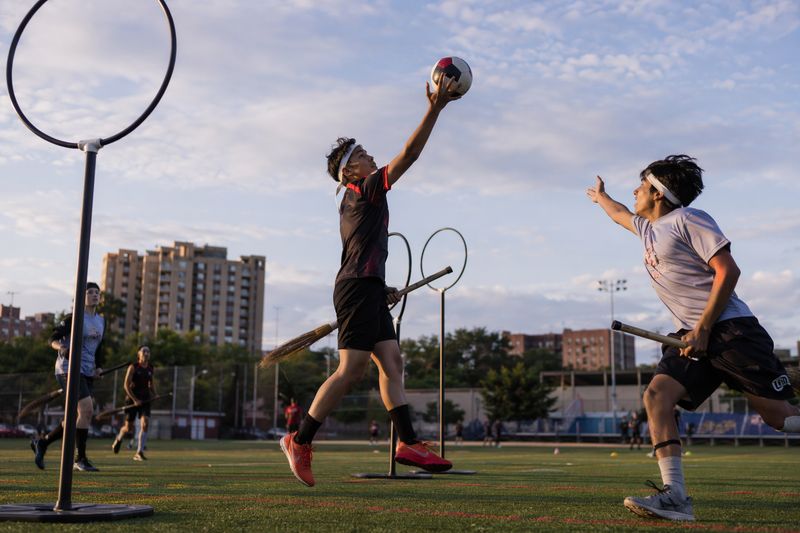
US Quadball is trying to solve its biggest problem the smart way: make the first touch easy. In Queens, the organization’s NYC Youth Quadball Clinic is set for Friday, July 10, 2026, from 9:00 a.m. to 12:00 p.m. at a Van Wyck Expressway location in ZIP code 11355, and it is built for kids and teens who have never picked up a quadball before.
What the Queens clinic actually teaches
This is not a vague “come try the sport” open house. USQ says it will provide all the equipment needed and teach the non-contact version of quadball, with instruction on how to score, how to throw a dodgeball, and how to handle the flag runner phase. The language matters because it strips away the biggest entry barriers in one move: no gear, no prior knowledge, no assumption that participants already know the rules.
That makes the clinic function like a starter kit for the sport. A child can walk in with zero background and leave having learned the core actions that define a quadball game, which is exactly how a niche sport starts becoming legible to families that have never seen it before. USQ lists Michael Rodriguez as the contact for questions, another small but important detail that turns the event from a concept into something a parent can actually navigate.
Why USQ keeps stressing youth access
The Queens clinic is one piece of a broader youth push that USQ says is aimed at introducing the next generation to one of the most inclusive and imaginative sports in the world. On its youth page, the organization describes the program as designed for kids and teens and says it is meant to be accessible, active, and fun. It also says the events foster teamwork, creativity, and confidence on and off the pitch.
That framing is not decorative. It is the business model. Quadball does not have the mass-market shortcut that more established youth sports enjoy, so every point of entry has to do three jobs at once: explain the rules, make the experience welcoming, and leave enough of an impression that a second session feels natural. USQ even says interested parties can bring youth quadball to a school, community organization, or backyard by emailing youth@usquadball.org, which shows the pitch is meant to travel beyond official club spaces.
The growth strategy behind one clinic
The clinic lands in the middle of a deeper organizational reset. US Quadball launched a youth department in late 2025, saying the goal was to grow youth quadball nationally and build the foundation for the sport’s next generation. That shift came alongside Amanda Dallas becoming CEO effective August 4, 2025, part of what USQ has described as a new stage of growth and development.
That timeline tells you where the sport is trying to go. Youth recruitment is not being treated as a side project or a feel-good outreach line on a website; it is being built into the organization’s structure. For a sport that still depends heavily on local volunteers and grassroots organizers, that matters. A youth department gives the game a clearer path from first exposure to repeat participation, and it gives clubs a better chance of finding players before college rather than after it.
The Queens event also sits near nearby open practices and pickup sessions on USQ’s current-season listing, which hints at a ladder of participation: clinic first, casual play next, organized competition after that. That progression is the real story. A one-day event is nice; a repeatable pipeline is survival.
What success would look like beyond one Saturday
If the clinic works, the evidence will not be how many kids show up for three hours in Queens. The better measure is whether a child who learns the basics on July 10 knows where to go next, whether a parent sees a low-risk way to keep them involved, and whether the sport becomes familiar enough to appear in a school gym, a recreation program, or a neighborhood park.
That kind of growth has to start by lowering the intimidation factor. Equipment costs vanish when USQ brings everything needed. Instruction becomes manageable when the sport is taught in plain language. First exposure becomes less random when the event is clearly branded for youth instead of buried inside a general club calendar. In a market like New York, those are the ingredients that can turn a one-off clinic into a feeder system.
The sport behind the outreach
USQ is also leaning on quadball’s history and competitive credibility, which helps explain why youth growth is more than marketing. The organization says the sport began on October 9, 2005, when a group of Middlebury College students played the first game at Battell Beach in Middlebury, Vermont. It was renamed from quidditch to quadball in 2021, a rebrand that marked a new chapter without erasing the game’s roots.
The high-end side of the sport is already established enough to give the youth project a clear target. USQ says the United States national team won IQA World Cup gold in 2012, 2014, 2018, and 2023, and also captured the inaugural IQA Pan-American Games in 2019. That matters because kids are more likely to stick with a sport when they can see an actual ladder: clinic to practice, practice to club, club to national-team dreams.
The Queens clinic is not the whole plan, but it is the cleanest expression of it. If US Quadball is serious about growth, the next generation will not be won by branding alone. It will be won by making the first rep simple, the second rep obvious, and the third rep hard to walk away from.