US Quadball closes Pride Month by centering LGBTQ+ inclusion
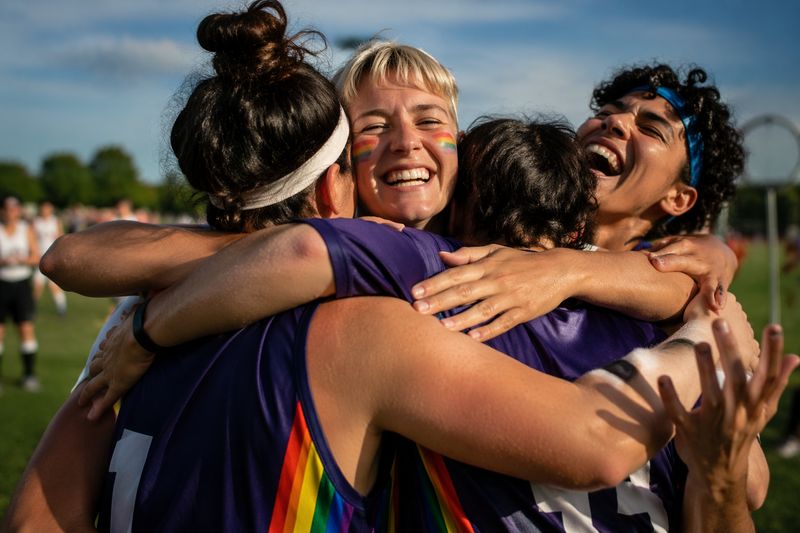
A June 30 Pride column from US Quadball does more than mark the calendar. It puts LGBTQ+ inclusion back at the center of the sport’s identity, and it does so through the voice of Erin Moreno, an executive assistant and former player who frames quadball as a community built around visibility as much as competition.
Pride as a statement of identity
Moreno’s piece lands at the end of Pride Month with a deliberate tone, personal and community-focused rather than ceremonial. That matters in a sport that has long tied its public image to mixed-gender participation, because the column treats inclusion as something living, not finished. The message is simple but demanding: quadball is not only celebrating LGBTQ+ athletes, it is restating the promise that has helped define the sport from the start.
That promise reaches beyond one column. US Quadball describes itself as a 501(c)(3) nonprofit founded in 2010, serving college and club teams nationwide, and it presents quadball as a mixed-gender contact sport with up to 21 athletes on a roster and seven players on the field at a time. In that context, the Pride message is not a side note or a seasonal gesture. It is an affirmation of what the sport says it is every day.
The campaign that gave the message weight
The June 30 column also sat inside a broader month-long push. US Quadball launched “Beyond the Binary: Fuel the Future of Inclusive Quadball” on June 1, and the campaign ran through June 30 with a goal of raising $5,000 and adding 10-plus new recurring donors. The money was designated to support transgender, non-binary, and queer athletes through grants, programming, education, and community initiatives.
Board Chair Annika Kim put the campaign in lineage terms, saying LGBTQ2IA+ athletes have shaped quadball into the sport it is today. That framing matters because it turns Pride from branding into obligation. If those athletes built the culture, then the organization now has to carry that culture forward through funding decisions, leadership choices, and the way it presents itself to new players.
The fundraising push also gives the column practical edge. A statement about inclusion becomes much more than sentiment when it is tied to recurring donors, athlete support, and program budgets. The sport is not just speaking in inclusive language; it is asking members to bankroll the systems that make that language real.
The rulebook behind the rhetoric
US Quadball’s Title 9 3/4 page makes the underlying philosophy explicit. The organization says it aims to challenge the way the world thinks about gender in sports and athletics, and it uses gender maximum policy as the tool for doing it. For the 2025-26 season, club teams seeking eligibility for the USQ Cup 2026 Club Competitive Division must play 3 max, while college divisions remain at 4 max for now.
That split is not accidental. USQ says the college decision reflects member feedback and concerns that a stricter rule could slow growth. The result is a policy that tries to hold two goals at once: keep the sport inclusive, and keep its pipeline healthy enough to add players rather than push them away. In quadball, roster construction is part of the inclusion conversation, not separate from it.
The sport’s basic structure reinforces that point. With up to 21 athletes on a roster and seven on the field, quadball depends on lineup balance in a way few sports do. That makes the gender maximum rule more than a compliance issue. It is one of the main places where the sport’s stated values become visible in actual play.
The international precedent
The Pride column also echoes a larger governance shift that stretches beyond the United States. The International Quadball Association said its member-wide gender representation survey drew 516 responses from 27 countries, and more than 80 percent of respondents supported the 3-max rule for international competition. More than 75 percent supported the same rule within their own national governing bodies.
Those numbers matter because they show the policy did not emerge from a vacuum. The sport’s gender framework has been shaped by broad member input across countries, not by a single federation acting alone. The survey results also explain why inclusion remains central to quadball’s public identity: the language of equity is embedded in the sport’s governance history, and the club and college rules in the United States sit inside that broader global consensus.
The IQA’s survey also points to a core tension the sport keeps managing. Inclusion is widely supported, but events, levels, and national contexts still require different applications. That is why exemptions, event distinctions, and separate national policies continue to matter. Quadball’s identity is not just that it is inclusive, but that it keeps revisiting how inclusion should function in practice.
What carries the promise forward now
The June 30 column, the June 1 fundraising campaign, and the 2025-26 policy structure all point to the same test: whether local clubs and national leadership can make the sport’s values durable. At the club level, that means recruitment, retention, and team culture. At the national level, it means funding athlete support, training leadership, and keeping the gender policy aligned with the sport’s stated mission.
US Quadball has already put the elements in place. It has a founding story that dates back to Middlebury College in 2005, a nonprofit structure created in 2010, a policy framework built around 3 max and 4 max rules, and a fundraising campaign aimed at transgender, non-binary, and queer athletes. The June 30 Pride column ties those pieces together and makes the expectation plain: inclusion is not a month-long message, it is the standard the sport has to keep meeting.
Sources
- [1]usquadball.org
- [2]iqasport.org