US Quadball launches Practice 101 to help teams run better sessions
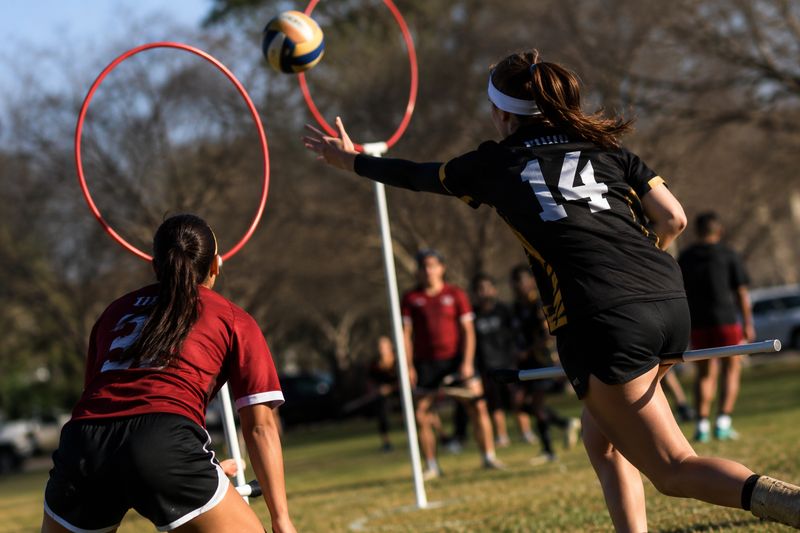
Players in a single quadball practice have to pass, dodge, absorb contact, hold position, track seeker play, and make fast decisions at game speed, often with a roster that is still filling out or has shown up in a different number than expected. Practice 101 is US Quadball’s resource for turning that scattered hour in the gym or on the field into a session that actually improves play. The resource focuses on how to structure practice, choose drills, adapt when roster sizes change, and tailor work for different skill levels, while also giving teams a practice-planning template they can use right away.
A session built for the way quadball actually works
Quadball asks a lot of a single practice. A good session has to balance conditioning, technical work, tactical drilling, and scrimmage reps in a way that keeps both newer players and experienced ones engaged. When a practice is too loose, teams burn time; when it is too rigid, they miss the reality of club quadball, where people arrive with very different backgrounds and the roster can shift from week to week.
What the US Quadball ecosystem is trying to solve
Practice 101 sits inside a broader US Quadball Sessions and Key Resources system. The materials are useful whether someone is creating a first team, entering a second season as president, or simply needs help getting organized.
Alongside Practice 101, US Quadball offers Recruitment 101, Retention 101, Social Media 101, Logistics 101, and Branding 101. US Quadball is a 501(c)(3) nonprofit dedicated to governing quadball.
Quadball was founded in 2005 at Middlebury College by Xander Manshel and Alex Benepe. What began as a campus-born sport now has enough depth, and enough turnover in volunteers, captains, and new programs, to need repeatable educational tools. The site’s season checklist and current-season event pages reinforce that shift from informal game to organized sport.
Three planning principles that can improve the next practice
Practice 101 pushes teams toward a more intentional practice design. The easiest way to use that thinking is to make every session answer a few clear questions before the first whistle blows.
• Start with one priority, not five. If the team needs cleaner passing under pressure, better defensive communication, sharper resets, tighter line changes, stronger conditioning, or more awareness around snitch-referee work, build the session around that one goal and let the rest support it.
• Match the drill to the roster you have, not the roster you hoped for. If numbers are low, compressed reps and smaller groups keep the session moving. If the turnout is bigger than expected, separate players by experience so newer athletes can work fundamentals while veterans get faster, more complex repetitions.
• Use a repeatable planning template so practice does not change shape every week. When players know the rhythm of the session, they spend less time waiting and more time learning, and that consistency helps both development and retention. A predictable structure also makes life easier for volunteer captains who are balancing practice with school, work, or other team duties.
Those principles are especially useful in quadball, where one practice can easily drift into aimless drilling if the coach tries to cover too much at once. A clearer plan keeps the field focused on the parts that matter most, from technical passing to high-speed decision-making, and it gives players a better chance to connect fundamentals to live play.
Why this matters for clubs of every size
Practice 101 is useful beyond the top teams with deep benches. Newer university programs and smaller community clubs often do not have a full-time coach or a large staff, which means captains and volunteers end up carrying the load of planning, teaching, and organizing. A template-driven session reduces that burden and helps make each practice more productive, even when experience levels are mixed.