US Quadball maps head referee path through officiating ladder
US Quadball’s head referee path starts with a blunt requirement: a candidate must first become LAR certified. That one step turns officiating into a ladder, not a leap, and it shows that quadball’s credibility depends on building officials as deliberately as it builds athletes. In a sport US Quadball describes as fast-paced and full of moving parts, the real infrastructure story is who keeps the game safe, fair, and moving.
The path to the top slot starts below it
US Quadball’s head referee certification page makes the progression clear. Before anyone is considered for head referee, they must already be a Lead Assistant Referee, or LAR, which means the sport expects officials to learn the game from the middle of the crew before taking command of it. US Quadball also maintains separate certification pages for Lead Assistant Referees and Seeker Referees, which reinforces that the head referee sits at the top of a structured officiating ladder rather than at the center of a one-size-fits-all referee role.
That structure matters because the head referee is not just another body on the field. The position depends on more than rule familiarity, since the crew has to track game flow, contact decisions, boundary calls, timing, substitutions, and the unusual mechanics that make quadball distinct. The official at the top has to lead through those moments, not simply observe them.
What the officiating crew is actually managing
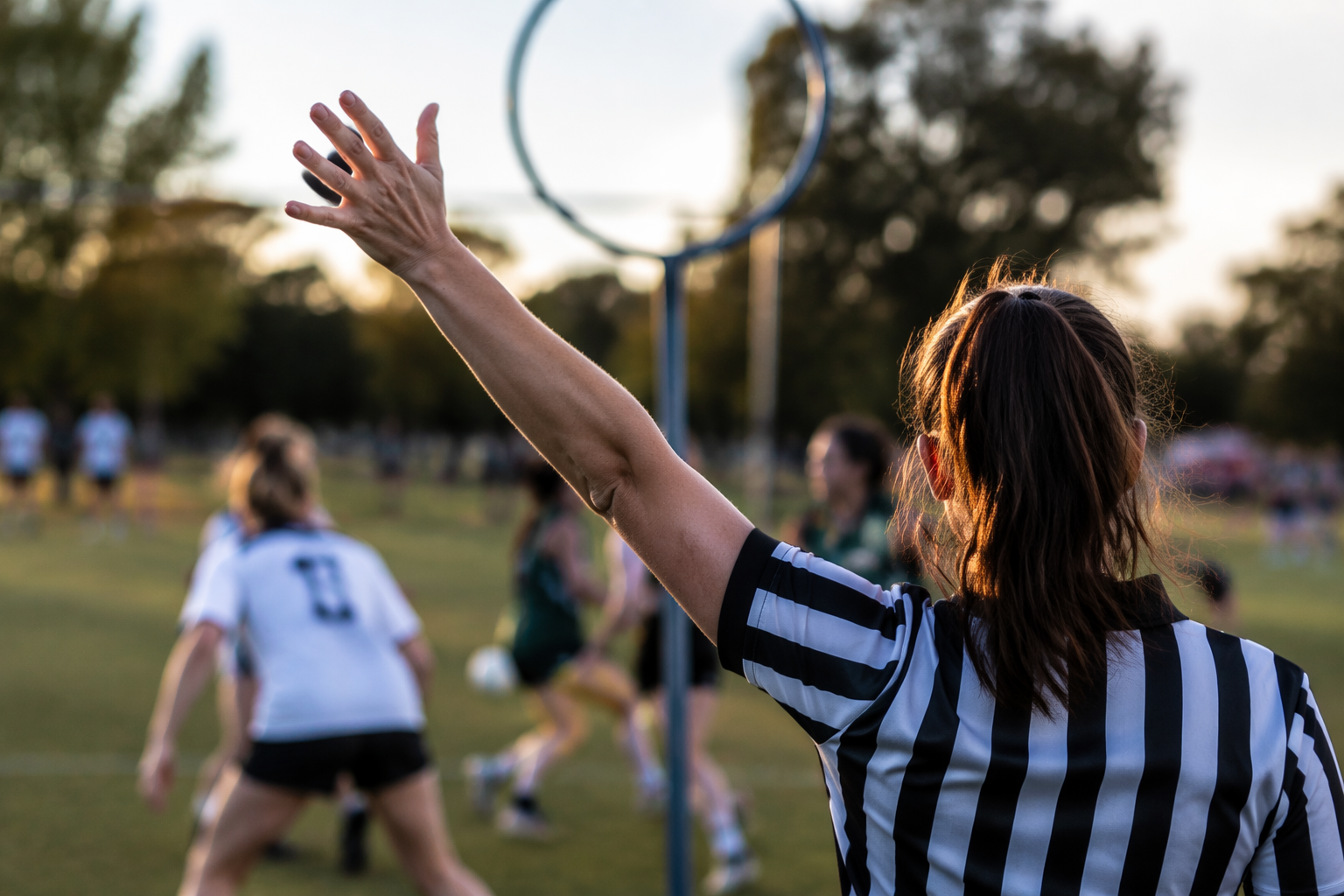
Quadball’s officiating model is built around complexity. US Quadball says the sport is fast-paced and has many moving parts, and that is why every match requires several officials rather than a lone referee. The game’s speed makes judgment calls pile up quickly, and the crew has to keep the match coherent while players are pushing transitions, contact, and tempo.
The job description for a good referee extends beyond rule enforcement. QuadballUK says referees are essential for the safe and fair running of a game of quadball, and that a good referee must make decisions under pressure, resolve conflicts, and manage a match safely and fairly. That is the standard the certification ladder is trying to prepare people for: not just knowing the rulebook, but handling the social and competitive friction that comes with a live match.
A head referee path built on that reality has to train people for more than one kind of failure point. It has to produce officials who can keep order when the pace spikes, when players disagree, and when the crew needs a single voice to settle the moment.
• game flow and tempo • contact and boundary calls • timing and substitution management • the sport’s unusual mechanics • conflict resolution and crew leadership
Those duties explain why the head referee role cannot be treated as a volunteer shortcut. The ladder exists because the sport needs officials who can do the hardest job after they have already learned the rest.
Why the ladder is a growth bottleneck
The certification path is also where quadball’s expansion runs into its biggest constraints. A progression from LAR to head referee takes time, and time is the first friction point in any official pipeline. A sport can only promote as fast as it can train, which means the availability of experienced mentors becomes as important as the number of interested newcomers.
Retention is the next pressure point. Quadball needs several officials for every match, and that multiplies the demand on a relatively small pool of trained people. If even a few experienced officials step away, the burden on the remaining crew rises immediately, especially at tournaments where multiple matches need to run on tight schedules.
Tournament demand makes the problem sharper. The more quadball grows across college and club environments, the more matches need full officiating crews, and the more the sport needs people ready to move up the ladder. The head referee pathway is therefore not just a certification track, it is a staffing model for the sport itself.
The standards have been changing alongside the sport
The international side of the game has been reshaping officiating too. On Oct. 20, 2020, the International Quadball Association announced a new referee certification policy for the 2020/2021 season and said it was moving away from its previously used "testing-is-training" system to a resource-based training system. That shift matters because it treats referee development as something that needs actual materials, not just trial by exam.
US Quadball continued refining its own certification structure with an Officials Certification Update for the 2022-23 Season. Then, on Feb. 10, 2023, the IQA announced that rules tests for the 2022-23 rulebook were available and that recertification tests would now only offer a single attempt to pass. Taken together, those changes show a sport tightening its standards while also making the path more explicit.
That tightening is part of quadball’s broader move toward professionalism. Referees are not being left to improvise their way into leadership roles. They are being asked to progress through a defined system, with resources, testing, and recertification all folded into the process.
From campus origin to shared governance
The reason that system matters becomes clearer when you look at the sport’s history. US Quadball says the sport was founded in 2005 at Middlebury College by Xander Manshel and Alex Benepe. The game that started as a campus creation later spread into a worldwide sport, and both US Quadball and the IQA announced the shift from "quidditch" to "quadball" in July 2022.
That rebrand was more than a name change. It signaled a push toward a more coherent identity and a more standardized governance structure, and officiating is where that kind of maturity shows up first. Quadball Canada’s use of USQ Rulebook 15 as its governing rulebook is another sign that the sport’s rules and referee development are part of a larger shared framework, not isolated national experiments.
In that sense, the head referee path is a small window into the sport’s future. Quadball’s next stage of growth will not depend only on better athletes or bigger events, but on whether enough officials can be trained, retained, and advanced through the ladder that keeps every match credible.
Sources
- [1]usquadball.org
- [2]iqasport.org
- [3]quadballuk.org