USA Football builds officiating pathway as flag football standardizes rules
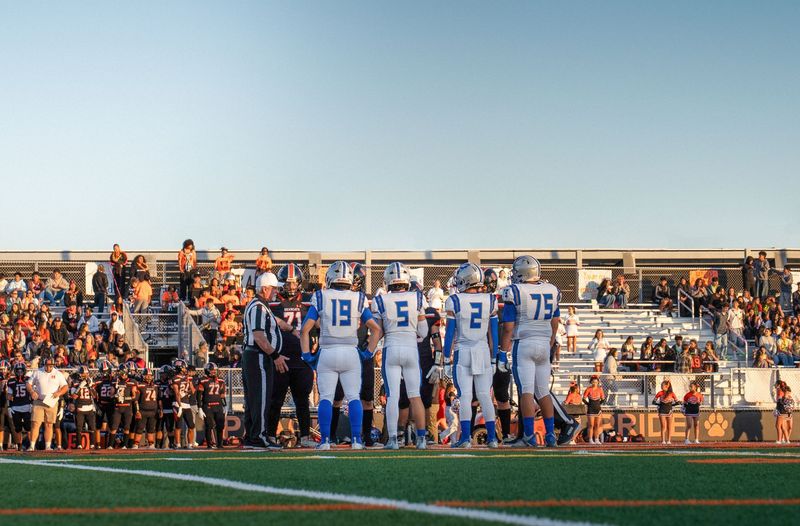
Flag football looks simple until the first close pull, the first clock debate, or the first game between teams from different leagues. USA Football is building the officiating pipeline that keeps those moments from turning into chaos, and its USA FLAG 5’s Rulebook v2026.1 says that pathway is the only route to officiating at the National Team Development Program and U.S. National Team competitions.
Why officiating is the sport’s real infrastructure
The modern game depends on more than athleticism and spacing. It depends on officials who know how the sport is supposed to be played, and USA Football’s rulebook frames that work as part of “building the pathway for officials.” The book says USA Football is the leader in education and training for flag football officials, and it ties that training to national and international competition rather than to a casual rec-league model.
That matters because flag football is moving into bigger stages where consistency is not optional. The rulebook says officials gain the expertise needed for high-level events and positions them for potential opportunities at the Los Angeles 2028 Olympic Games. In February 2026, the International Federation of American Football said the International Olympic Committee Executive Board approved the Olympic Qualification System for Flag Football for LA28, which confirmed the route to the inaugural Olympic flag football events.

What the rulebooks standardize
The best way to understand flag football is to look at what the rulebooks choose to regulate. USA Football’s 5v5 Tournament Rulebook organizes the sport around game setup, rosters, positions, equipment, the ball, the field, clock settings, and clock stoppage. That is not trivia. That is the difference between a game that can be copied anywhere and a game that depends on local habits and guesswork.
That structure is what makes a non-contact sport feel legitimate at scale. When the field dimensions, the ball, the roster limits, and the timing rules are written down, a team from one league can line up against a team from another without spending the first half arguing definitions. NFL FLAG’s public rules page points to a 2026 rulebook and Spring 2026 tournament guidelines, while IFAF has published Flag Football Rules 2023 and a 2025 edition of Football Rules and Interpretations. The sport is not improvising its identity; it is revising it on purpose, year by year.
The practical piece readers often miss is that officiating is where the abstract becomes real. In flag football, the official has to know when play is live, when it is dead, how clock stoppage works, and how equipment and field rules are enforced. The game only stays recognizable when those calls are consistent from one tournament to the next.

How the officiating pipeline works
USA Football’s Flag Officials Course shows how that consistency gets built. The course covers rules, mechanics, game management, and health and safety, which is exactly the mix the sport needs if it wants officials who can handle youth games, tournament play, and higher-level competition. The officials materials also say the course gives hands-on referee experience and a chance to earn money officiating games, so the pipeline is not just theoretical. It is designed to produce people who can work games right away.
That pipeline connects back to the National Team Development Program, which USA Football ties explicitly to flag football. The point is not simply to train more officials. The point is to create a recognizable standard that travels with the sport, whether the game is played in a local league, at a national event, or on a path that could lead toward the Olympic stage in Los Angeles.
Why the Olympic path raises the stakes
The Olympic connection makes the rulebook matter even more. In August 2024, the NFL said men’s and women’s flag football would be part of the LA28 sports program and highlighted that NFL players would be allowed to compete at the Games. That announcement added another layer of attention, because once the sport is linked to Olympic eligibility and elite player participation, officiating stops being background work and becomes part of the sport’s competitive credibility.
IFAF’s February 1, 2026 approval of the Olympic Qualification System clarified the route to LA28, and that is exactly the kind of framework flag football needs. International events cannot function on vague local customs. They need the same language for timing, equipment, field setup, and game administration, which is why the sport’s rulebooks keep getting revised and standardized across leagues and levels.
For players, that means the game they train for is the same game they will actually play when the stakes rise. For parents and coaches, it means fewer surprises when a tournament field is managed differently from a weekend league. For the sport itself, it means credibility is being built in the places fans rarely notice: the whistle, the clock, the field markings, and the person who knows exactly when a flag pull ends the play.