USA Football expands flag officials training for youth to national teams
Flag football is scaling faster than the sideline crew in many places, and that is the part of the sport most fans do not see until a missed flag pull or a late whistle changes everything. USA Football is pushing officials training from the youth level all the way to national-team competition, treating officiating less like a volunteer sideline task and more like the infrastructure that keeps games fair, safe, and on time.
A course built for the game as it is played
USA Football’s Flag Officials Course is designed for both new and returning officials, and it is built for youth, high school, adult, and competitive flag football. That matters because the sport asks officials to manage a game that moves fast, has few margins, and depends on decisions that do not exist in tackle football.
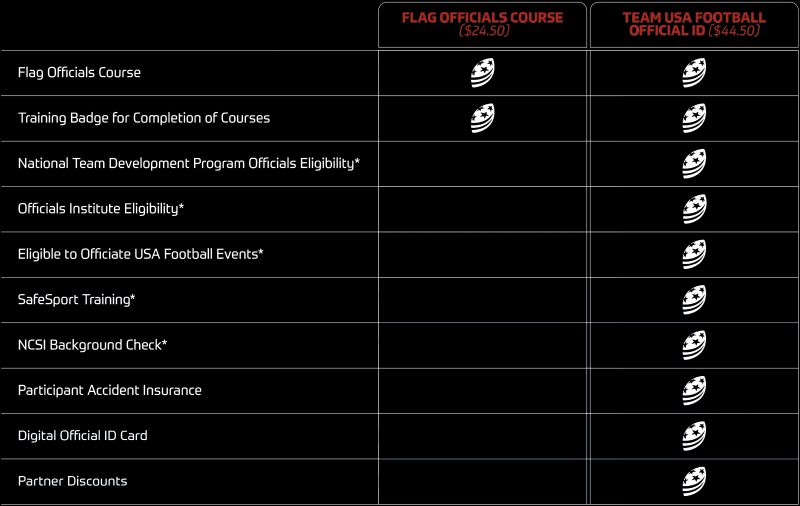
The course covers rules, penalties, signals, positions, mechanics, game management, communication, wellness and safety essentials, conflict resolution, and rulebook refreshers. USA Football lists the course at $24.50 and separates the pathway for new officials and returning officials, which gives the training structure instead of treating every participant as if they are starting from zero.
That approach reflects the reality of the sport. A good flag official has to know not just what the rule says, but how to communicate it quickly, keep players calm, and stay physically and mentally sharp over a game that may turn on a single pull, a single rush, or a single contact call.
Why flag football demands a different kind of official
Flag football looks simple from the stands, but the official’s job is crowded with judgment calls. The game depends on whether a flag pull was clean, whether a player obstructed a rusher, whether a pass came out before a rush crossed the line, and whether contact created an advantage. That is a different skill set from football officiating in any collision format.
NFL FLAG’s rules show how specific the field and pace are. Games are played on a 30-yard-by-70-yard field with two 10-yard end zones and 5-yard no-run zones near the end zone and midfield line-to-gain. There are no kickoffs, and games are typically two 15- to 25-minute halves depending on the league. The common youth formats are 5-on-5 and 7-on-7, which means the official is tracking spacing, timing, and eligibility in a game where the action can flip in a blink.
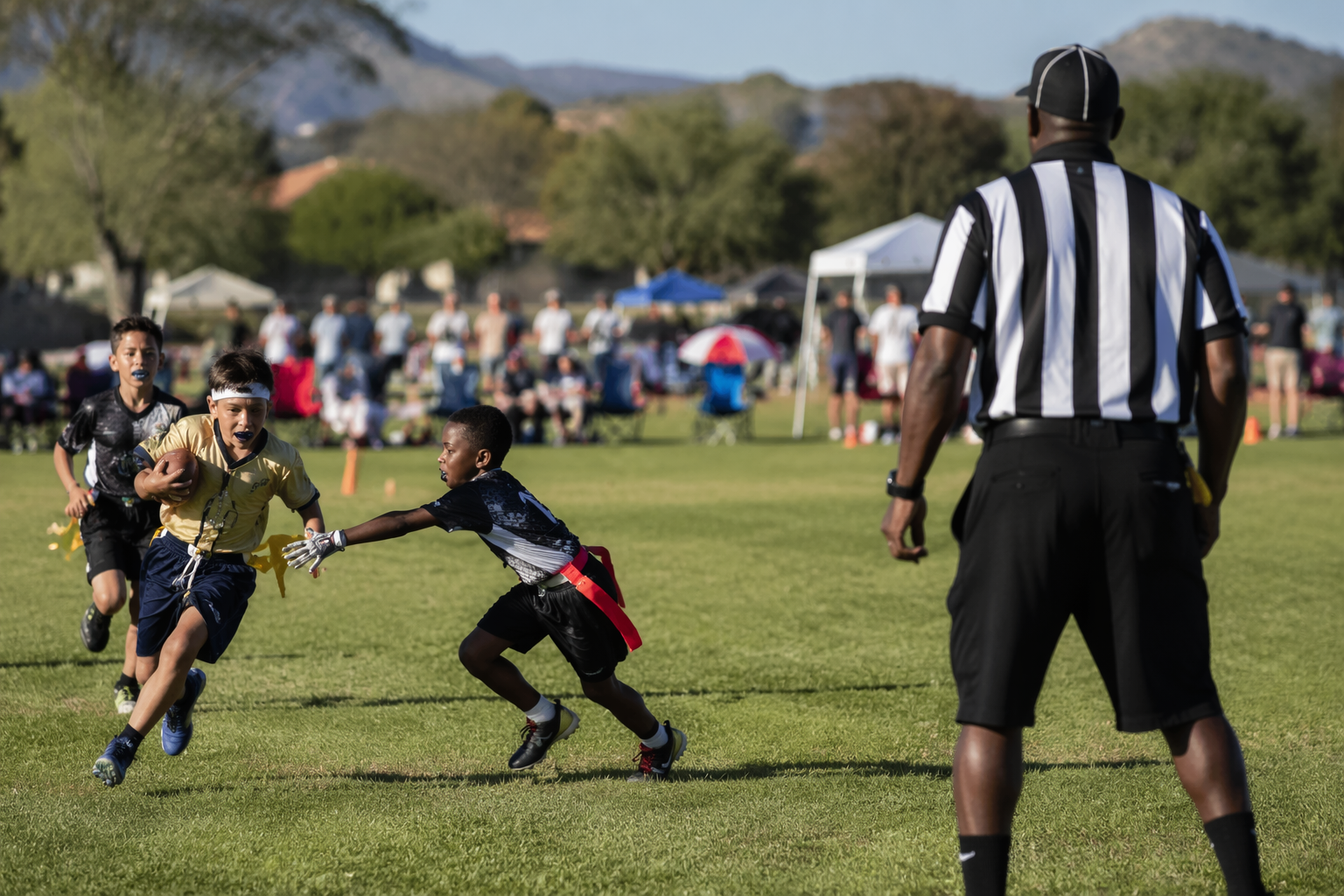
That small-field speed is why officiating standards are not a side issue. When a game is short, a field is tight, and possessions are limited, one bad mechanic or one missed signal can decide who advances and who leaves angry. For fans, the difference between a cleanly run game and a chaotic one is often whether the officials are trained to keep the pace under control without slowing the sport down.
The ladder now runs to national teams
USA Football says its Flag Officials Course is the only pathway to officiating National Team Development Program qualifying events and U.S. National Team competitions. That turns officiating into a ladder, not a dead-end assignment.
The National Team Development Program provides education and training for flag football officials, with opportunities to work evaluation or competition events. USA Football says it selects, trains, and leads U.S. national teams in tackle and flag football, and it describes itself as the national governing body for American football in the United States. It also says it is the sole U.S. member of IFAF, which gives its officiating pathway extra weight because it connects local training to the international side of the sport.
That structure matters for retention. Officials are more likely to stay in a system when they can see a next step: local games, then higher-level youth or high school assignments, then elite development events, then national-team work. Flag football needs that kind of ladder if it wants officials to grow at the same pace as the game.
The growth is real, and the pipeline is strained
The officiating push is happening because demand is climbing. NFHS says it serves 19,500 high schools and more than 12 million young people, so any new sport it tracks becomes a staffing problem as quickly as a participation story. Its flag football resources already include 2025-26 official signals and field diagrams for the high school game, which shows how quickly the sport is moving toward standardization.
The participation numbers are the warning light. NFHS says about 500,000 girls ages 6-17 played flag football in 2023, a 63 percent increase since 2019. It also says nine states have sanctioned girls flag football, while others are in pilot programs or expected to sanction it. More teams mean more games, and more games mean more officials who know the same mechanics and the same signals.
The shortage is not hypothetical. NFHS said the number of registered high school officials grew six percent in the latest survey year, but the shortage remains a major issue. It previously said the system had lost 50,000 officials and needed a coordinated consortium effort to rebuild the pipeline. That is the backdrop for flag football’s rise: the sport is expanding into schools and elite pathways at the exact moment officiating labor remains thin.
What weak officiating does to the sport
In flag football, weak officiating does more than create a few bad calls. It breaks trust. If players think contact is being ignored, if coaches think the no-run zone is being enforced inconsistently, or if a game repeatedly stalls because officials are not on the same page, the sport loses its rhythm and its credibility.
The best officials keep the game moving without turning it into a whistle-fest. They know the rules, manage conflict before it escalates, and use the mechanics and signals that make a fast game legible to players, coaches, and parents. That is why USA Football’s training package goes beyond the rulebook and into communication, wellness, and conflict resolution. The job is not just to call the play correctly. It is to leave the game looking like it was run by adults who knew exactly what mattered.
As flag football keeps moving from school fields to national-team stages, the officials pipeline is becoming part of the sport’s core identity. The teams may get the highlights, but the whistle is what keeps the whole thing credible.
Sources
- [1]usafootball.com
- [2]nflflag.com
- [3]nfhs.org