USA Football rulebook reveals flag football’s distinct field and no-run zone
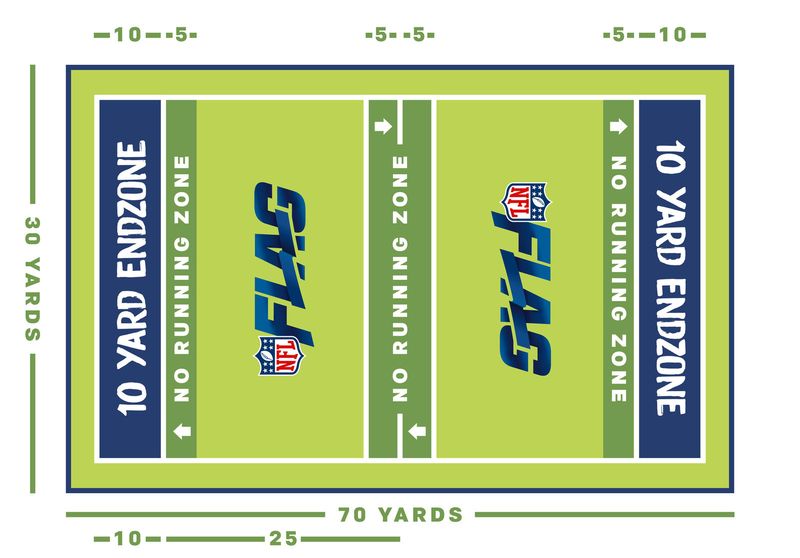
USA Football’s 2026.2 rulebook shows why flag football is not tackle football with the contact removed. The game is built on a 25 by 70-yard field, and once the offense enters the five-yard no-run zone before either end zone, the ground game disappears entirely: no running the ball in any fashion, even after a handoff. That one constraint changes everything from play design to quarterback reads, because scoring chances are created by spacing, timing and route placement rather than by grinding out yards.
The no-run zone rewires the offense
The no-run zone is the sharpest example of how the rulebook shapes strategy before the snap. A team can still hand off the ball, but inside that five-yard area the play cannot become a designed run, so the offense has to finish with a pass. That pushes coaches toward short-area concepts, faster decisions and route combinations that isolate defenders in tight space.
It also changes how quarterbacks operate. Instead of leaning on a downhill run to solve a goal-line series, the passer has to diagnose leverage, identify pressure and deliver on time while the defense knows the ball has to leave the quarterback’s hand. In a sport with a compact field and no-run restriction near the end zone, precision matters more than patience.
A standardized field, not a backyard variation
The field geometry is only part of the point. USA Football’s 2026.2 USA Flag 5’s rulebook organizes the sport into clear sections: game, field, ball and equipment; rosters; positions; and tournament play, including clock settings and clock stoppage. That structure makes the format portable from youth leagues to high school events to tournament settings, because the same basic field and game flow travel with the rulebook.
The point of that standardization is consistency. A team can move from one sanctioned environment to another and still know the dimensions, the pace and the basic operational rules that govern how a drive unfolds. In a sport where a single zone rule can determine whether a possession ends in a touchdown or a turnover on downs, that predictability is part of the competitive architecture.

Officials are part of the game design
USA Football’s officials guide reinforces that flag football is built around interpretation as much as execution. The guide is organized into approved rulings and interpretations for game, field and equipment; league and tournament play; live ball and dead ball situations; game play; officials’ duties; penalties; and officials’ signals. Those categories matter because the key moments in flag football often hinge on timing, not impact.
A flag pull can end a play instantly, a dead-ball ruling can change the next snap, and a penalty can swing possession or field position in a game where the field is already compressed. Officials need standardized signals so players, coaches and spectators read those moments the same way, which keeps the pace fast and the decisions legible. The mechanics are not window dressing, they are the framework that lets a non-contact game move with clarity.
USA Football goes further in the 2026.2 rulebook, calling itself “the leader in education and training for flag football officials” and “the only pathway to officiating at the National Team Development Program and U.S. National Team competitions.” The same rulebook ties that pathway to “potential opportunities to officiate at the world’s biggest stage in Los Angeles in 2028,” which makes the officiating structure part of the sport’s elite pipeline.
The Olympic stage is changing the stakes
The 2028 Olympic debut raises the profile of every rule choice. LA28 says flag football will be played in two 20-minute halves, a format that leaves little room for wasted possessions on a compact field. Olympics.com describes the playing area as 70 by 25 yards with 10 yards allotted to each of the two end zones, underscoring how much the game depends on efficient use of space.
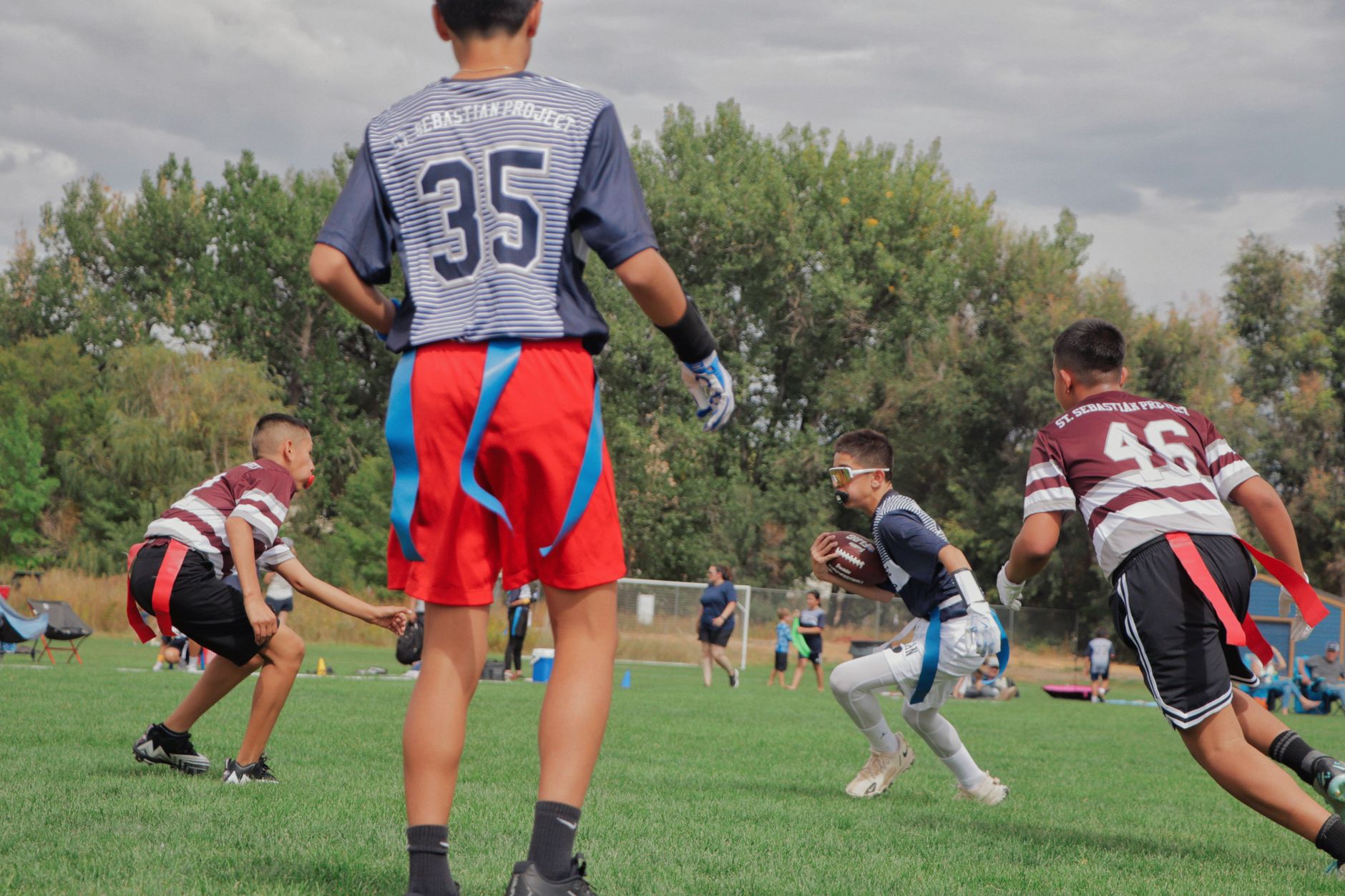
That visibility extends beyond the Olympic movement. In May 2025, NFL clubs approved participation of NFL players in the 2028 Olympic Games in Los Angeles, which pulled flag football closer to the center of the pro football conversation. Once players with NFL experience become eligible for Olympic play, the sport’s rules, officiating standards and field design carry even more weight, because the level of scrutiny rises with the talent.
From wartime recreation to a global ruleset
Flag football’s history explains why the modern rulebook feels so deliberate. Olympics.com traces the sport back to recreation for American soldiers during World War II, before it spread into broader use and eventually into organized competition. What began as a casual, non-contact version of football now sits inside a formal ecosystem of definitions, mechanics and international standards.
That global ecosystem is already visible in the International Federation of American Football’s 2023 rules, which cover 5-on-5, 7-on-7, beach flag and indoor flag. The existence of multiple formats shows how the sport has moved beyond a single recreational model into a ruleset that can be adapted without losing its identity. USA Football’s 5v5 rulebook fits into that same shift: tight space, restricted running near the goal line and officiating built for fast interpretation.
The result is a game that rewards route design, quarterback timing and disciplined spacing more than brute-force yardage. The field is smaller, the no-run zone is stricter and the officials are trained to manage every stop, signal and penalty with precision. That is why flag football now looks like its own sport, not just a softer version of the one that came before it.
Sources
- [1]resources.usafootball.com
- [2]olympics.com
- [3]la28.org
- [4]nfl.com
- [5]americanfootball.sport