USA Racquetball archives trace racquetball champions back to the 1960s
Racquetball’s deepest story is not buried in a single season, but in the record books. USA Racquetball’s championship archives stretch back to the late 1960s and reveal how the sport built its identity through repeat champions, durable pairings, and eras defined by a handful of names that kept returning to the top.
The sport’s earliest milestones set the timeline
The archive begins before racquetball fully separated itself from its paddle-sport roots. USA Racquetball places the May 23-26, 1968 National Paddle Rackets Tournament in Milwaukee among the sport’s early milestones, then points to the First Official International Racquetball Association Championships in St. Louis, Missouri, in 1969 as the moment the competitive record really started to harden. The first racquetball magazine followed in November 1972, a sign that the sport was not only producing champions but also developing a media culture to preserve them.
That sequence matters because it shows how quickly racquetball moved from experiment to institution. Once the championships, the magazine, and the Hall of Fame system were in place, the sport had the tools to remember itself. Those tools now let the archives do more than list winners. They expose the first dynasties, the first rivalries, and the first generation of players who made racquetball recognizable.
Singles records read like the sport’s family tree
The singles champions archive reaches back to 1968, and the names at the top of that list map the sport’s early power structure. Bill Schultz appears as the 1968 champion, Bud Muehleisen follows in 1969, and Charles Brumfield claims titles in 1972 and 1973. Later champions such as Rocky Carson, Michelle Gould, and Ben Baron carry the record forward into newer eras, proving that the archive is not just a snapshot of the sport’s infancy but a continuous ledger of its champions.
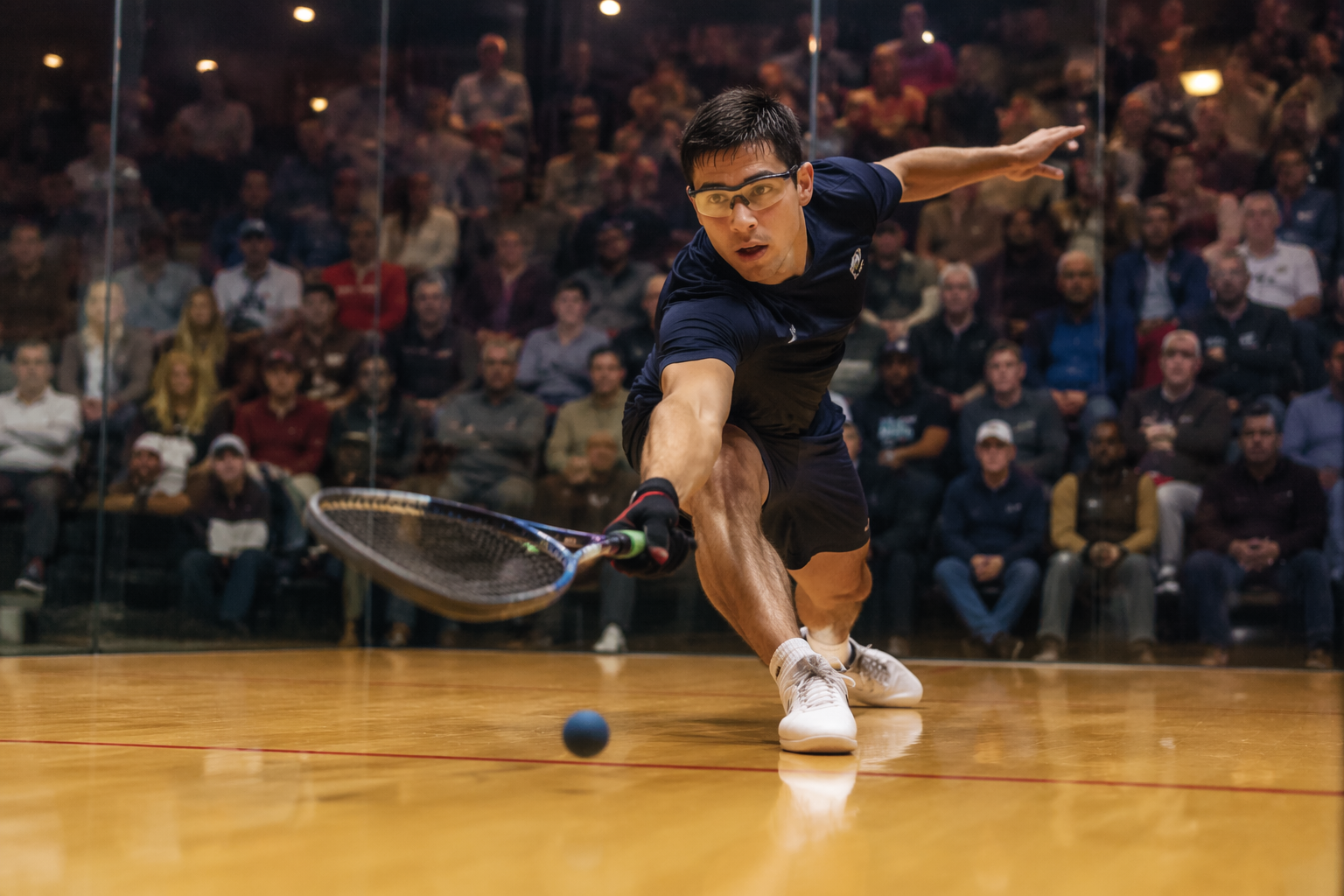
Bud Muehleisen sits at the center of that early lineage. USA Racquetball identifies him as the first inductee into the USAR Racquetball Hall of Fame as an amateur athlete/contributor, alongside Joe Sobek, in 1974. The Hall of Fame also credits Muehleisen with winning the first national racquetball championships in 1969 by defeating Charlie Brumfield, and another entry calls him “the most influential man in racquetball.” That language is not decorative. It reflects how deeply his name is tied to the sport’s first competitive identity.
Muehleisen’s resume gives the early era its scale. USA Racquetball says he won 69 National Indoor Championships and four national outdoor titles, a reminder that dominance in racquetball was never confined to one surface or one season. The archives make clear that the sport’s earliest stars were not just champions, they were builders of the competitive culture itself.
Brumfield’s run marks the bridge from amateur championship to professional era
Charlie Brumfield’s line in the record book shows how one player can define a transition period. USA Racquetball’s remembrance of Brumfield says he made the National Racquetball Singles final in 1969 and 1970, then won the event in 1972 and 1973. Just as important, those titles came before professional racquetball tournaments existed in the sport.
That detail turns Brumfield into more than a champion. He becomes a bridge between eras, one of the players whose success helped prove that racquetball could sustain a serious championship structure before the professional circuit took shape. In a sport that later built a year-end pro tour and a clearer commercial hierarchy, Brumfield’s titles belong to the older model: a national championship era defined by amateur prestige and the sport’s first formal records.
The pro tour created a new kind of dynasty
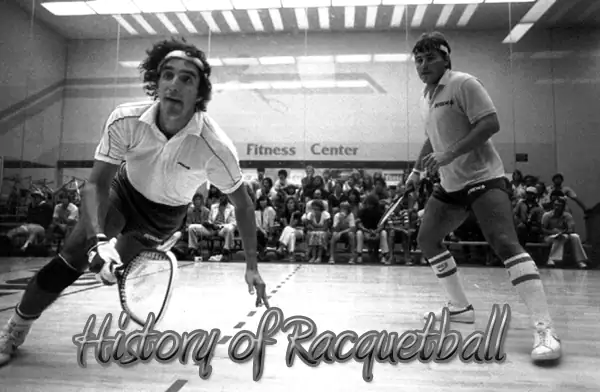
The International Racquetball Tour records, which USA Racquetball tracks from the 1980s onward, show how dominance changed once the pro game matured. Mike Yellen owns multiple year-end titles in the mid-1980s, Cliff Swain reappears repeatedly through the 1990s, Sudsy Monchik runs through several consecutive seasons, and Kane Waselenchuk takes over the modern era with a year-end streak that spans most of the 2010s.
That progression says a lot about how racquetball’s top level evolved. In the amateur years, the archive feels like a chain of breakthrough champions. In the professional years, it becomes a map of sustained control, where one player or one short group of players can shape an entire decade. The year-end title format also rewards consistency, not just peak performance, which is why the pro record book tells such a strong story about longevity and adaptation.
Waselenchuk’s streak is especially revealing because it reflects the modern expectation of specialization. The pro era does not just celebrate who could win once. It rewards who could keep winning in a tightly tracked, year-end system that turned repeated excellence into a visible dynasty.
Doubles preserves partnerships, not just stars
Doubles is where the archive becomes even richer, because the record books preserve pairings as well as individuals. USA Racquetball’s doubles archive includes open and age-group divisions, and it stretches well beyond the elite bracket into mixed and other age-based categories. That makes doubles a different kind of legacy test: success depends on chemistry, timing, and the ability to sustain a partnership long enough to leave a mark.
The open records from 2020 show Maurice Miller and Troy Warigon as the men’s champions and Jazmin Trevino and Erin Slutzky as the women’s champions. Those names matter not because they sit on a ranking, but because they illustrate how the archive captures racquetball as a partnership sport. A singles title belongs to one player. A doubles title belongs to a combination, and that makes the history more layered.
The broader structure of the doubles books also broadens the sport’s memory. Because the records include age-group and mixed divisions, the archive does not reserve its legacy only for the open bracket. It recognizes competitive longevity across decades of participation, which is one reason racquetball’s record books are unusually useful for telling the sport’s full story.
What the archives reveal about racquetball’s legacy
Taken together, these records show a sport that built its own dynasty map early and kept updating it. The first national champions, the Hall of Fame inductees, the pro tour year-end winners, and the doubles pairings all point to the same truth: racquetball has always measured greatness through sustained runs, not isolated flashes.
That is why Bud Muehleisen, Charlie Brumfield, Mike Yellen, Cliff Swain, Sudsy Monchik, and Kane Waselenchuk belong in the same historical frame even though they competed in different eras. The archives connect them through continuity. They also show how racquetball moved from an emerging championship scene in Milwaukee and St. Louis to a fully formed sport with official pro dynasties, mixed and age-group depth, and a record book sturdy enough to hold every era together.