USA Racquetball enforces 22-inch racquet limit to protect fairness
USA Racquetball keeps its clearest equipment line at 22 inches, and the reason is competitive balance as much as measurement. A racquet frame may be built from any material deemed safe, but the total length, including the grip, cannot exceed 22 inches, a cap designed to stop equipment from becoming a shortcut to extra reach, leverage and power.
The penalty language is strict. If an overlength racquet frame is found during a game, the player can forfeit the game in progress. If the violation is discovered between games, the preceding game can be forfeited instead. USA Racquetball also draws a distinction when the problem is an overhanging grip rather than the frame itself, and it says a grip issue that is corrected before or between games carries no penalty. That split shows the rule is built to police real match conditions, not just the showroom version of a racquet.

The governing body has also tried to keep disputes from turning into gamesmanship. Its public Non Conforming Racquets list names racquets marketed for the sport that do not meet current specifications. If a player challenges an opponent’s racquet and it proves legal, the challenger loses a timeout. The International Racquetball Federation uses similar language in its rulebook, saying the racquet, including solid parts of the handle and the grip, may not exceed 22 inches and that a referee technical is issued when a requested measurement shows the racquet is legal.
That hard boundary sits on top of a sport that has always changed its gear. USA Racquetball’s history page traces the racquet from Joseph Sobek’s first model in 1950, built with wood and a leather wrap grip, to alloy, fiberglass and now graphite composite frames. The sport’s equipment has never stood still, and the rulebook has evolved alongside it to allow new materials without surrendering control of the basic shape of the game.
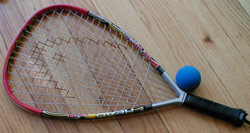
The long view matters because the push and pull over racquet size is not new. The Racquetball Museum’s timeline says graphite frames arrived in 1979, and that in 1997 the rule shifted to allow oversized frames of 22 inches in length. That version of the frame measured roughly 32 inches in total length and width, about 25 percent larger than original racquets and roughly 50 percent bigger in hitting area, a change that delivered more power but also sharpened the need for a firm limit. USA Racquetball’s current rule keeps that innovation inside a fixed box, and that is the point.