USA Racquetball rules reveal doubles strategy, serve rotation differences
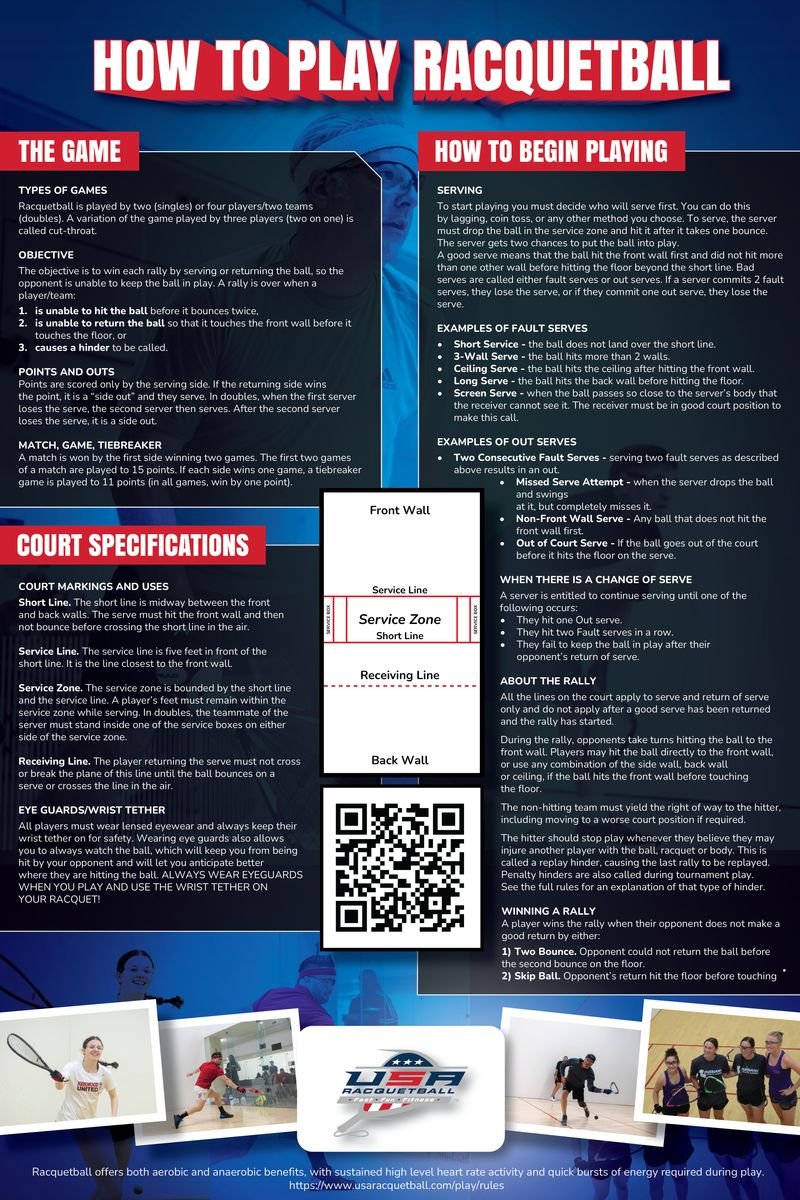
USA Racquetball treats doubles as a four-player format, and that simple fact changes everything from division placement to how a server, a partner and a receiver move before the ball is even struck. The best doubles pairs do not just hit harder or faster than singles players. They manage space, protect a partner who can be targeted, and use serve order to force mistakes.
Doubles starts with the lineup, not the rally
A doubles team consists of two players, but the rules also control who belongs in which division and when a roster can change. Mixed-skill teams play in the division of the higher-level player, adult-age teams are placed by the younger player, and junior-age teams by the older player. A partner change is allowed only before the first match begins, which means the real doubles decision happens long before warmups end.
A player who can cover the back court may still be vulnerable in the service box, and a partner with a strong forehand may still struggle against repeated screen pressure.
Serve order is the first tactical battle
The biggest separation from singles is the serve rotation. In doubles, both players on a team serve until there has been both a handout and a side out, and the referee must make sure a player who has already lost a rally while serving does not serve again during that turn. That rule turns the server order into a built-in pressure system: one mistake can expose the whole rotation.
The sequence also creates a practical choice for teams. If one partner is more reliable under pressure, that player often becomes the stabilizer who keeps service alive through awkward points, while the other can be used to attack weaker returners or to set up pace and angle changes. Out-of-order serve penalties can erase points scored during an improper sequence, so doubles teams need to know not only who serves next, but who is allowed to serve next.
The service box changes the geometry
Doubles uses service boxes, and they are one of the clearest reasons the format is not just singles with an extra body. The server and the non-serving partner can step outside the service zone as soon as the ball contacts the server’s racquet, a 2020 rule change that was part of the first revision since 2013. That adjustment made modern doubles formations more dynamic than older descriptions of the sport suggest.
Even so, the non-serving partner is not free to drift around casually at the start of the motion. The partner must stand erect inside the service box, back facing the side wall, with both feet flat on the floor from the start of the service motion until the ball is struck. The serving team has to think about angle, spacing and whether a body is helping hide the line or blocking it.
Shot selection is about screens, not just power
A served ball that hits the non-serving partner while that partner is in the service box is a fault serve. That single rule shapes much of doubles shot selection. If you are serving, the question is not simply whether you can hit a good drive or Z serve. It is whether your serve will jam the receiver without clipping your own partner, or whether the serve will create a screen that looks legal but turns messy the moment the receiver loses sight of the ball.
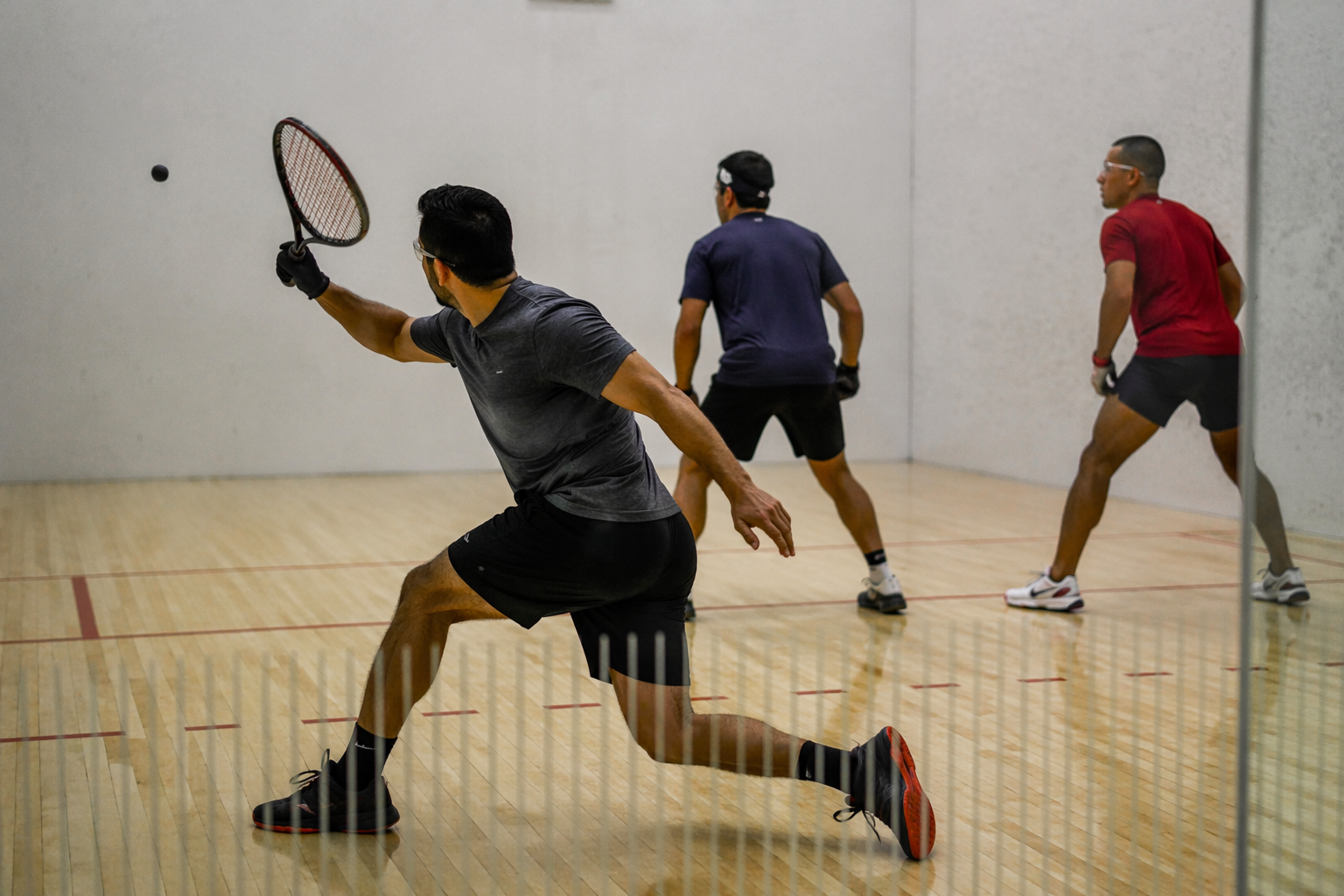
A screen serve is judged by whether the receiver’s view is blocked by a ball passing too close to the server or the server’s partner. The receiver is expected to take good court position near center court to get a clear view. That changes how good doubles players think about return position. A receiver who crowds the corner can get trapped behind traffic; a receiver who stays centered can see more and react earlier.
In practical terms, this is why doubles punishes solo shot-making habits. A singles player may love a tight, low drive into the back corner, but in doubles that same ball can be a better screen only if the partner alignment works and the receiver’s lane is actually compromised.
Protecting a weaker partner is part of winning
Because doubles is played by two people who must occupy the same court, the stronger player often has to absorb the tougher assignments. A weaker partner cannot be hidden forever, but the better pair will try to reduce that partner’s exposure in the service box and on early returns. If one player is vulnerable to a high-pressure returner, the team may choose safer serve placement and cleaner rotation rather than chase a low-percentage ace.
The rule structure supports that kind of protection. Since the referee can penalize improper serving order and a served ball that strikes the non-serving partner is a fault, teams have to build patterns that keep the weaker player out of the most dangerous contact zones.
The national stage shows how central doubles has become
USA Racquetball’s 2026 National Indoor Championships ran Feb. 11-15, 2026 at Arizona State University’s Sun Devil Fitness Complex in Tempe, Arizona, with 212 athletes across 58 divisions and representation from 31 states. That was a 17% increase over the 2025 event, which drew 177 athletes to Bay Club Pleasanton in Pleasanton, California, from May 14-18, 2025.
The 2026 championships also linked doubles performance directly to team selection. Finalists and semifinalists in team qualifying secured positions on the 2026-2027 U.S. National Adult Team effective June 1, 2026.
Doubles has always been part of racquetball’s identity
The first National Racquetball magazine was published in November 1972, and the first NRC Pro Stop was held Sept. 27-30, 1973 in Houston, Texas. The first annual international three-wall singles championships followed in June 1974 at Orange Coast College in Costa Mesa, California, but the doubles story was already taking shape.
Dr. Bud Muehleisen and Charlie Brumfield were the most dominant doubles team of the early era and the first outdoor national champions in 1974. Mark Harding and Paul Olson pushed that legacy further, winning 7 titles overall and 6 of the 10 outdoor nationals pro/open doubles titles in the 1980s.