USA Racquetball sets strict eligibility rules for visually impaired play
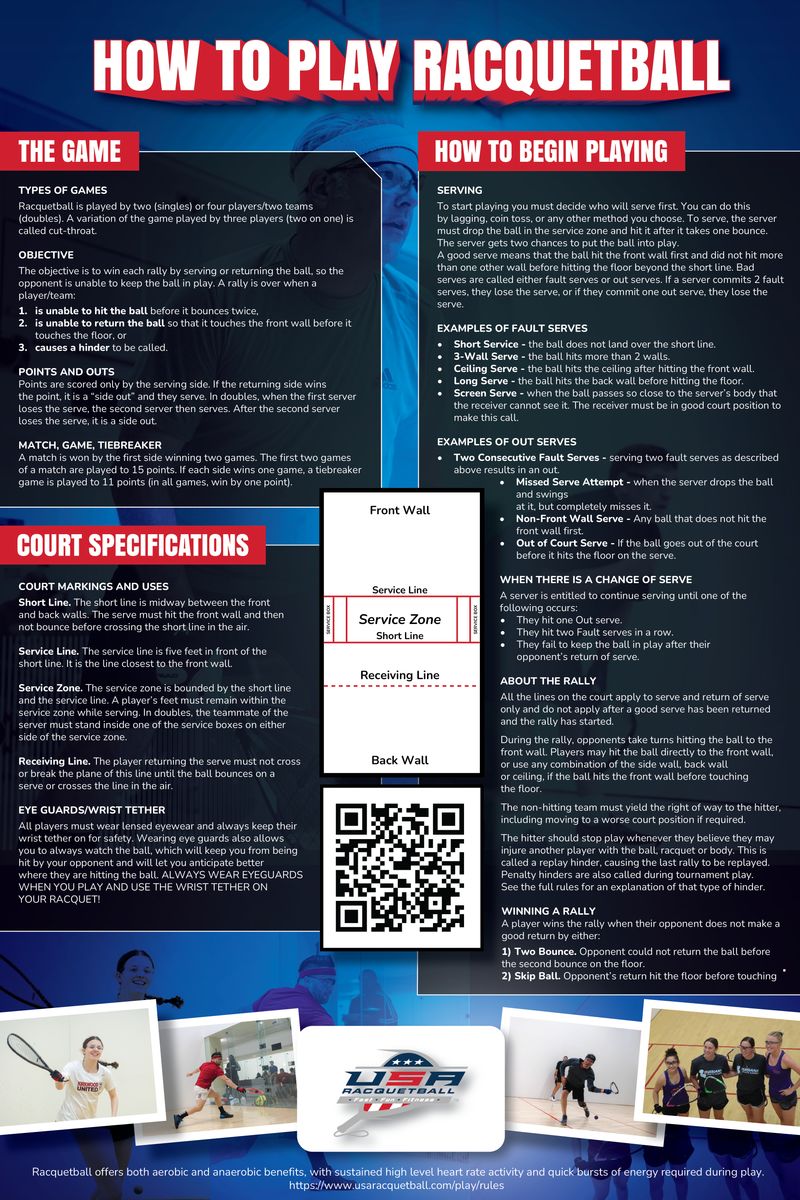
USA Racquetball draws a hard line in visually impaired play: eligibility hinges on measurable vision thresholds, and the rest of the game stays standard unless the rulebook says otherwise. Rule 8.1 uses medical-style cutoffs of 20/200 corrected vision or a 20-degree field of vision, then sorts players into B1, B2, and B3. That is not a courtesy policy. It is the machinery that lets the division run as a real competition.
The eligibility test is exact by design
The first thing the rules do is remove guesswork. USA Racquetball says a player’s visual acuity must not be better than 20/200 with the best practical eye correction, or the player’s field of vision must not be better than 20 degrees. Those are concrete standards, and they matter because they give officials a clear line to apply instead of asking anyone to make a subjective call about how impaired is impaired enough.
The classification labels are just as specific. B1 means totally blind to light perception. B2 covers players who can see hand movement up to 20/600 corrected. B3 covers the range from 20/600 to 20/200 corrected. In other words, this is not one catch-all category for anyone with low vision. It is a tiered system that separates different functional levels of sight so competition can be organized around comparable ability.
What changes on court, and what does not
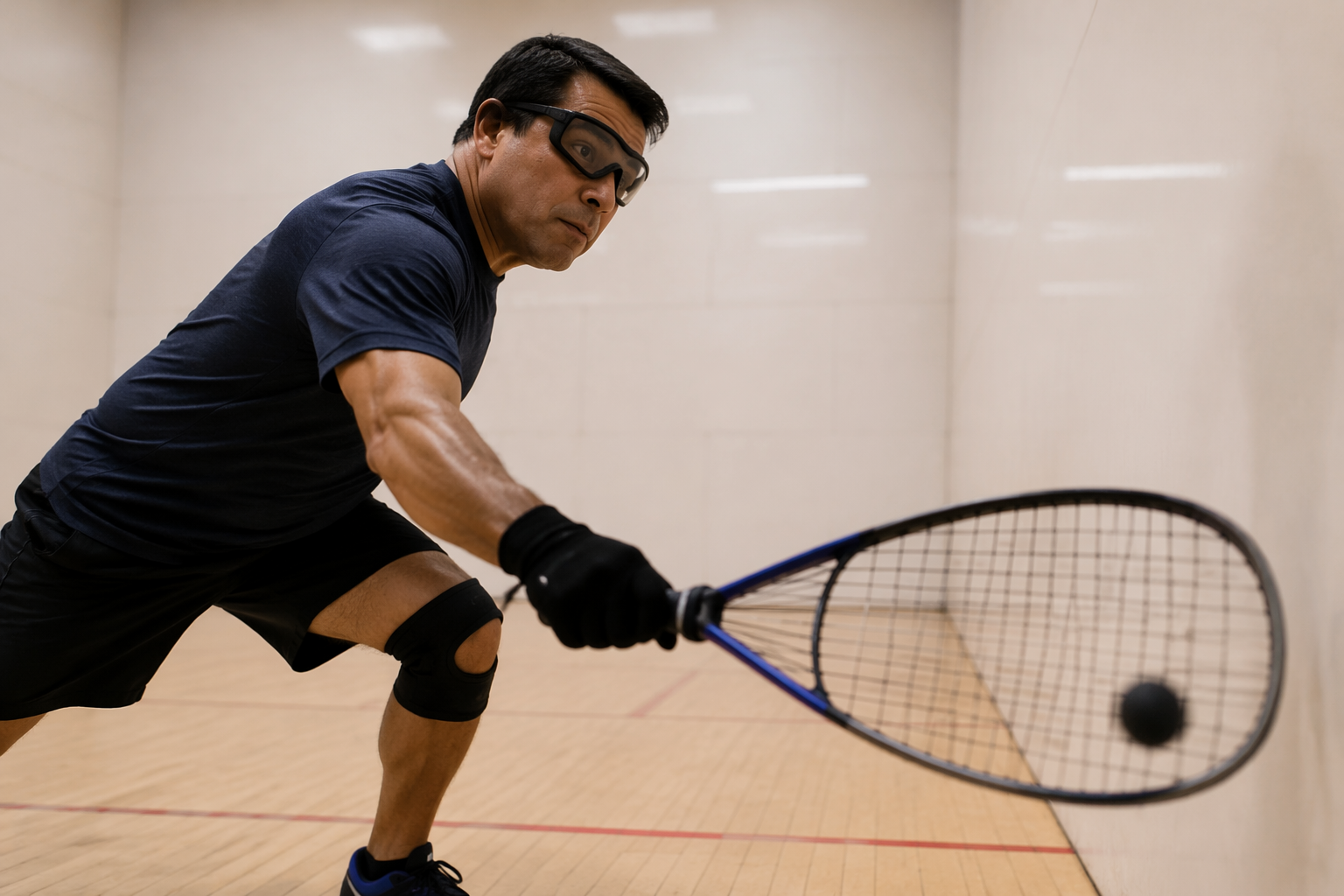
The most useful sentence on the current rules page is the simplest one: standard racquetball rules apply unless modifications are stated in the visually impaired section. That tells clubs, referees, and tournament directors exactly where the sport stays intact and where adaptation begins. The court is still a racquetball court, the ball is still moving in the same tight geometry, and the rally still turns on fast rebounds. The difference is that the rulebook now names the eligibility and adjustment points instead of leaving them to informal accommodation.
That structure matters because racquetball is one of the least forgiving court sports for ambiguity. The ball comes off walls quickly, angles change in a blink, and a small officiating error can tilt an entire match. A classification system based on 20/200, 20 degrees, and the B1-B3 ladder gives event staff a real framework: check eligibility first, then run the division under the published modifications rather than improvising from match to match.
For event directors, the practical takeaway is simple. A visually impaired division should not be treated like a special exhibition appended to a regular draw. It is a regulated competition with defined entry standards, and those standards are the foundation for seeding, grouping, and officiating consistency.
The rulebook has carried this for years
This is not a late-stage add-on. A 2013 USA Racquetball Official Rules document says the rulebook went into effect on September 1, 2013 and covered all USAR sanctioned and non-sanctioned play in the USA, with rule modifications for Wheelchair, Deaf, and Vision-impaired racquetball play. A later rulebook version was still described as effective September 1, 2013 and noted no significant changes since October 2014, which shows how firmly the framework had already settled in.
The current rules page also says the most recent version of the rulebook includes seven rule changes passed by the USA Racquetball Board of Directors in July 2023. That matters because it shows the vision-impaired section sits inside an active governance system, not a frozen document. The standards can be updated, but the core idea stays the same: eligibility is defined by precise criteria, and the sport’s base rules remain the default.
The public record goes back decades
There is older evidence that visually impaired racquetball was being shown in organized form long before the current rulebook page. A YouTube video from the 1989 US Racquetball National Championships is titled Exhibition of Visual Impairment Racquetball and notes that it was presented with permission from USA Racquetball. That is the kind of detail that tells you the concept was not experimental theater. It had already earned a place on a national championship stage.
The archival record backs that up. A USA Racquetball page titled 9-Visually Impaired Racquetball appeared in the teamusa.org rulebook archive from 2017 to 2019. For a sport built around institutional consistency, that kind of archival presence matters. It shows that the category was preserved as part of the official rule structure, not left as a one-off demonstration that disappeared when the cameras did.
Why this classification model works
The logic here lines up with the broader adaptive-sport playbook. The U.S. Association of Blind Athletes was founded in 1976 by Dr. Charles Buell to improve the lives of people who are blind and visually impaired, and the United States Olympic and Paralympic Committee describes vision impairment classification in Paralympic sport as the system used to determine eligibility and grouping. That is the same operating principle USA Racquetball uses in its own rulebook: classify first, then compete.
That is why the visually impaired division can expand access without diluting competition. The game still looks and feels like racquetball, but the entry gate is built on measurable standards rather than vague tolerance. Clubs that want to host it, and directors who want to run it well, have everything they need in the rulebook: the thresholds, the categories, the default rules, and the modifications. Precision is the accommodation, and in this case precision is what keeps the competition honest.
Sources
- [1]usaracquetball.com
- [2]s3.amazonaws.com
- [3]web.archive.org
- [4]youtube.com
- [5]usaba.org
- [6]usopc.org