USA Racquetball standardizes seeding and draws for national events

USA Racquetball’s draw rules turn a sanctioned tournament into more than a single-elimination sprint. The structure is built to protect fairness, preserve court time, and make sure a tough first-round loss does not end a player’s weekend before it has started.
Seeding before the first serve
The first competitive edge in racquetball often appears before anyone steps on court. USA Racquetball says draws should be finalized at least two days before a tournament begins when possible, and its preferred seeding method is the current national rankings. The organization also says tournament software can automate the seeding process, which matters when divisions are large and every placement affects who gets the more difficult path through the field.
For national championships, the process is even more formal. USA Racquetball says the draw and seeding body is chaired by the Executive Director or a designee, and it should include an odd number of knowledgeable people so ties can be broken cleanly. The organization has also published specific seeding criteria for national events, and in June 2026 it announced a Ranking & Seeding Group, facilitated by Director of National Events Jonathan Greenberg, to develop and apply consistent seeding processes for national championship draws. That move gives the sport a clearer standard for how top players, dangerous unseeded entrants, and rising juniors get placed in the bracket.
Why the bracket matters to the match you play
Seeding is not just paperwork. It decides who is forced into a tougher opening round, who gets a more manageable route to the late stages, and how quickly a surprise result can ripple through the draw. In a national event, a top seed who is protected early can avoid another elite player until later, while an unseeded player may have to survive a much harder first match just to reach the same stage.
That structure also gives the sport its tactical tension. One upset can completely alter a division, changing the semifinal picture and opening space for a lower-seeded player to make a run. For spectators, that makes the draw itself part of the story. For athletes, it makes every placement decision feel immediate, because one slot up or down can reshape the entire weekend.
How racquetball guarantees more than one match
USA Racquetball’s tournament rules aim to keep entrants active even after an early loss. If court time allows, each entrant should get a minimum of two matches in a division, usually by moving first-round losers into a consolation bracket. That approach gives sanctioned events a built-in safety net and makes the bracket more forgiving for players who travel, pay entry fees, and expect real court time.

The format changes with draw size. For smaller draws, USA Racquetball recommends a round robin. For larger draws, it says pool-play round robins followed by a single-elimination playoff can be used. The practical effect is simple: some divisions are built to sort everybody through match play before the knockout rounds, while others keep a traditional bracket but add a second route so the weekend does not end after one bad result.
USA Racquetball also says preliminary consolation matches may be two games to 11 points, while semifinal and final matches should use standard scoring. That distinction matters because it shows the consolation bracket is not a throwaway side event. It is a real competitive layer, just with a shorter format early and a full scoring standard when the division reaches its decisive rounds.
The organization says the consolation format should be written on the tournament application or posted on the tournament website. That makes the event’s structure part of the public contract with players: you should know in advance whether a loss sends you into a dropdown bracket, a pool stage, or a straight elimination path.
Scheduling pressure and the multi-division player
The same rules also account for the realities of busy tournament weekends. USA Racquetball warns that players entered in more than one division may have several matches in a day, and it recommends reasonable rest when possible. That is not a small detail. In racquetball, where speed and recovery matter, the gap between matches can shape performance as much as the draw itself.
This is where bracket design becomes a player-safety and player-performance issue as well as a competitive one. A player who is seeded deep in multiple draws may face back-to-back matches that test endurance more than raw shotmaking. A well-built schedule protects the quality of play, especially when divisions overlap and the event is trying to fit a full field into limited club time.
A sport that has been standardizing for decades
The current rules sit inside a long organized history. USA Racquetball’s history materials say the first official racquetball magazine, titled Racquetball, was published in November 1972. Those same materials reference the first official International Racquetball Association Championships in 1969 in St. Louis. The point is not nostalgia. It is that racquetball has been formalizing its competitive structure for generations, and modern seeding policy is part of that lineage.
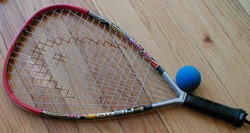
That history helps explain why the sport cares so much about bracket integrity now. The draw is not a decorative chart; it is the framework that determines access, fairness, and the rhythm of a tournament weekend. The sport’s rules treat it that way because racquetball has always depended on a carefully managed competitive environment.
What the recent national fields show
The size of recent national events makes those rules feel even more necessary. USA Racquetball says the 2026 National Indoor Championships ran from February 11 to 15, 2026, at the Arizona State University Sun Devil Fitness Complex in Tempe, Arizona, and drew 212 athletes. That was a 17 percent increase from the 2025 event.
The 2025 National Indoor Championships ran from May 14 to 18, 2025, at Bay Club Pleasanton in Pleasanton, California, and drew 177 athletes. Those numbers show why standardized seeding, round robins, and consolation play matter so much. Once a national field reaches that size, the draw itself becomes part of the championship experience, shaping who gets tested early, who gets protected, and who still has a path to meaningful matches after an opening loss.
Formats that change with the event
Not every USA Racquetball event uses the same structure. In 2023, USA Racquetball noted that Junior Nationals uses a different format than most racquetball tournaments and is not single elimination or consolation. That tells you the organization adapts format to the purpose of the event, especially when the field is development-focused.
The US OPEN provides another useful example. Its junior-focused pro divisions have guaranteed two matches and use a dropdown or consolation bracket if a player loses in the first round. That blend of protection and competition is exactly what modern racquetball tournament design is trying to achieve: every entrant gets a fair start, a real chance to compete, and enough court time to make the trip worthwhile.
The result is a national event structure that rewards ranking, preserves transparency, and keeps the draw alive well beyond the opening round. In racquetball, the bracket is part of the competition, and USA Racquetball is making that structure more consistent from event to event.