USA Racquetball uses multi-bounce to grow the junior game

More than 180 junior players are expected at the 2026 Junior National Championships, set for June 24-28 at the Wellmark YMCA in Des Moines. USA Racquetball is leaning on multi-bounce as a development tool, not a novelty. The format is built to give younger players more time to track the ball, get set, and learn court position without changing the sport’s core demand: hit the front wall, keep the rally alive, and force an error or an unreachable return.
The rule framework that makes it teachable
Multi-bounce keeps the basic racquetball mechanics intact. The ball stays live while it is bouncing, but a player gets only one swing at it, and the ball is dead once it stops bouncing and starts rolling. The format also keeps the back-wall and short-line geometry in play, since any ball rebounding off the back wall must be struck before it crosses the short line on the way to the front wall, with a special blast-rule exception when the ball caroms from the front wall to the back wall on the fly.
The teaching value is in the front-wall targets. The rules place two horizontal reference lines on the front wall, one at 1 foot and one at 3 feet, so players learn different return windows based on where the ball lands. A ball hitting below the 3-foot line but on or above the 1-foot line must be returned before a third bounce; a ball hitting below the 1-foot line must be returned before a second bounce; a ball hitting on or above the 3-foot line follows the basic multi-bounce return rule. Games are played to 11 points and the first side to win two games takes the match.
Multi-bounce slows the pace just enough for beginners to survive longer rallies, but it still forces the same decisions about angle, depth, timing, and recovery that matter in one-bounce racquetball.
Who should play it
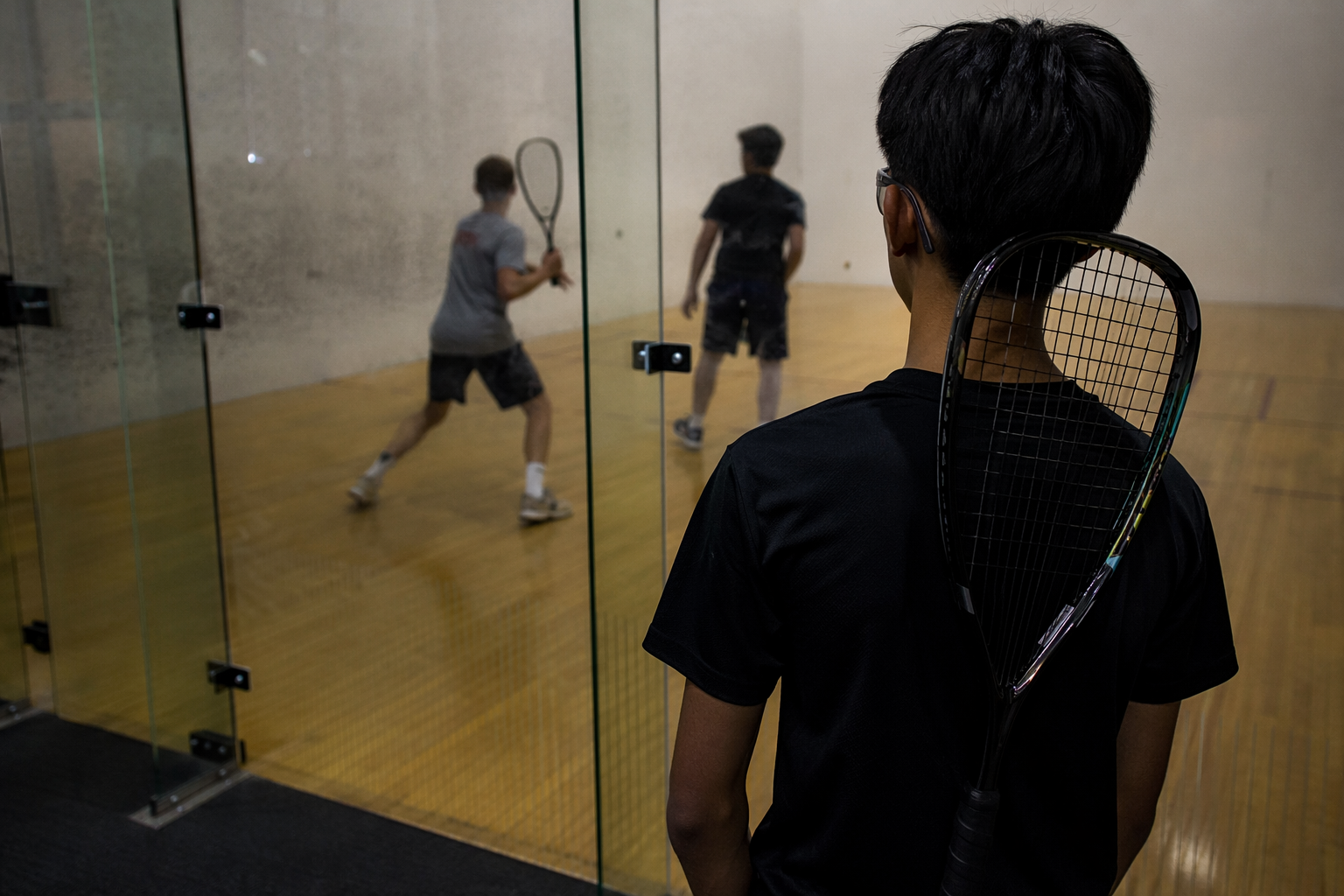
The youth setup includes 6 & Under and 8 & Under multi-bounce divisions, while 10 & Under players can have the option of two-bounce play. In an older youth explainer, Dan Horner, the national rules commissioner, presented those divisions as the place for “the littlest ones just getting started,” with 10 & Under players getting an extra bounce on the return of serve and during rallies.
Horner also made the development case plainly in 2023: “juniors are the players of the future.” He urged parents and clubs to bring children and grandchildren to the court, watch local junior practices, become certified instructors, donate old racquets, goggles and racquetballs, and sponsor juniors for camps, clinics, or Junior Nationals.
Many youth coaches still start with regular rules even for very young players, which makes multi-bounce a deliberate choice rather than a default. The 2026 rules explainer was written around the Junior National Championships because the event uses multi-bounce formats, and because younger players benefit from a version of the game that lets them learn mechanics before the pace rises.
How clubs can build the bridge
A good multi-bounce progression does not stop at the first rally. It should move players through a sequence that preserves the same court habits while shrinking the safety net:
- Start with 6 & Under and 8 & Under multi-bounce so players can track the ball and finish points without being overwhelmed by speed.
- Move 10 & Under players into two-bounce, or let the Tournament Director use the flexibility the rulebook allows for two or three bounces based on age, skill and participation goals.
- Transition the same group into one-bounce by keeping the front-wall target work, the short-line awareness, and the recovery steps that multi-bounce already teaches.
That flexibility is built into the rulebook. Youth multi-bounce may be played with two or three bounces at the Tournament Director’s discretion, which gives clubs room to match the format to the age group and the size of the turnout. The format can be tuned as a staged lesson in spacing, patience and shot selection.
Clubs that want to grow the junior base can also use the same 2023 national approach: offer beginner-friendly divisions, lower the cost barrier when possible, and help families outfit kids with usable gear.
The junior pipeline is already visible
USA Racquetball keeps separate junior championship histories for Singles 6-Multibounce and Singles 8-Multibounce, and the 8-and-under list stretches back to 1983, when Sudsy Monchik and Kelli Fisher were among the champions. Recent winners include Xavier De La Torre-Barrera and Sasha Rai in 6-and-under in 2024, plus Zane Horner and Nithya Kyra Mangalampalli in 8-and-under that same year.
The 2025 Junior National Championships in Minneapolis, held at the University of Minnesota Recreation Center from June 25-29, drew 170 players, the biggest Junior Nationals field since 2017.