USA Ultimate breaks down the thrower's toolbox for deeper play
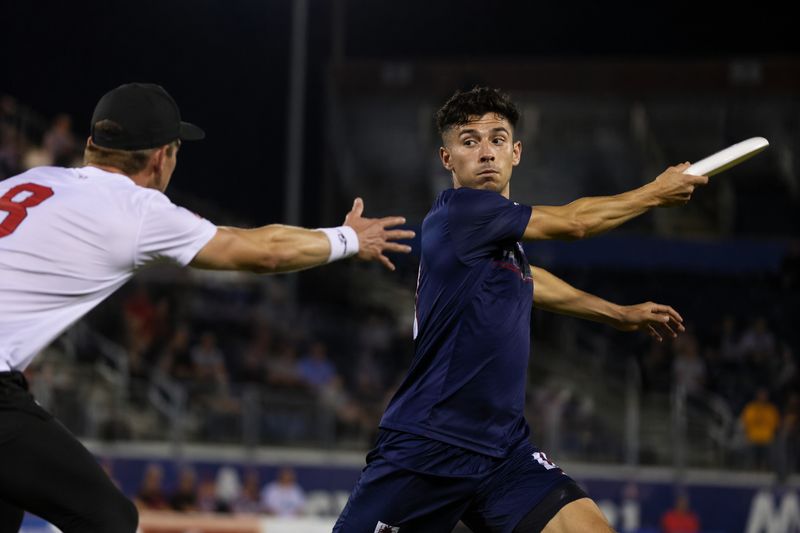
Ultimate is built around three foundation throws — the backhand, forehand and hammer — in a seven-a-side game played on a field about the length of a football field, with 18-meter end zones.
The geometry that makes the throws matter
Ultimate as it is played today traces back to Columbia High School in Maplewood, New Jersey, in the summer of 1968, when students were still shaping the rules around a sport that would become self-officiated at every level. USA Ultimate later took form as the Ultimate Players Association in 1979, and its Spirit of the Game standard puts fair play in the hands of the athletes themselves, without neutral officials.
The sport has grown well beyond those origins. USA Ultimate’s 2022 annual report lists more than 50,000 members, while the World Flying Disc Federation’s world ultimate rankings cover competition across more than 125 member national federations. USA Ultimate also launched the first annual DISCover Ultimate Day on September 6, 2025, with 22 communities in 15 states taking part.
Backhand: the throw that opens the field
The backhand is the first throw most players learn for a reason: it comes across the body, it feels natural, and it gives a thrower a reliable way to move the disc without needing a complicated release point. The basic sequence is simple: shoulder to the receiver, step out, snap the wrist and release. That motion turns the throw into a repeatable answer when the offense wants something quick and stable.
On the field, the backhand is often the highest-value choice when a handler needs to keep the disc moving through open space or reset a stalled possession without forcing a more delicate angle. Because the motion crosses the body, it can be released with pace and accuracy from a wide range of stances, which is why it remains the backbone of everyday offense. The downside is that the same familiarity that makes it dependable also makes it easier for a defense to read if the offense leans on it too heavily.
Forehand: the side-of-the-body answer
The forehand, often called the flick, solves a different problem. It uses a two-finger grip under the disc with the thumb on top and is released from the side of the body in a motion that works a lot like a quick flick. Where the backhand sweeps across the frame, the forehand stays on one side, letting a thrower attack space that would be awkward or slow to reach with the other hand.
That makes the forehand especially useful when the mark is set to take away the obvious backhand lane or when a cutter breaks into space that is easier to hit from the same side of the body. It is the throw that can keep an offense from becoming one-dimensional, because it forces the defense to defend both sides of the handler. The forehand also carries its own risk: if the release gets rushed, it can flatten out or drift, and if a player never develops confidence with it, the offense can get trapped into predictable shapes.
Hammer: the overhead lane that changes the mark
The hammer is the throw that most clearly expands what ultimate can do. It uses a forehand grip turned upside down and is released over the head with a quick wrist action. That creates a vertical passing lane that does not exist in most other team sports, which is why the hammer becomes so valuable when the standard lanes are crowded or the mark has taken away the sidearm and backhand options.
In practical terms, the hammer is a break-glass answer for tight spaces. It can punish a defender who leans too hard into a force, and it can reach cutters running into pockets of space that are invisible from shoulder level. The tradeoff is that the overhead angle asks for timing and touch, especially when bodies are packed together or the offense has not cleared space well enough for the disc to travel cleanly.
When the full toolkit changes an offense
The real edge comes when the three throws stop looking like separate tricks and start functioning as a system. A handler who can throw a backhand reset, a forehand continuation and a hammer into space does more than complete passes, that player makes the defense account for three different release planes at once. That is how an offense moves from predictable to dangerous: the mark has to respect the across-the-body throw, the side-of-the-body throw and the overhead lane, and every cutter gets more room on the next cut.
USA Ultimate’s introductory manual credits earlier skills-and-drills materials compiled by Catherine Hartely, Kyle Weisbrod, Anne Wescott, Corey Young, Eric Simon, Robin Barney and Suzanne Fields, and cites Ultimate: Fundamentals of the Sport by Irv Kalb and Tom Kennedy for the basic throw descriptions.