USA Ultimate explains Spirit of the Game as self-officiated play

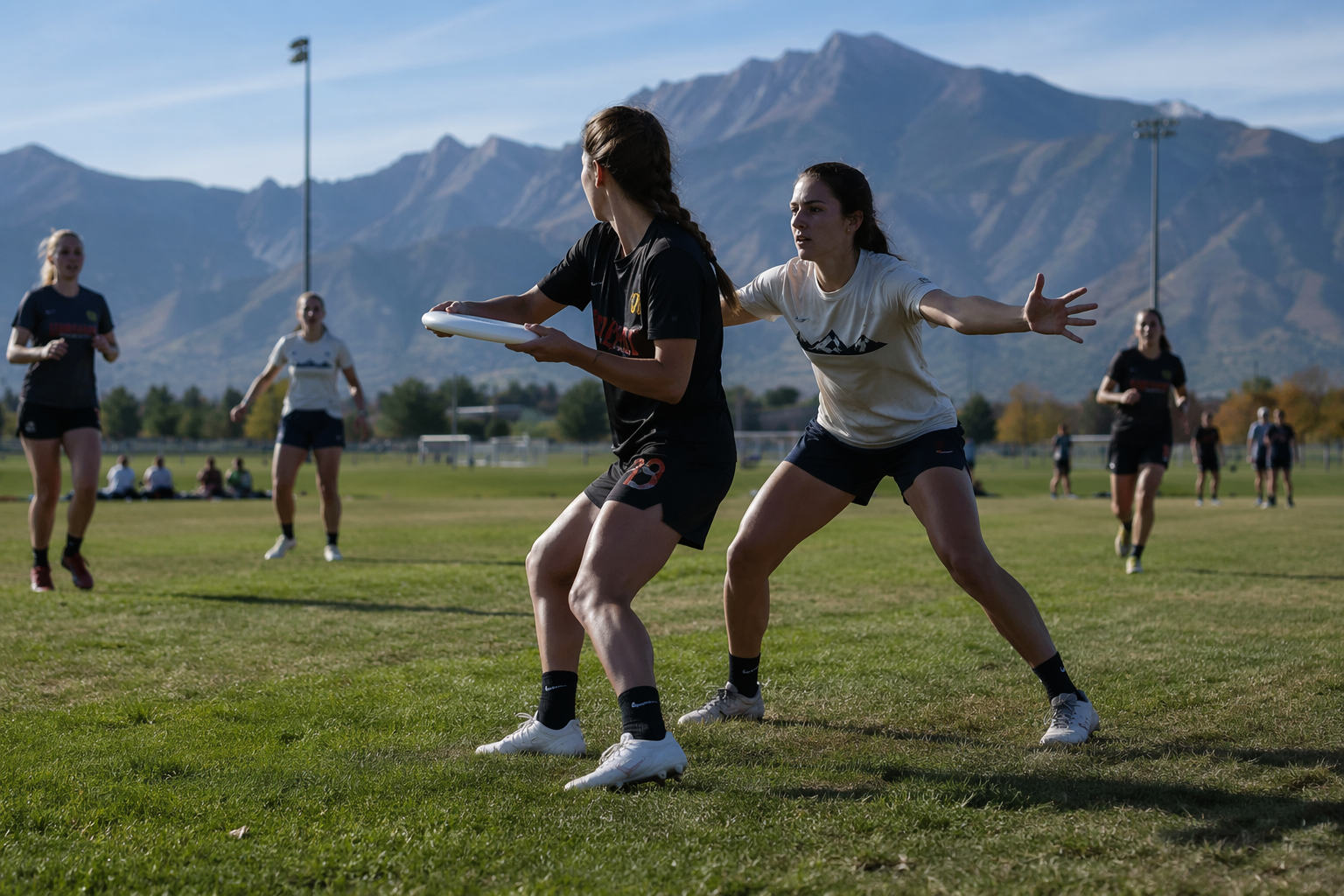
Spirit of the Game is the part of ultimate that makes the sport feel different the moment the disc goes up. USA Ultimate’s rules describe ultimate as a non-contact, self-officiated disc sport played by two teams of seven, with players empowered to make their own calls without a neutral official. That is not a side note in the rulebook. It is the mechanism that forces every athlete to be competitor, teammate, and official at once.
What Spirit of the Game actually means
At its core, Spirit of the Game puts fair play on the athletes themselves. USA Ultimate says each player has to know the rules and apply them in real time, and the World Flying Disc Federation uses the same basic idea: responsibility for fair play sits with every player on the field. That is why ultimate can look like a full-speed collision of layouts, bids, and break throws while still asking the players to police themselves.
The sport’s culture has been built that way from the beginning. WFDF’s history places the first Ultimate rules in 1970, written by Joel Silver, Buzzy Hellring, and Jon Hines. The founders at Columbia High School in Maplewood, New Jersey, expected referees would eventually be used if the sport took off, and WFDF also notes that early games were played on an honor system. The ideal was always self-governance, but the founders were not pretending competition would stay small or simple forever.
That tension still defines the sport. Spirit is not just about being polite after a foul call. It is about making the game work without outsourcing the hard part to an official.
How the 2025 Spirit scoring system works
USA Ultimate’s 2025 Spirit Scoring System translated that philosophy into a number. The update did not redefine Spirit of the Game, but it did make the score sheet cleaner: five categories became three, and the average Spirit score changed from 10 to 6. Each category is scored from 0 to 4, and a score of 2 means a Good game. That makes 6 the expected total for a solid outing, while 12 is the ceiling.
The three categories are simple enough to remember and sharp enough to matter: Rules Knowledge and Use, Fouls and Body Contact, and Communication and Conduct. That shift matters because it moves Spirit away from a fuzzy impression and toward a specific evaluation of how teams play the game. If a team knows the rules, avoids unnecessary contact, and communicates cleanly, the score should reflect it. If it does not, the number drops.
USA Ultimate says the revision was designed to simplify overlapping categories, modernize the guidance, and address concerns about bias in Spirit ratings. The Spirit of the Game working group did most of the work, with help from the SOAR committee, the EDI committee, the LGBTQ+ advisory council, and the BIPOC Advisory Working Group. That combination tells you the organization was not only thinking about mechanics. It was also trying to make sure the system did not quietly reward some players and punish others for reasons that have nothing to do with fair play.
Where Spirit scores matter in real games
Spirit scoring is not just a feel-good appendix at the end of a tournament. USA Ultimate’s Spirit examples say teams should use the criteria as a guide, and they expect a typical game to come out as Good, meaning 6 points. The examples also warn that self-officiating and Spirit ratings can be affected by bias, which is the part of the system that deserves the most scrutiny.
That warning is the reason Spirit scoring matters in tournament culture. If players know a score will be given, they have one more reason to explain calls clearly, avoid late contact, and keep arguments from spiraling. The score does not replace the game itself, but it does create a public record of how the game was played. In that sense, Spirit scoring is an accountability tool first and a cultural statement second.
The category structure also gives spectators and reporters a concrete way to read behavior on the field. Clear explanations during calls, good rule knowledge, official hand signals, active efforts to avoid unnecessary contact, and teammates correcting bad calls are all part of the system. That is a lot more measurable than a vague plea to “play with class.”
The Spirit Captain role and the bias check
USA Ultimate gives teams another tool: the Spirit Captain. A Spirit Captain is a player who is eligible to participate and has been designated to address, discuss, and resolve Spirit issues with opponents, teammates, coaches, and officials. USA Ultimate encourages Spirit Captains at all levels, and in some settings they may be required.
That role matters because Spirit problems are often not isolated to one foul call. They can involve tone, trust, and whether a team is willing to hear a correction. A Spirit Captain can step in before a disagreement becomes the kind of sideline argument that drags an entire game off course.
USA Ultimate’s EDI guidance adds another layer by recommending spirit timeouts and spirit circles when bias may be affecting play or conflict. That is a notable admission. It says the sport does not assume its self-officiating system is automatically fair just because it is self-officiated. The structure exists because bias can creep into how calls are made, how they are received, and how Spirit is scored.

Why observers still sit in the middle of the debate
Spirit has never existed in a vacuum, and the observer question keeps proving it. WFDF says the debate over observers and Spirit remains ongoing in North America and internationally, and its history page says the move toward the current Observer system was shaped by notable incidents over time. USA Ultimate’s rules now include an Observer section, which makes the governing structure more layered than the pure honor-system image many casual fans still carry.
That is the real cultural split in ultimate: self-officiation is the ideal, but observer-supported play is part of the modern game. USA Ultimate draws a line between the two in its rules structure, while still keeping Spirit at the center. In practice, that means the sport is trying to preserve its identity without pretending high-level competition can run on ideology alone.
The cleanest way to frame it is this: Spirit is not anti-competition. It is the sport’s method for keeping competition honest when the players themselves are the officials.
Spirit, participation, and the broader culture around the sport
USA Ultimate also ties Spirit to the sport’s accessibility. The organization describes ultimate as low-cost, minimal-equipment, and playable in single- and mixed-gender formats. It also says the sport develops communication and conflict resolution skills, which is exactly why Spirit carries so much weight beyond the box score.
That culture is visible in USA Ultimate’s growth efforts too. The first annual DISCover Ultimate Day was held on September 6, 2025, with 22 communities in 15 states taking part. USA Ultimate says its EDI work is meant to increase participation among underrepresented groups, lower financial barriers, and expand participation for women and LGBTQIA+ athletes. Those goals connect directly back to Spirit, because a system that can be skewed by bias is not just a rules issue. It is an access issue.
So the most important thing to understand about Spirit scoring is not the math, even if the math is now cleaner. It is the message embedded in the score: ultimate wants to measure whether players can compete hard, call it fairly, and accept accountability without handing the game over to someone else. The scoreboard keeps the points, but Spirit keeps score on something else entirely.
Sources
- [1]usaultimate.org
- [2]wfdf.sport