USA Ultimate guide shows how to teach beginners in 30 minutes
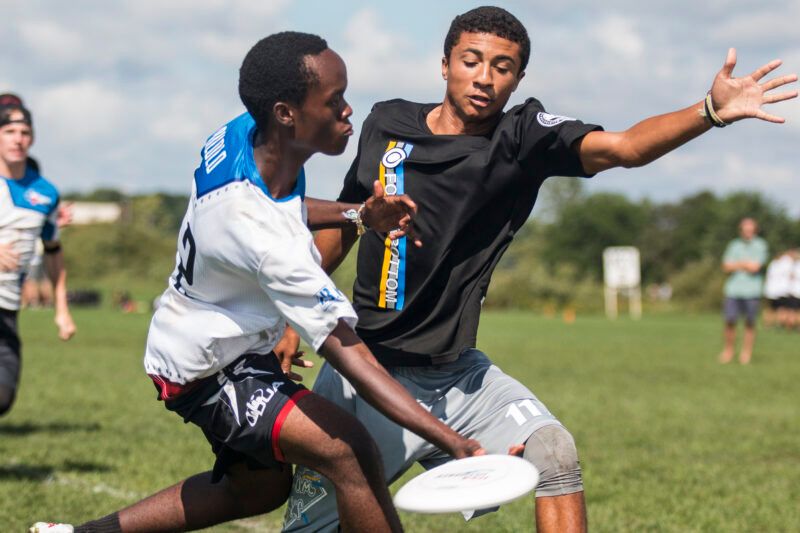
USA Ultimate’s youth rules adaptations put introductory instruction at 30 to 60 minutes, with just one disc and eight cones. The beginner setup is cheap, short, and flexible enough to work in a gym, on grass, on sand, or on a field, and beginners can still leave a single class block understanding the point of the game.
Start with the 30-minute version
USA Ultimate lists the equipment cost at about $10 to $20, and the educator quick-reference guide labels the injury risk low while noting that the sport still asks players to use both aerobic and anaerobic effort. That combination lets a teacher build a lesson around movement and decision-making instead of spending half the period explaining gear or waiting for a full field setup.
The cleanest first lesson is built around a small-sided game, not a long lecture. Put the cones down, mark a scoring space, show how the disc advances downfield, and let players learn by moving, catching, and resetting. The official beginner structure works because it does not demand a complex facility or a trunk full of equipment; it demands a clear target, a small space, and a tight teaching script.
The rule that changes everything: Spirit of the Game
Ultimate’s beginner materials do not treat sportsmanship as an add-on. Spirit of the Game puts respect and sportsmanship at the center of Ultimate’s philosophy, and there are no referees because players are responsible for making their own calls. WFDF calls Spirit of the Game one of the core elements in flying disc sports and places responsibility for fair play on every player.
That makes Ultimate unusually useful in school settings, where the lesson is about more than throwing mechanics. Students have to pivot, create space, communicate, and resolve contact or fouls without turning every stoppage into a teacher intervention.
What to simplify by age group and class size
The beginner framework becomes even more practical once you stop pretending every group should learn the same way. A school resource package on adapting Ultimate Frisbee to all ages lays out age bands for 6-10 year olds, 11-13 year olds, 14-16 year olds, 17-18 year olds, and secondary school lesson plans. Victoria Flying Disc Association’s school package includes eight lesson plans for students aged 13 and over, and the Australian Sports Commission has published eight curriculum-aligned flying disc lesson plans for primary school teachers.
You can scale the same sport without changing its identity. Younger players need shorter directions, tighter spaces, and more repetition on basic throws and catches. Older students can handle more of the rule set, longer points, and bigger decisions about spacing and movement. In a large class, the one-disc, eight-cone setup naturally supports rotation and small-sided games, which means nobody is standing around waiting for a full-field scrimmage to organize itself.

A practical PE format looks like this:
- Use the cones to carve out a compact playing area.
- Teach the smallest useful version of the game, get the disc moving, and keep the first points short.
- Add one rule at a time, especially the self-officiated call process.
- Finish with a small-sided game so the class learns through play, not explanation.
Gym, grass, sand: the same lesson, different footprint
USA Ultimate’s educator guide allows the same beginner lesson to run on a field, in a gym, on grass, or on sand, so weather and facility constraints do not kill the lesson plan. For a PE teacher, that matters as much as the low cost. For a youth coach, it means the sport can survive winter, cramped indoor space, or a summer program that only has a patch of open ground.
The key is not to overcomplicate the space. Keep the playing area small enough that beginners can see each other, the disc, and the end zone without sprinting half a field to get involved. A compact setup helps first-time players understand spacing faster, and it makes pivoting and cutting visible in a way that a giant field often does not.
Why Ultimate keeps showing up in schools
Ultimate did not grow out of a pro-first system. WFDF dates Joel Silver’s introduction of the idea at Columbia High School in Maplewood, New Jersey, to 1968, and the first game to 1969. Another school-resource history dates Columbia High School’s competitive team to 1969 and places its practices in a parking lot.
The wider lesson plan is already there
The beginner pathway is not just a U.S. story. The Australian Sports Commission has eight curriculum-aligned flying disc lesson plans for primary school teachers. The Australian Flying Disc Association offers an eight-week beginner plan with each lesson lasting 40 minutes and adaptable to different settings. Victoria Flying Disc Association’s school resource package includes eight lesson plans for students 13 and over.