USA Ultimate observers keep Spirit of the Game, not referee calls
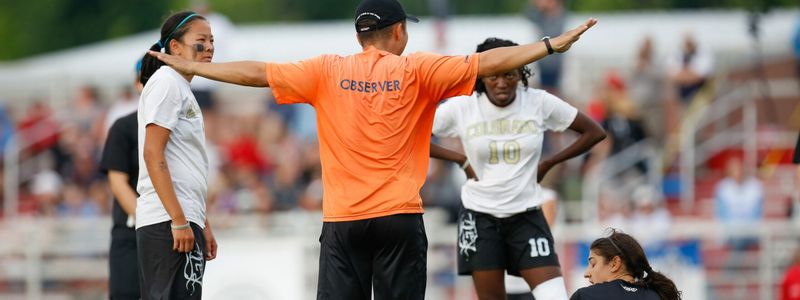
Observers in USA Ultimate are non-player game officials who can rule on boundary decisions, time violations, and conduct issues, but players still own subjective foul and violation calls. They are not referees in the usual sense, and the system is built to protect Spirit of the Game without slowing elite play to a crawl.
What observers can do, and what they cannot
The cleanest way to understand the system is to split the call sheet in two. Subjective decisions, like whether there was meaningful contact, a travel, or a pick, remain player responsibility. Observers can step in when players ask for help, and they can make active calls on conduct issues, time violations, and boundary decisions. The 2024 observer manual details that middle ground, with sections on active and inactive calls, do-over, player overrule, replay, consistency, and best judgment.
If a receiver and defender disagree over a contested catch and the argument is really about contact, the players are still the ones who must sort it out. If the same point turns on whether a foot was on the line, whether the disc was still live at a restart, or whether a stall or time limit was breached, the observer can rule on the objective piece and keep the game moving.
Why ultimate chose this middle ground
Ultimate asks players to police themselves in ways most sports hand to referees. That is part of the sport’s identity, but it also creates a problem in high-level games, where possessions move fast and every stoppage can become a small negotiation. Observers exist to reduce those delays without replacing the players’ authority over the core Spirit of the Game decisions.
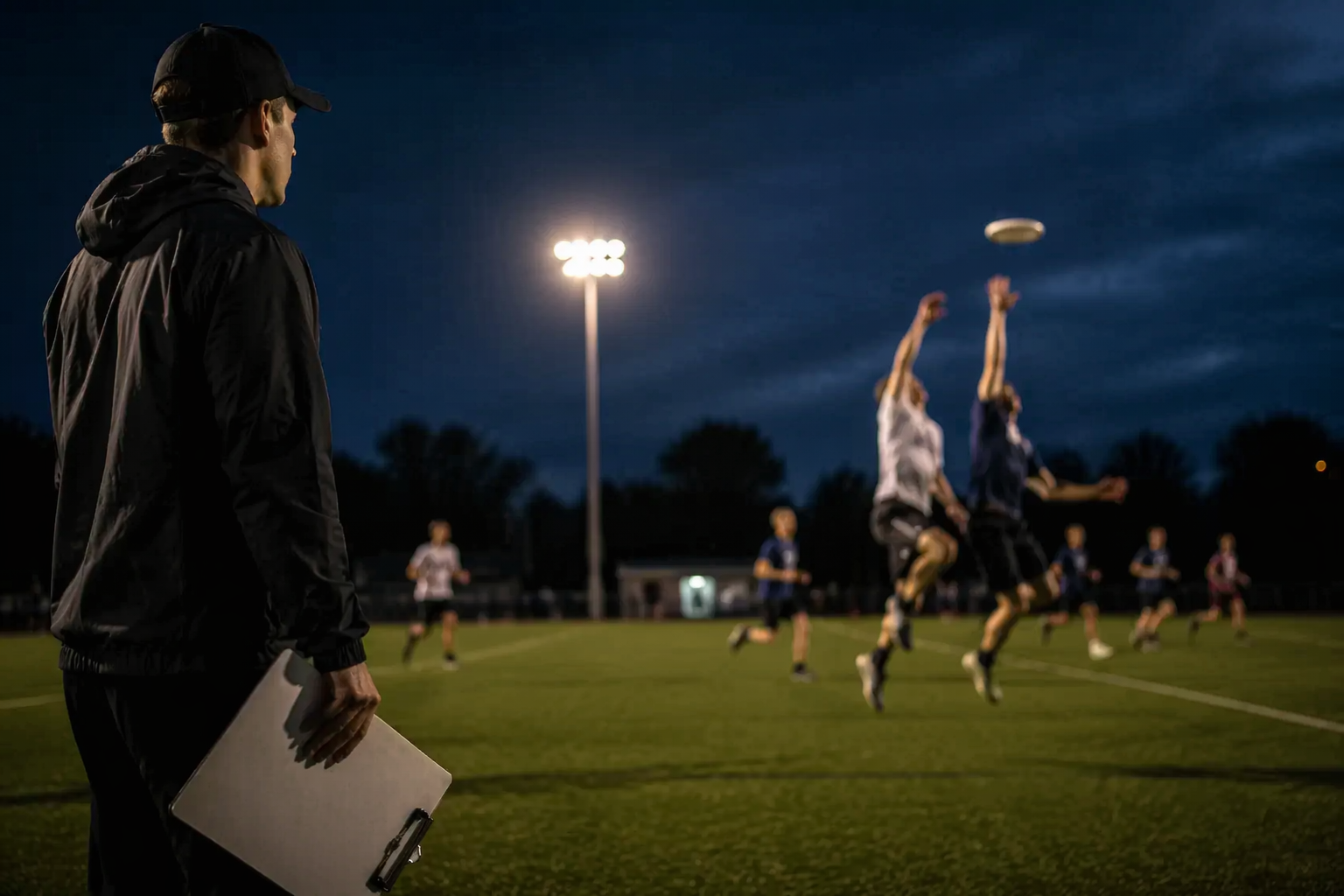
Observers preserve the culture of player responsibility while giving the sport a neutral, rules-trained official for objective matters, conduct, and pace control. A late-game boundary dispute, a restart timing issue, or a sideline conduct problem can be resolved without turning every close play into a full referee stoppage.
WFDF calls the observer-versus-Spirit question an active debate in North America and internationally. WFDF traces the roots back to Columbia High School, where early rules allowed for referees but the game was played on an honor system if no referee was available.
Under WFDF rules, ultimate is self-officiated and non-contact even at world championship level, and games are typically played to 15 points or around 100 minutes.
How USA Ultimate built the observer program
The observer program took on its current structure in 2005, when the national governing body standardized training materials into the USA Ultimate Observer Manual and built a clinic curriculum around it. It is based on clinic attendance, testing, and on-field performance evaluation, with Regional Observer Coordinators created to schedule clinics and deploy observers at USA Ultimate events.
Observer certification clinics run for two days and cover the Observer Code of Conduct, officiating philosophies, mechanics, skills and drills, and the game-day experience. The 2024 clinic model also sends trainees into actual games under the trainer’s supervision after the classroom portion, which is how the system links rules knowledge to live, moving play.
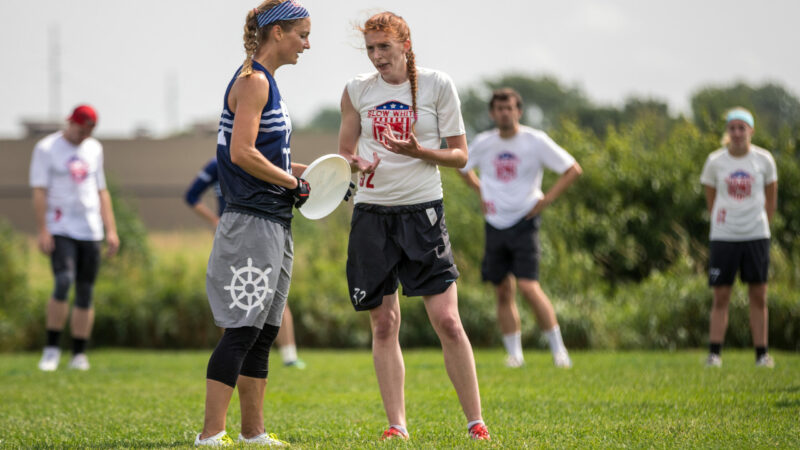
The revised April 2024 edition expands well beyond simple dispute resolution, and it includes a misconduct system with technical fouls, team misconduct fouls, personal misconduct fouls, ejections, and game forfeiture.
What this looks like in game situations
The observer role is easiest to see in the moments that stall momentum. A disc lands near a sideline and both teams have a different view of whether it was in or out. That is an objective ruling, so the observer can make the call and move the point forward. The same is true when a timing issue arises, whether it is a stall count, a restart question, or another time violation that can be resolved without debating intent.
A contact foul is different. If two players disagree over whether a defender impeded a cutter, that is still fundamentally a player call, because it depends on what each player saw and felt. The observer can help if the players request that help, but the system is still built so the players own the subjective part of the decision.
The manual’s misconduct categories place technical fouls, team misconduct fouls, personal misconduct fouls, ejections, and even forfeiture inside the observer framework.