USA Ultimate rules make the pull a field-position battle
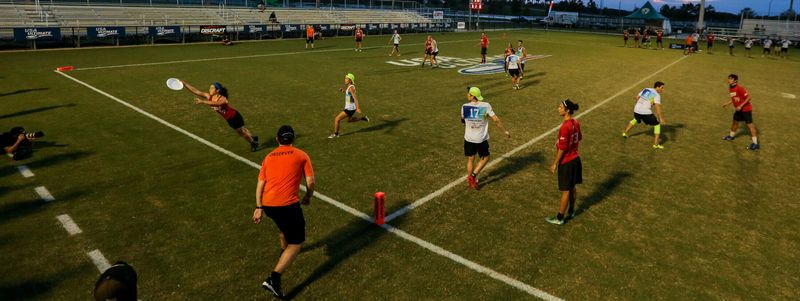
Under USA Ultimate rules, the pull starts play at the beginning of a half or after a goal, and the team that scored the previous point must throw it and then defend. It is the first tactical battle of the point. That means every score flips direction and hands the next possession to a field-position fight before the offense has even completed a pass.
The opening throw sets the terms
A good pull is measured by more than distance. Hang time matters because it gives the coverage unit time to get downfield, and placement matters because a disc aimed toward a sideline or into a dead corner can make the first throw feel rushed from the instant it is caught. The pull is the closest thing ultimate has to a kickoff in American football, but the comparison only goes so far. In ultimate, the geometry is sharper, because where the disc lands can create a sideline restart or a brick restart in the middle lane, and that choice can alter the first three throws of the point.
Elite teams treat the pull as a possession-defining weapon. A deep, well-placed pull can pin the receiving offense into a long field and force a handler set that starts under stress. A flat or floaty pull can hand over a cleaner first look and give the offense room to work. At the top level, that difference shapes whether the defense starts with its preferred marks and switches, or whether it is already chasing.
Why the brick mark changes the whole conversation
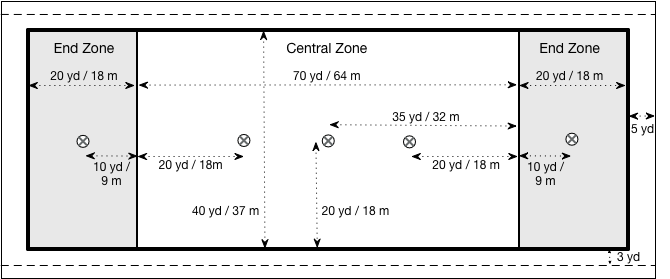
The current USA Ultimate rules place reverse brick marks in each end zone halfway between the goal line and backline, and halfway between the sidelines. When the pull goes out of bounds and the proper signal is made before possession, the receiving team can choose the brick mark closest to the end zone it is defending instead of taking the disc where it left the field. The same bad pull can turn into either a sideline start or a center-lane start, depending on the choice.

The field does not play the same from every lane. A sideline restart compresses space and can make around-the-world movement harder. A brick restart puts the disc in the middle of the field, where offenses can attack either side and defenses must protect more width. On the pull, the defense is trying to decide where the offense starts its first meaningful possession.
The rules also give the receiving team an extra edge on the first pulling-team violation. If the pulling team commits the first violation, the receiving team may let the disc hit the ground untouched and then take it at the brick mark even if the disc initially lands in bounds. That turns one mistake into a better field position than the pull originally allowed. It also rewards teams that know the rule cold and are ready to use it the second the violation happens.
Pin deep, force brick, prevent quick offense
Teams want to pin deep when they can, force brick when they can, and prevent quick offense after the catch. A pull with strong hang time allows downfield defenders to close space, contest the first movement, and make the receiving unit start from a cramped part of the field. A pull that drifts out of bounds can still be useful if it pushes the receiving side toward a worse restart option or forces a slower setup.
If the disc sails out of bounds, the receiving team can take it where it crossed the sideline or use the brick mark closest to the end zone it is defending. A disciplined receiving side may prefer the center restart, but the choice itself changes how the first cutter set forms and which side of the field becomes the immediate pressure point. One throw has already dictated where the offense begins, and often what it can try first.
The best pullers understand that “long” is not the same as “good.” A towering pull that lands deep but gives the offense a clean read is not nearly as valuable as one that lands with purpose, closes space quickly, and sets the first offensive touch in a bad place. Hang time and placement are as important as raw power because the receiving team is managing a possession already framed by the shape of the pull.
How the rules keep the battle honest
USA Ultimate’s Rules Working Group, part of the Spirit, Officiating and Rules, or SOAR, Committee, is responsible for revising and updating the Official Rules of Ultimate. The current 2026-27 Official Rules keep the reverse brick marks and the out-of-bounds options explicit, and the 2024-2025 rules spell out the receiving team’s option on a first pulling-team violation.
Ultimate began in the summer of 1968 at Columbia High School, and unofficial national championships were already being held by the mid to late 1970s. Ultimate developed as a player-run sport built around Spirit of the Game, and players themselves must recognize, call, and manage pull-related options in real time.
The same logic travels internationally
WFDF’s 2025-2028 rules keep the same basic structure alive. The team that scored throws the pull, stays in that end zone, and becomes the defensive team, so teams change direction after each point. WFDF also allows an out-of-bounds pull to be put into play from the sideline or from the brick mark.