USA women’s flag football veterans spotlight Olympic rise in rivalry game
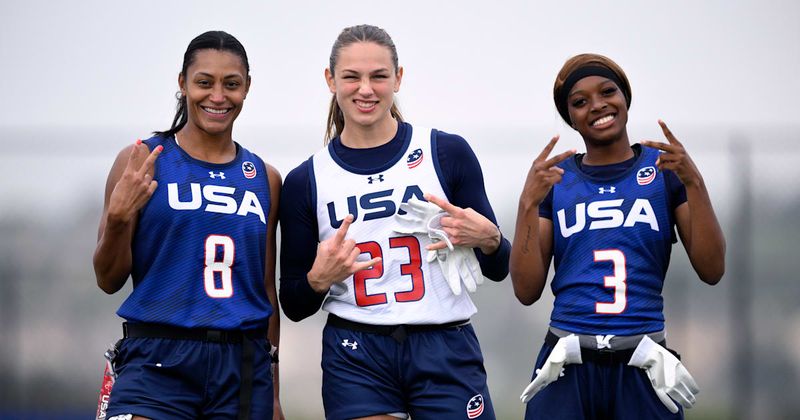
The women who built Team USA’s flag football program are now close enough to see the payoff. In Carson, California, Deliah Autry-Jones, Madison Fulford and Loryn Goodwin helped turn a U.S.-Canada rivalry game into a snapshot of a sport that has moved from limited visibility to an Olympic pathway with real structure behind it.
Veterans carrying the next era
Autry-Jones stands out because her arc mirrors the sport’s own climb. She first began organized flag football in high school, when opportunities for women were far more limited, and now she is one of the longest-tenured players on the national team. That history matters because it shows how recently the sport still lived on the margins, even for athletes with the talent to shape it.
Her view of the present is measured by the future she can finally see. Young girls can now picture college scholarships, national-team selection and even the Olympic Games, a chain of possibilities that barely existed when many of today’s veterans started. Autry-Jones framed the team’s responsibility simply: “the team’s job is to keep making the sport the best it can be.”
Fulford and Goodwin add another layer to that story. Together with Autry-Jones, they represent different eras of the women’s game, but the message is the same: flag football is no longer just an informal opportunity or a niche competition. It is becoming a high-level pathway where experience, consistency and visibility all matter.
Why the Carson rivalry game carried weight
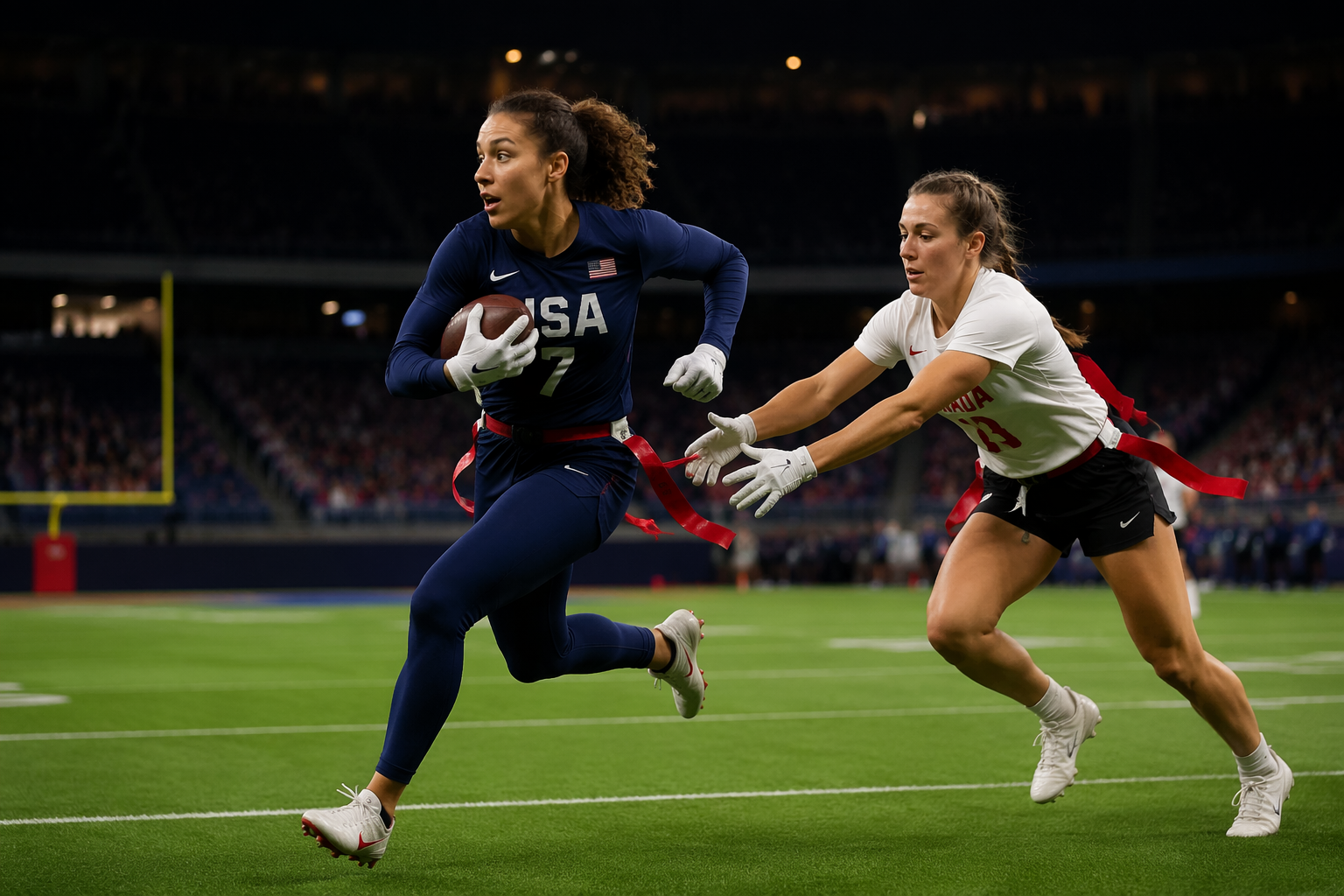
The U.S. women took the field on Friday, June 19, in Carson as part of USA Football’s Summer Series Rivalry game against Canada, and the setting was as important as the opponent. USA Football’s Summer Series at Dignity Health Sports Park brought together more than 1,000 athletes, coaches and team personnel from across the United States and around the world, turning the event into a broad international showcase rather than a simple exhibition.
That scale matters because the rivalry game was not isolated from the sport’s development. The U.S. men’s and women’s national teams both faced Canada as part of the Summer Series in Los Angeles, reinforcing the idea that elite flag football is now being built through repeated high-level matchups, not one-off appearances. Canada remains a crucial measuring stick, and the game in Carson gave Team USA another live test against a familiar standard-bearer.
The result on the field was only part of the story. The deeper value was seeing veterans who helped build the program stand at the center of a stage that now feels much larger than it did just a few years ago. That contrast between the sport’s earlier scarcity and its current visibility gave the matchup its emotional edge.
The college pipeline is changing fast
The biggest reason the veterans’ perspective resonates now is that the sport around them is expanding quickly. The NCAA added flag football to its Emerging Sports for Women program on January 16, 2026, and then advanced it toward championship status in May 2026. The NCAA also said more than 100 colleges and universities were expected to sponsor the sport in the 2026-27 academic year.
That growth changes everything about the national team conversation. When a sport gains traction in college athletics, the talent pool deepens, coaching standards rise and player development becomes more formalized. For Team USA, that means today’s veterans are no longer carrying the sport alone. They are becoming the reference point for a much wider generation that can now chase the game through schools, club systems and eventually national-team selection.
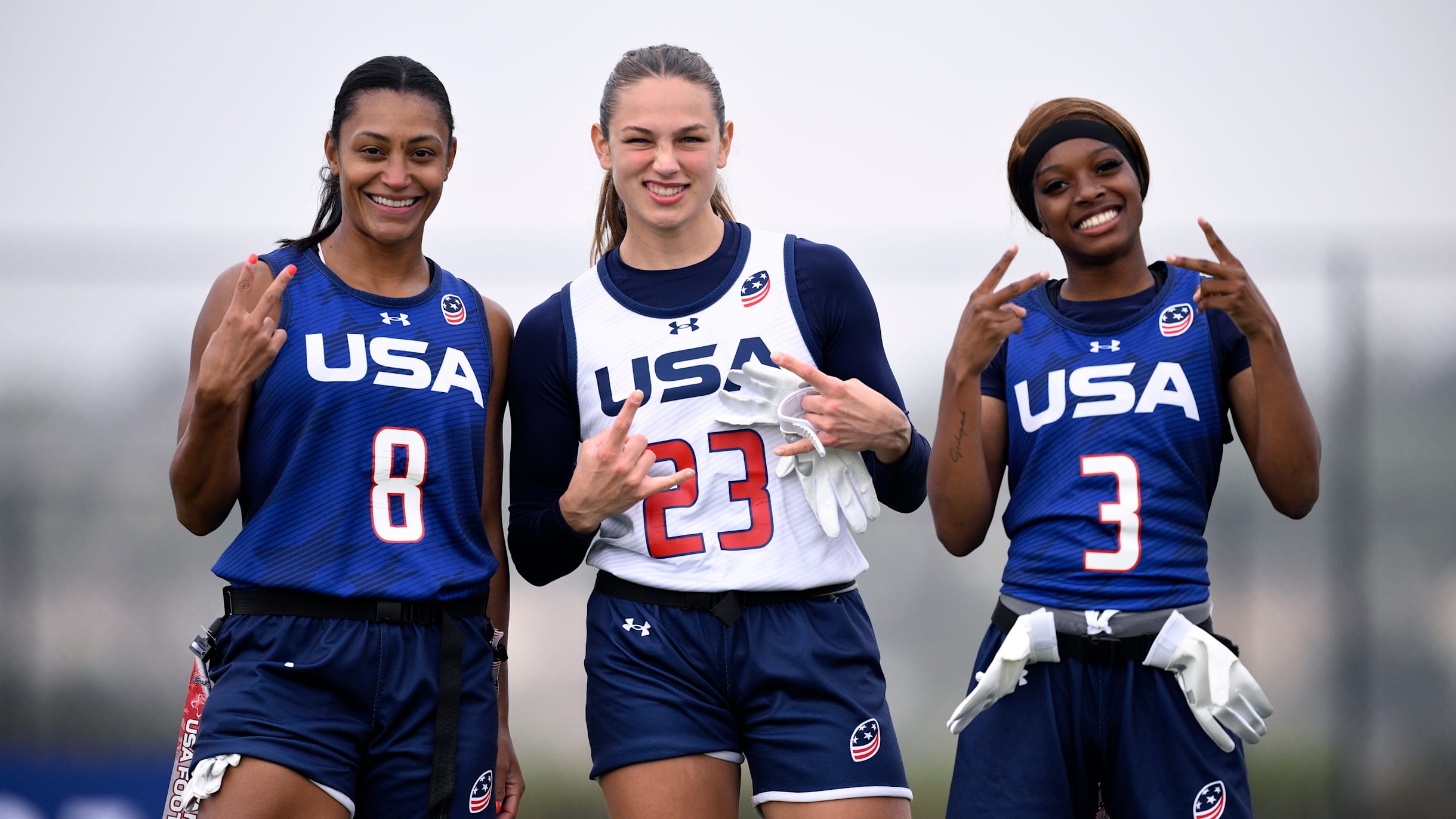
Autry-Jones’ comments about young girls seeing a path to scholarships and the Olympics land differently in that context because they are no longer aspirational in the abstract. The NCAA’s move creates a bridge between grassroots participation and elite competition, and that bridge is exactly what the women’s national team has been helping to build.
LA28 gives the sport its clearest stage
The Olympic backdrop gives all of this urgency. The International Olympic Committee approved flag football for the Los Angeles 2028 Olympic program in 2023, and LA28 says the men’s and women’s tournaments will each feature six teams at BMO Stadium. The sport is being introduced as a showcase of pace, strategy and skill, and its Olympic debut will be one of the most visible validation points the game has ever had.
That validation is arriving alongside a global ramp-up. The International Federation of American Football says World Flag 2026 in Germany will bring together teams from 19 nations across five continents, making it the biggest global flag football event before LA28. For Team USA, that means the path to Los Angeles is already crowded with meaningful competition, including Canada in the rivalry series and a broader international field that is growing more sophisticated every season.
The veterans understand that scale better than anyone because they remember when scale was the missing ingredient. Now they are not just competing for Team USA, they are helping define the standard for what the sport looks like as it moves from promise to Olympic reality.
Sources
- [1]olympics.com
- [2]usafootball.com
- [3]ncaa.org
- [4]la28.org
- [5]americanfootball.sport