USHL continues to power NCAA hockey and NHL pipelines

The USHL’s biggest question is the one families actually care about: which path gives a player the best shot at NCAA Division I hockey and, from there, the NHL. The league’s answer is built on outcomes, not slogans, and the numbers behind that answer are strong enough to explain why the USHL remains the benchmark for American junior hockey.
The USHL’s sales pitch is measurable, not just promotional
USA Hockey defines junior hockey as a development stage for players ages 16 to 20, and it says the USHL is the only Tier I junior hockey league in the United States. The league leaned into that identity in 2023-24, saying it was celebrating its 22nd season as the nation’s only Tier I junior league, while its media guide called the season the 45th anniversary campaign for a 16-team league.
The performance indicators are the reason the pitch lands. The USHL says 50 or more players from the league were selected in six consecutive NHL Drafts, more than 200 former USHL players were in the NHL in 2022-23, and nearly 400 players on USHL rosters last season committed to NCAA Division I schools. Those are not vague promises about exposure; they are hard counts of draft picks, college decisions, and NHL alumni.
Why the college pipeline keeps flowing through the league
The college connection is the clearest piece of the USHL’s value. College Hockey Inc. maintains commitment and NHL draft-pick tracking pages for college hockey players, which underscores how central that movement is to the sport’s ecosystem, and FloHockey has described the USHL as long having been fertile recruiting ground for NCAA’s top programs.

That recruiting reality helps explain why a USHL season matters even when the standings are tight. Clubs are evaluated not only on wins and playoff runs, but on how well they prepare players for the next stop, whether that next stop is Minnesota, North Dakota, Boston College, or an NHL development camp. The league’s public résumé is built around pace, structure, and repeatable performance, because those are the traits college staffs and pro scouts are paying for.
The championship history in the media guide adds another layer of proof that the league remains competitive while feeding the pipeline. In 2022-23, the Fargo Force won the Anderson Cup as regular-season champions, and the Youngstown Phantoms won the Clark Cup for the first time as playoff champions. A league that turns over talent as quickly as the USHL does has to keep proving that it can win games while moving players on, and that tension is part of the product.
How it stacks up against the NTDP
The USHL does not operate alone in elite American development. USA Hockey’s National Team Development Program is its showcase program, and the organization describes it as the pinnacle of its amateur player-development structure. The NTDP selects the top 23 players in two age groups, Under-17 and Under-18, and the Under-17 team plays the majority of a 62-game junior schedule in the USHL against opponents ages 17 to 20.
That setup matters because it shows how much overlap exists between the USHL and the top of the American pipeline. The NTDP is designed to identify the best young players in the country, but its Under-17 team still lives inside the USHL ecosystem for most of its schedule. In other words, the league is not just competing with USA Hockey’s top program, it is part of the same talent runway.
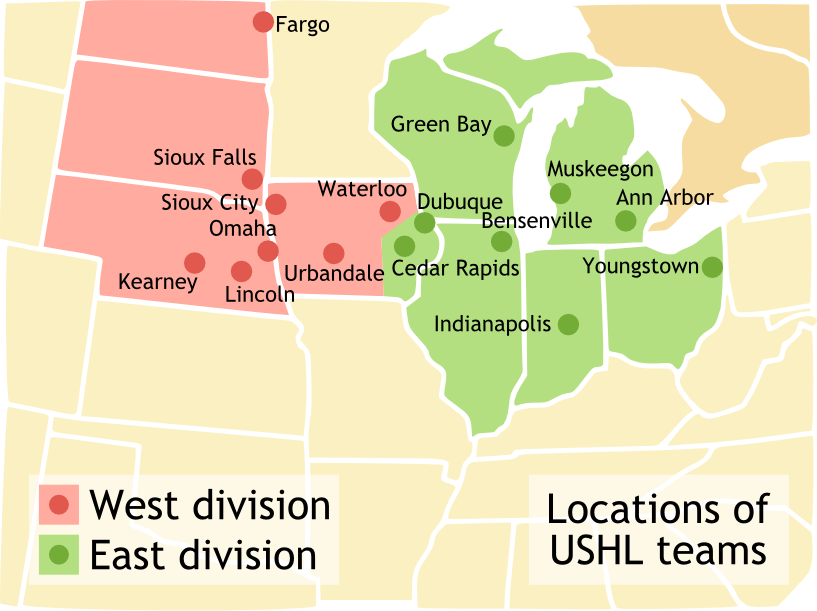
The USHL’s own national-team footprint reinforces that point. On Nov. 16, 2023, the league said 22 of its players were named to the U.S. Junior Select Team, another sign that its rosters are deeply embedded in USA Hockey’s evaluation system. For players chasing national-team visibility, that is a meaningful data point, not a marketing line.
What changed with the CHL, and why the USHL still matters
For years, one of the USHL’s strongest arguments was that it offered elite junior competition without closing the NCAA door. That advantage is still real, but the landscape is different now that the NCAA Division I council made Canadian Hockey League players eligible for NCAA hockey beginning in 2025-26, with the legislative change taking effect Aug. 1, 2025.
That shift does not erase the USHL’s appeal. It does mean the league’s college-first path is no longer unique in the broader junior market, because major-junior players can now be part of the NCAA conversation too. Even so, the USHL still offers a cleaner domestic route for families who want Tier I competition, NCAA access, and a track record that includes 50-plus draft picks in six straight NHL Drafts.
Prep school and AAA hockey still sit on the front end of many college journeys, but the USHL is where those journeys often become legible to NCAA staffs and NHL scouts. The league’s numbers, its Tier I status, and its place in USA Hockey’s development ladder make its claim more than branding. It is a pipeline with receipts, and the receipts keep pointing to Division I campuses and NHL rinks.
Sources
- [1]linkedin.com
- [2]usahockey.com
- [3]static.ushl.com
- [4]ushl.com
- [5]flohockey.tv
- [6]collegehockeyinc.com