USHL Development Series reveals league's multi-stage talent pipeline
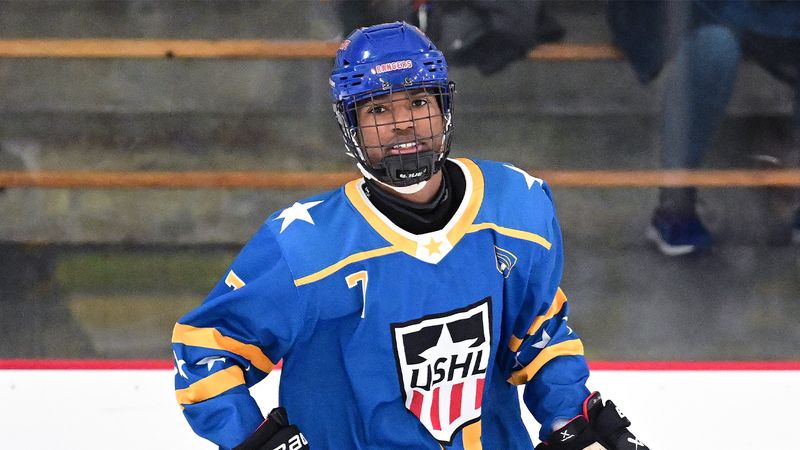
The USHL’s Development Series is built to do what a single showcase weekend cannot: slow the evaluation down. Instead of lumping every prospect into one room, the league splits players by birth year, layers in on-ice and off-ice testing, and gives USHL, NCAA, and NHL Central Scouting personnel repeated looks before the draft board hardens.
A staged system, not a single tryout
The 2025 cycle marked the combines’ 15th year, dating back to their creation in 2010, and the league returned to Green Bay for a second straight year at Cornerstone Community Center. That setting matters because the series runs as a spring and summer pipeline, not a one-and-done audition. In 2025, the schedule was divided into three separate combines: Phase II for 2007- and 2008-born players from April 17-20, Phase I for 2009- and 2010-born players from May 1-4, and the Player Development Combine for 2011- and 2012-born players from July 17-20.
That age separation is the first clue to how the USHL thinks about talent. A 17-year-old who can dominate in one age group does not automatically project better than a younger player whose pace, habits, and decision-making suggest more upside. By splitting the field into birth-year bands, the league creates cleaner comparisons and reduces the distortion that comes from stacking early bloomers against players who are still growing into their bodies.
What evaluators are actually watching
The combines are invitation only, and players must complete a USHL Player Questionnaire to be considered. Before an invitation goes out, central scouting staff pre-screen and scout the prospects, which means the event is already serving as a second or third pass on names that have been on the league’s radar. More than 1,000 players born between 2007 and 2012 were expected to attend the 2025 combines, so the funnel is broad enough to catch depth talent while still remaining selective.
Once players arrive, the evaluation goes far beyond goals and assists. Participants play five games, then go through off-ice physical and cognitive testing that helps teams measure speed, strength, processing, and how a prospect handles information under stress. That blend matters in junior hockey, where a player’s next step often depends less on one highlight than on whether he can repeat good decisions against better competition.
The audience in the building also changes the stakes. USHL and NCAA personnel evaluate players side by side, and NHL Central Scouting was scheduled to attend the 2025 Phase I and Phase II combines. That gives prospects a rare cross-section of the hockey ladder in one place, and it gives evaluators a chance to compare notes on the same player against the same competition.
Why the series reveals more than raw production
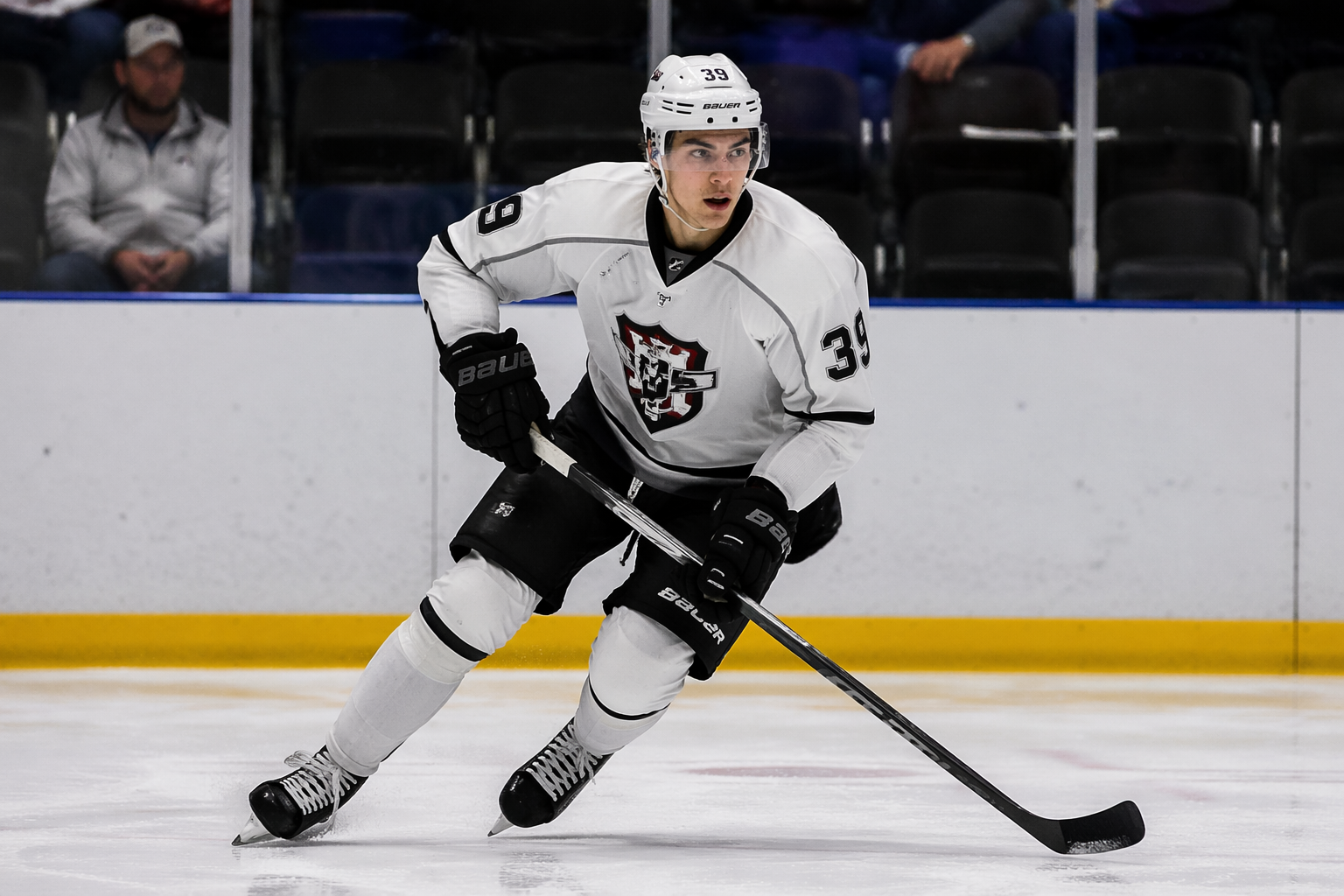
This is where the Development Series separates itself from the usual summer hockey circuit. A prospect’s box score can flatter him for a weekend, but five games and structured testing expose more of the details teams care about: whether his pace holds up shift after shift, whether he can process pressure, whether his skating translates when the ice gets smaller, and whether his game scales beyond the environment where he has already been productive.
The league’s setup also helps scouts measure coachability and adaptation. A player who looks ordinary in one game may be solving the ice better by game four, while another who flashes early may fade once opponents adjust. That arc matters in a league like the USHL, where clubs are not just chasing the best player in the building on one day, but the player most likely to become useful months and years later.
The point of the multi-step process is to separate long-term projection from one-weekend hype. A younger player who keeps arriving on pucks, competes through contact, and answers testing well can rise even without a gaudy scoring line. That is how prospects can move up with scouts while casual fans barely notice them: the league is grading future value, not just present-day noise.
How the combines fit draft preparation
The Phase I and Phase II combines matter even more because they sit ahead of the USHL Draft. In 2025, the draft was scheduled for May 5-6, which means the spring combines fed directly into club decision-making. The league described the combines as an important part of finalizing draft preparation, and that makes sense in a market where every team is trying to reduce risk before spending picks on players who may not be fully formed yet.
Neutral Zone analysts joined USHL staff for pick-by-pick analysis around the draft, adding another layer to how teams process the board. That same logic runs through the combine model itself: the more informed the evaluation, the better the chance a club can distinguish between a player who is hot for a weekend and a player who can survive the jump to the next level. The draft is only as strong as the information feeding it, and the Development Series gives clubs a structured way to build that information early.
Why Green Bay keeps getting the event
Green Bay has become the league’s repeat host because the event needs more than ice time. The combines are held at Cornerstone Ice Center and Cornerstone Community Center, and the 2025 return put the USHL back in a setting built to handle players, coaches, scouts, and families at scale. In 2023, USHL officials pointed to Greater Green Bay’s hospitality community as eager to host the athletes and families who come with the series, which turns the event into a regional hockey showcase as much as a scouting stop.
That broader footprint matters in a sport where development is now tightly linked to travel, exposure, and logistics. The combine circuit brings in players from across the birth-year bands, fills hotels, and concentrates decision-makers in one market. For Green Bay and nearby Ashwaubenon and Titletown, the series is part of the summer hockey calendar that keeps the region on the map for elite junior evaluation.
The data layer is getting deeper
The Player Development Combine is also becoming more data-driven. In 2025, Drive Hockey Analytics renewed its partnership with the USHL to provide wearable-sensor and smart-arena tracking data for that event. The system is designed to capture real-time movement, speed, workload, and positioning, giving evaluators a more technical read on how young players move and how hard they can sustain it.
That kind of tracking does not replace the eye test, but it sharpens it. A scout still needs to know whether a player sees the ice, competes, and adapts, yet the data can confirm trends that a glance might miss. For a league trying to identify long-term junior and college prospects, that combination of observation, testing, and tracking is the point of the Development Series: it creates enough layers to make a better bet on the players who will matter later.
Sources
- [1]ushl.com
- [2]oursportscentral.com